
Overview
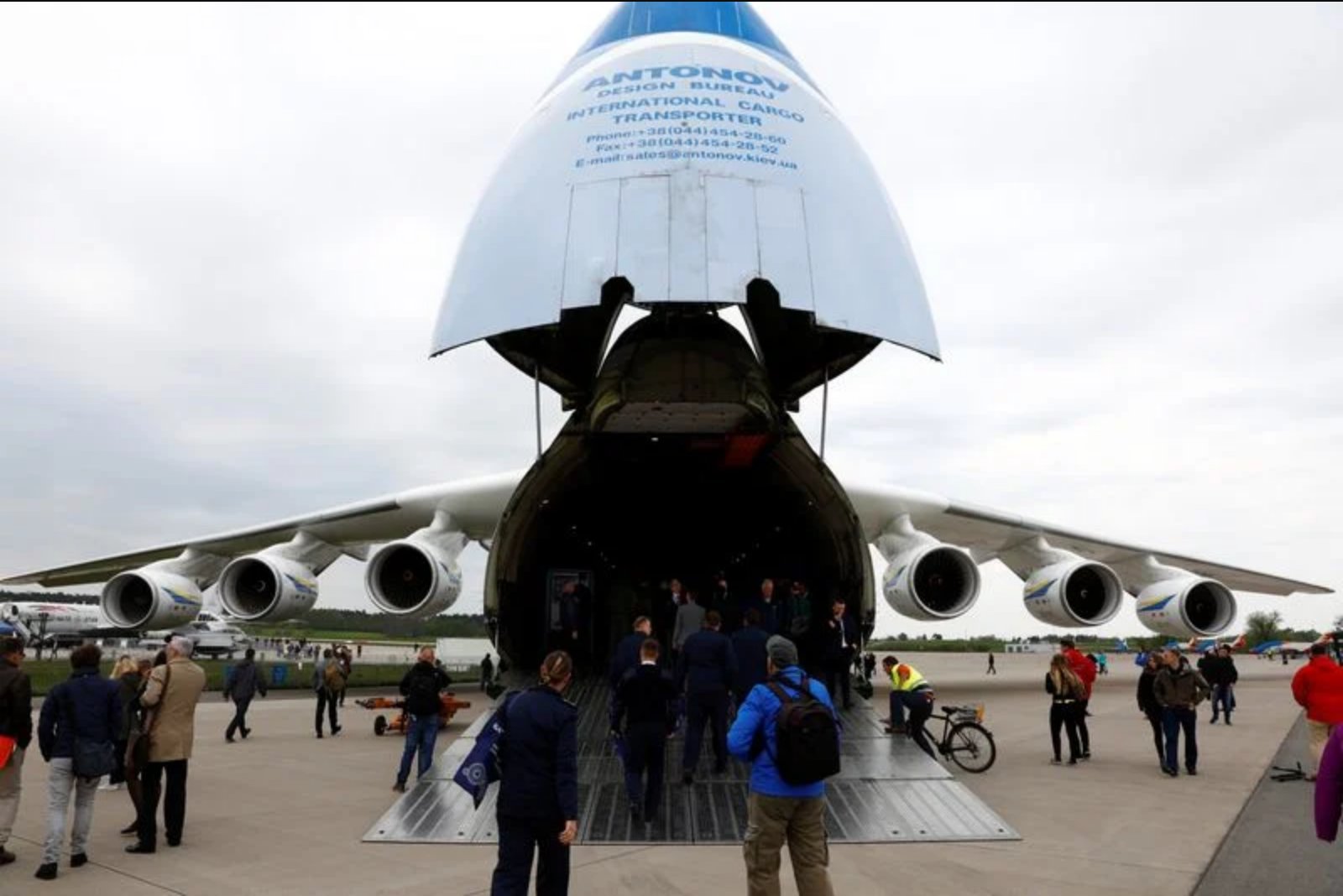
Two of the largest commercial aircraft manufacturers have recently enlisted one of the planet's biggest cargo jets to accelerate delivery of major airframe components. The Antonov An-124, a four-engine heavy transport, has been chartered to fly parts linked to Europe’s A350 wide-body jet and to sections for the Boeing 767 airframe used in freighters and military tankers.
How the An-124 has been used
Industry sources and regulatory filings show that the An-124 was also used earlier this year to carry components for the 777 freighter. In the most recent instances, the aircraft moved A350 sections and two upper fuselage sections that Boeing described in filings as coming from a Daher Aerospace facility in Florida. Those parts would ordinarily travel by land or sea between production sites, but were flown to meet urgent production requirements.
A Boeing spokesperson commented broadly that the company uses "a variety of transportation methods to maintain stability in our production," without directly addressing the An-124 flights. An Airbus spokesperson said "we sometimes use the Antonov," while not confirming whether that applied specifically to A350 components. The A350 program has been flagged publicly as affected by delivery delays.
Operational context and supply-chain implications
Planemakers typically move large structural sections via dedicated sea freight, trucking networks and fleets of converted cargo jets. Switching to an outsized airlift solution is more expensive and signals that buffer inventories are limited. Industry observers say these charters reflect pressure on manufacturers to keep assembly lines supplied and to prevent localized delays from cascading into broader program slippage.
Analysts note that aerospace supply chains have shown improvement since the worst of the pandemic-era disruptions and that overall aircraft deliveries are up this year. Nevertheless, concerns persist in specific segments of the supply chain - notably aerostructures and interior systems such as seats - where localized issues can still disrupt production pacing.
Details on Airbus and the Kinston facility
Two industry sources said Airbus's decision to fly A350 components rather than ship them by sea was linked to a deterioration in output at a former Spirit AeroSystems plant in Kinston, North Carolina. Airbus assumed control of those facilities last December as part of a joint break-up of the supplier with Boeing.
At the time of the handover, parts for the A350 were being moved by sea and there was a buffer stock of four full sets of parts, one source said. The same source indicated that air freight has become necessary to avoid new production delays since the situation in Kinston deteriorated.
An Airbus spokesperson said, "Regarding Kinston, we are making progress towards separation from the previous owner and integration into the Airbus landscape. However it remains a complex multi-year journey to complete." The company also told analysts in a pre-results briefing that it had not altered assumptions about the drag on 2026 profits arising from the costs of absorbing the Spirit facilities.
Airbus had informed some customers in May that they could face delays to A350 deliveries later this decade, in part because of difficulties securing sections from the Kinston factory, according to information available in May.
Boeing's filings and the 767 requirement
U.S. filings indicate Boeing chartered the same Antonov in late June to transport two upper fuselage sections from Daher’s Florida factory to Boeing’s Everett, Washington, plant. In a June 22 letter to the U.S. Department of Transportation, reviewed in regulatory filings, Boeing described the parts as "urgently required for the production of the 767." The letter added that "Those delays would impose a significant economic cost if not avoided."
Boeing followed up on July 1 with another letter supporting an exemption for Antonov to move a similar Daher-made component. Daher declined to comment on operational matters.
The 767 airframe is no longer built as a passenger jet, but remains in production in other forms: it is used to assemble U.S. refuelling tankers and is in the final stages of production as a commercial freighter.
What this signals for manufacturers and markets
The use of the Antonov An-124 for high-priority parts movement underscores the operational choices manufacturers face when confronted with constrained inventories and intermittent supplier performance. Shifting from sea or road transport to chartered heavy airlift solves immediate bottlenecks but increases logistics cost and reflects limited spare capacity in the system.
For market participants and supply-chain managers, these developments highlight the ongoing need to track production-rate continuity, buffer inventories, and single-source risks within aerostructures and other tightly sequenced aircraft sub-systems.
Reporting for this article drew on industry sources and regulatory filings detailing the recent charters and related correspondence with transportation authorities.