
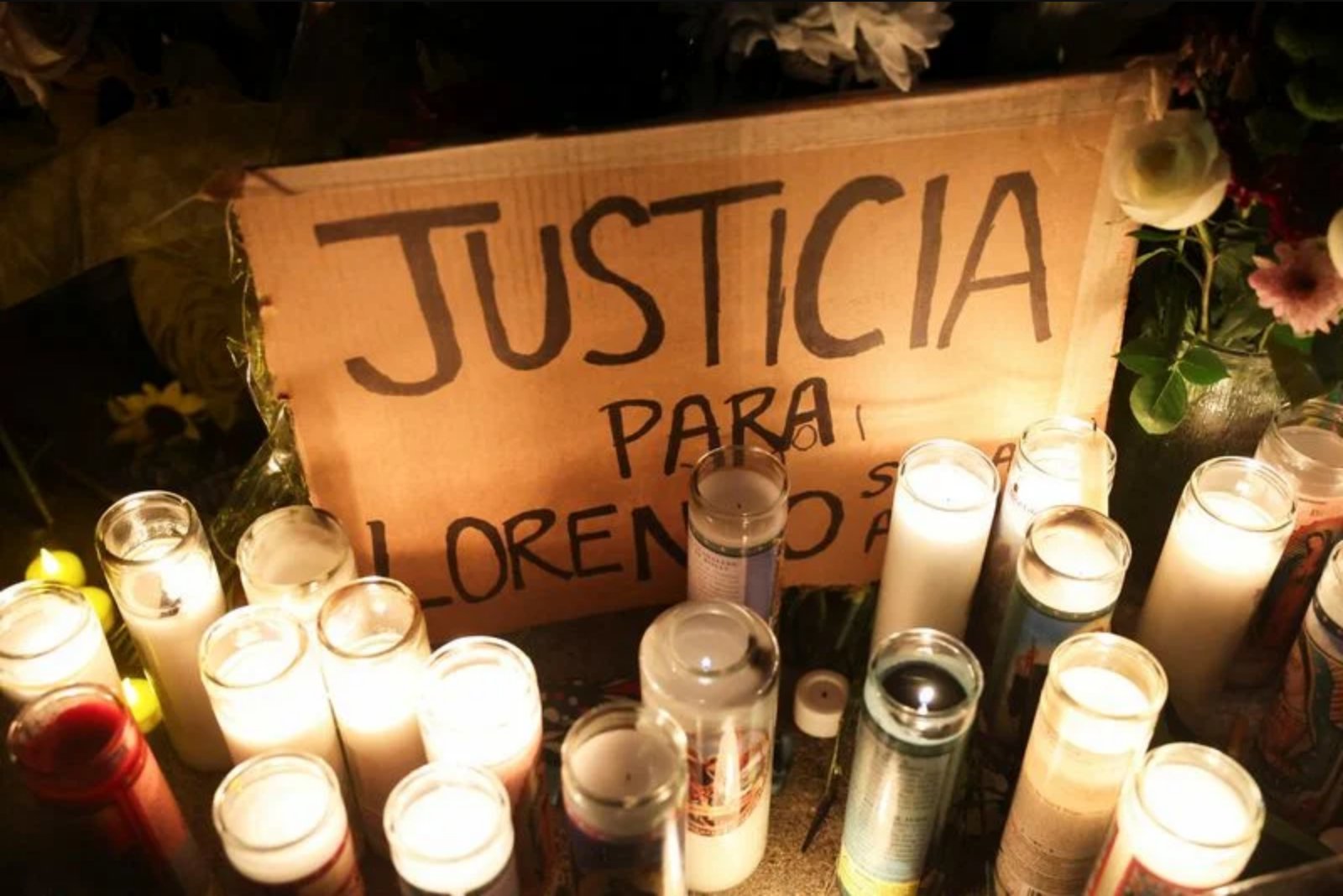
On Canal Street in Houston’s East End, neighbors continue to lay flowers, light candles and leave balloons at the spot where Lorenzo Salgado Araujo was fatally shot by an Immigration and Customs Enforcement officer this week. The location is in Magnolia Park, one of Houston’s oldest Hispanic neighborhoods. Streets there are lined with taco trucks, tortillerias and Spanish-language signboards that reflect the neighborhood’s roots.
Magnolia Park - commonly referred to as Little Mexico by local leaders - traces its origins to a 1890 layout and was reshaped by Mexican families who fled revolution and came to the area seeking work on the nearby ship channel. The neighborhood’s name recalls the 3,750 magnolia trees developers planted there. Community leaders describe the area as the heart of Houston’s Latino community.
The killing has unsettled residents beyond the immediate loss. Neighbors and local advocates say the shooting deepens fears in a community where many people view increased immigration enforcement as a direct threat to daily life, and has left people calling for clarity about what happened.
"The fear, it’s real now ... It’s something this community has never seen before. It was always a happy community, fun, festive, music, smells of barbecue in the air," said Jesse Rodriguez, an art historian and community leader who has converted one of his family’s ancestral homes into a museum about Magnolia Park. "This happened here in our yard," he added, wearing a T-shirt listing every street in the neighborhood. "What I see is how these people fear every day just to go work."
Anger and sorrow have spilled into the streets. More than 1,000 people marched near the site on Wednesday; about 100 remained for a candlelight vigil, according to accounts from the scene. The protest activity reflects a community response that is both public and sustained, with neighbors continuing to gather at the spot where Salgado died.
ICE has released an account stating that Salgado, a Mexican national who officials say had been living in the United States illegally for three decades, rammed his van into an agency vehicle and attempted to run over an officer, who then fired on him. Relatives and family representatives dispute that account and have asked for an independent investigation into the shooting.
Relatives said Salgado, a construction worker and father of three, had lived in Houston for 35 years and was in the process of obtaining a work permit. The Mexican government said on Thursday it would examine possible criminal complaints in the United States involving the deaths of Mexican citizens in immigration custody or enforcement operations.
A witness at the scene reported that a few FBI agents were seen entering businesses directly across from where the shooting occurred on Thursday.
Scholars and local residents say federal agents moving through a neighborhood whose identity is closely tied to immigration can deepen a sense of intrusion. "It can feel like an invasion of sorts," said Néstor Rodríguez, a sociology professor at the University of Texas at Austin. "They’re not just going into disjointed communities where people don’t know each other. These are people whose family history is based there."
Magnolia Park is overwhelmingly Hispanic - 97% of residents - and 44% are immigrants, according to figures provided by Magnolia Park Arts & Community, a Houston-based arts nonprofit. For the city as a whole, roughly 44% of residents are of Hispanic origin, based on U.S. Census Bureau data noted by local organizations.
For neighbors such as Jorge Gonzalez, a 60-year-old who lives three houses from the shooting site, the presence of an ICE van in the neighborhood felt jarring. He described it as "the weirdest thing" he had ever seen there.
Community members express frustration about what they view as recurring enforcement actions that disrupt the lives of people working to support their families. "I think we’re all frustrated at the continuing raids and hauling of hardworking people who come here to provide for their families, provide a better future. They’re not causing any harm, they’re just trying to survive," said Maria Rosas, a 32-year-old accountant who grew up in the neighborhood.
It remains uncertain whether the incident will prompt broader protests in Houston comparable to recent actions in other cities. Brandon Rottinghaus, a political science professor at the University of Houston, noted the city has reacted to prior controversial events with protest, particularly in the 1970s and 1980s, but he added that Houston has generally leaned toward political apathy in recent times.
The shooting has amplified calls for independent review and created a climate of anxiety among residents who say they fear enforcement activity could affect daily routines, work and community cohesion. Family members have demanded outside oversight, and Mexican officials indicated they would consider examining potential criminal complaints tied to deaths of Mexican citizens in U.S. immigration actions.
As the community continues to grieve and seek answers, streets in Magnolia Park remain marked by memorials and gatherings. Local leaders and residents are publicly registering their unease and uncertainty about the immediate future in a neighborhood with deep ties to migration and generations of family histories.