
Summary
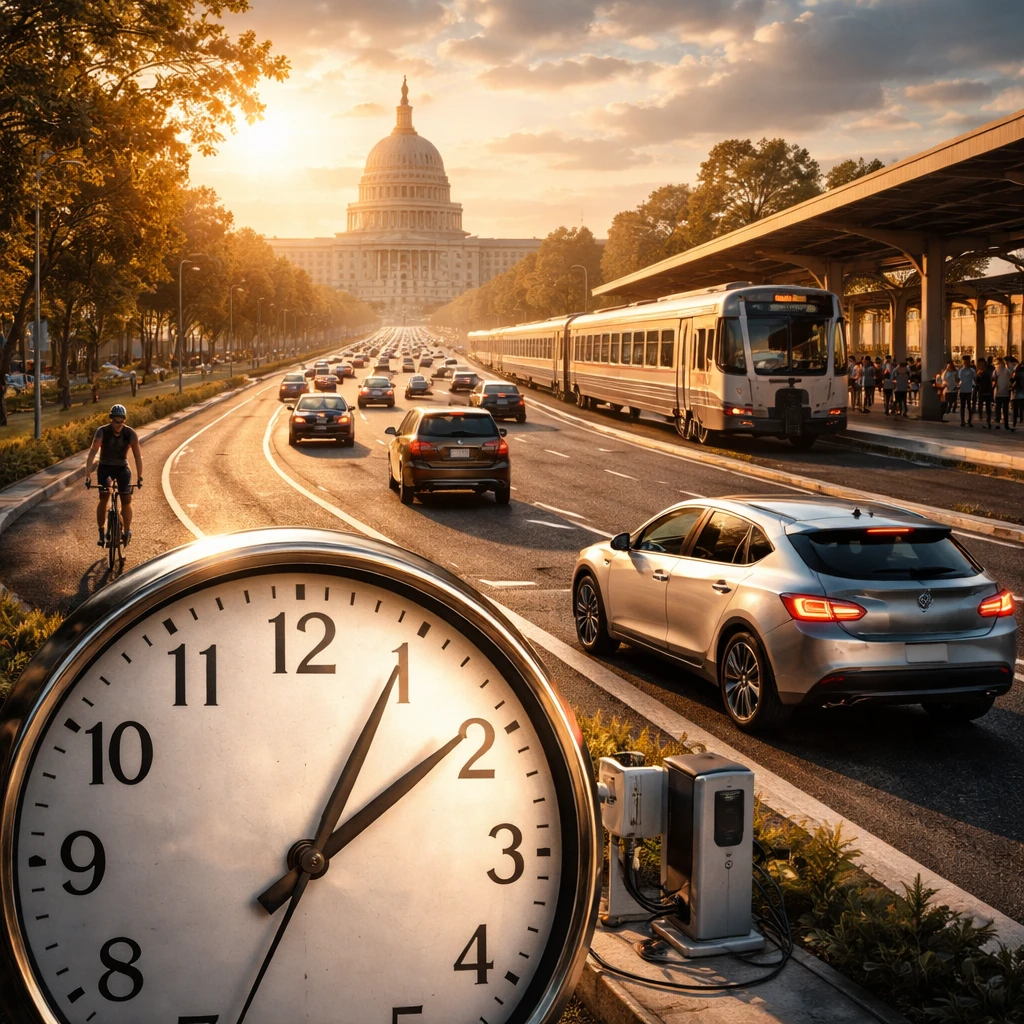
The administration is urging Congress to adopt a package of changes as lawmakers work to renew the five-year surface transportation law that expires on September 30. In a letter to lawmakers on Thursday, U.S. Transportation Secretary Sean Duffy outlined priorities that include making daylight saving time permanent, reducing federal support for bicycle lanes and mass transit, curbing funding for electric vehicle (EV) charging infrastructure, and speeding deployment of self-driving vehicles. The letter also requested another $1 billion for reconstruction of New York Penn Station and a directive for Amtrak to rename the station.
Legislative context and timing
Duffy asked that permanent daylight saving time be approved as part of the legislative package that must be finalized by the end of September. The current five-year surface transportation statute expires on September 30. The U.S. House of Representatives passed a bill last week to make daylight saving time permanent, but the measure faces significant obstacles in the Senate, where leaders appear less certain of its prospects. The president is personally calling senators to urge support for the change.
The House has proposed a new five-year bill authorizing $580 billion in funding and would impose an annual $130 fee on owners of electric vehicles to contribute to road repairs. Duffy signaled he wants the daylight saving measure included within that broader reauthorization.
Policy shifts outlined in the letter
On safety and public behavior, Duffy argued in the letter that "Adopting permanent Daylight Saving Time would eliminate the needless time, hassle, and cost involved in changing clocks twice a year, and a study found that it would prevent hundreds of traffic deaths every year by shifting daylight to times of day when more Americans drive."
On active transportation and transit funding, the secretary urged Congress to curtail certain grant programs. He asked lawmakers to end some competitive and formula grant funding that supports bicycle lanes and to eliminate the Mass Transit Account within the Highway Trust Fund, proposing consolidation of fuel tax receipts into the highway account. The letter explicitly requested Congress "to restrict competitive and formula grant funding for bicycle lanes and other bicycle infrastructure that reduce travel throughput for motor vehicles and support removal of existing bike lanes that contribute to congestion."
The letter noted that while overall traffic deaths have declined, bicyclist deaths rose 4% to 1,148 last year. Supporters of bicycle infrastructure say lanes can reduce deaths and injuries; the letter framed lane removal and funding restrictions as congestion-relief measures.
Autonomous vehicles and EV infrastructure
Duffy pressed for several provisions to accelerate the adoption of self-driving vehicles. His requests include a voluntary pilot program allowing manufacturers to deploy robotaxis, preemption of state-level rules that might restrict deployments, and elimination of the 2,500-vehicle annual cap on certain deployments.
At the same time, the Transportation Department has taken steps affecting EV charger programs. In February 2025 the department suspended an EV charger infrastructure program that Congress enacted in 2021; a judge declared that suspension unlawful in January. Duffy asked Congress to cut funding for charging infrastructure while also making EV owners subject to a $130 annual road-repair fee under the House proposal.
Penn Station funding and renaming
The secretary asked Congress to provide New York Penn Station with an additional $1 billion for reconstruction and requested that Amtrak be directed to rename Penn Station. Earlier, the administration offered to unfreeze some transportation funds if Senator Chuck Schumer of New York agreed to support renaming Penn Station after the president.
Short-term extensions and legislative process
Many lawmakers expect Congress to adopt a short-term extension of the existing law beyond the November midterm elections. The Transportation Department is pressing to have some of its priorities incorporated into any such temporary extension.