
July 22 - The White House plans to announce an expanded pledge on Thursday designed to keep the electricity costs associated with rapid growth in data center capacity from being passed through to average consumers and businesses. The move broadens an earlier Ratepayer Protection Pledge announced in March, with the administration saying the updated pledge will cover 80% of all the power delivered to U.S. homes and businesses.
Officials expect the president to appear alongside Energy Secretary Chris Wright, Environmental Protection Agency Administrator Lee Zeldin and several state governors who signed the original pledge, according to a White House official. The effort is supported by a coalition that includes governors, lawmakers, utilities and developers of data center facilities.
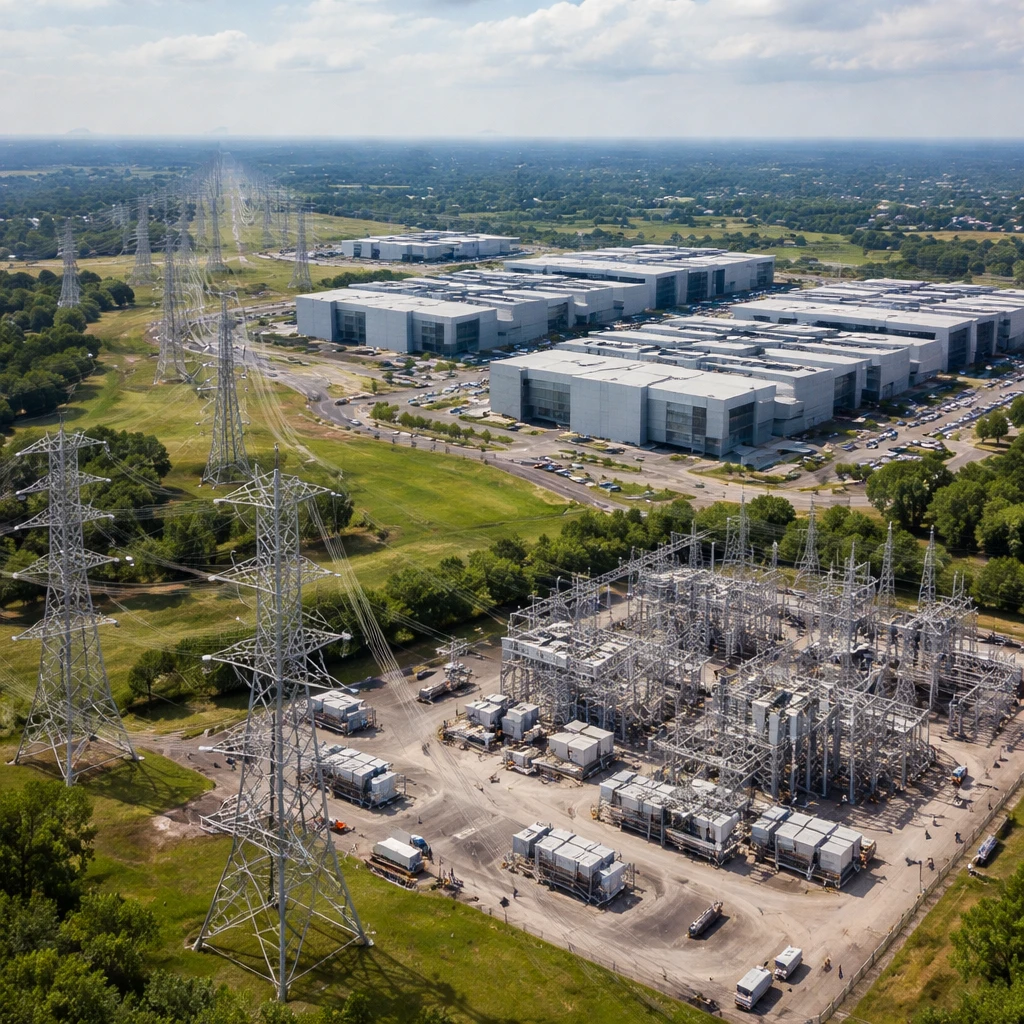
While the pledge aims to have companies that build and operate data centers pay rates above and beyond normal tariffs to prevent cost shifts to households, industry and grid conditions present substantial obstacles.
America’s electricity delivery system is fragmented across regional transmission organizations and utilities, and that patchwork network is already under heavy strain. The PJM Interconnection - the nation’s largest regional grid serving 67 million people - experienced an 81% jump in transmission-line congestion costs, reaching $3.2 billion in 2025.
Last week’s annual power auction at PJM also pushed wholesale power prices to record levels, and the Federal Energy Regulatory Commission has scheduled a meeting on Thursday to consider PJM’s precarious future in the face of ongoing supply and demand imbalances.
Critics of the current model point to structural mismatches between the needs of very large industrial customers and those of residential ratepayers. "Today’s electricity system forces almost everyone, from homeowners to hyperscale data centers, to depend on the same network," said Travis Fisher, director of energy and environmental policy studies at the Cato Institute, a libertarian think tank. He wrote that the one-size-fits-all approach "increasingly does not serve either group well," noting that large customers may wait a decade or longer for service while ordinary ratepayers worry that expanding the grid for massive new industrial loads will ultimately increase their own bills.
Data center supporters counter that the sector’s rapid expansion is prompting overdue investment in the grid. They also point to other underlying drivers of higher costs that predate the recent wave of data center construction, including power-plant retirements and limits on transmission capacity.
The White House characterizes the pledge as nonbinding. It says the expanded commitment reflects an intent to cover a large share of electricity deliveries to households and businesses, but the administration and its supporters face the practical challenge of coordinating policy across a diverse set of regional systems and market conditions.
Clear summary
The administration will announce an expanded, nonbinding pledge intended to prevent households and businesses from absorbing electricity cost increases tied to data center growth. The pledge extends a March commitment and is supported by governors, lawmakers, utilities and data center developers. Grid constraints, surging congestion costs in PJM and record auction prices highlight the difficulty of ensuring that large new industrial loads do not indirectly raise consumer bills.