
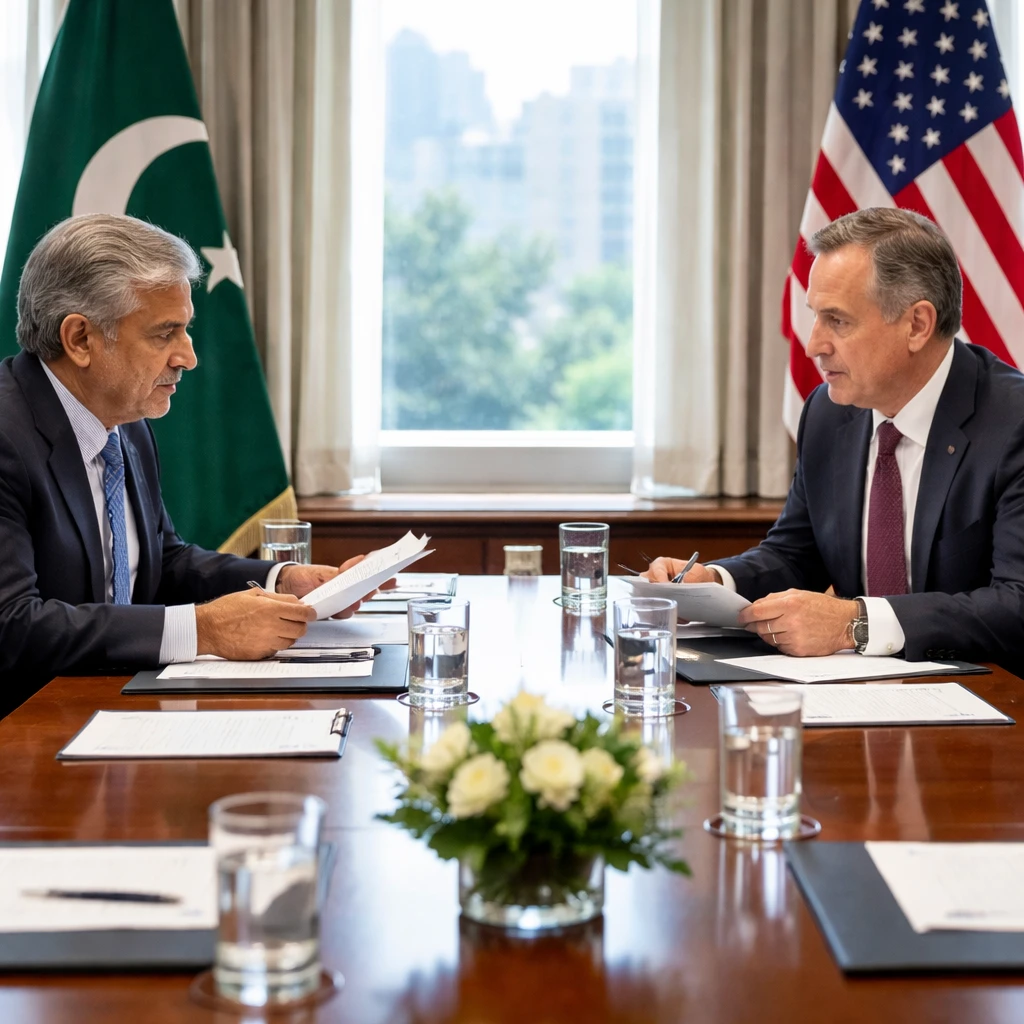
In Washington on July 22, U.S. Treasury Secretary Scott Bessent met with Pakistan’s finance minister to acknowledge Islamabad’s recent policy steps and to underscore U.S. support for the country’s efforts to return to international capital markets, the Treasury said in a statement the following day.
The Treasury communication highlighted the administration’s view that Pakistan has made progress on restoring macroeconomic stability and pursuing fiscal consolidation. The statement said, "Secretary Bessent welcomed the progress Pakistan has made in restoring macroeconomic stability and advancing fiscal consolidation, recognizing the government’s efforts to implement significant economic reforms."
The statement added that Bessent "expressed support for Pakistan’s efforts to build greater economic self-reliance and commended the government’s commitment to creating the conditions for a successful return to international capital markets."
The Treasury note did not address Islamabad’s request for a $10 billion exchange stabilization facility. Pakistani Finance Minister Muhammad Aurangzeb delivered the request during the meeting, sources said.
During his visit to Washington, the finance minister also held talks with John Jovanovic, president of the U.S. Export-Import Bank (EXIM), as part of a push to deepen economic and trade ties between the two countries.
Pakistan’s pursuit of a bilateral currency stabilization vehicle follows a period of heightened diplomatic activity in which Islamabad stepped up to broker talks aimed at ending the Iran war. That diplomatic engagement raised Pakistan’s international profile and drew public praise from the Trump administration.
On the economic front, Pakistan has been vulnerable to external shocks because of its reliance on Gulf energy imports, remittances, and financing support from regional partners. The country narrowly averted default in 2023 after a $3 billion IMF standby agreement and subsequently secured a $7 billion Extended Fund Facility, along with a separate $1.3 billion loan intended to bolster resilience to climate change and natural disasters. Despite those arrangements, Pakistan’s foreign exchange reserves continue to depend heavily on official financing, debt rollovers and deposits from China and Saudi Arabia.
Following the meeting with EXIM’s chief, Pakistan’s finance ministry welcomed the U.S. export credit agency’s proposal to expand cooperation. The ministry said EXIM proposed creating a multi-year transaction pipeline and facilitating U.S. financing to support closer economic ties.
In a post on X, the finance minister said: "Both sides agreed to identify near-term transactions, designate focal persons, and work towards finalizing the strategic framework, with a view to having it signed on the sidelines of the United Nations General Assembly session in September 2026."
EXIM confirmed the meeting in its own post on X but did not provide details about any specific U.S. financing commitments. The agency wrote: "Chairman @JJovanovicUSA met with Pakistan’s Minister of Finance and Revenue Muhammad Aurangzeb @Financegovpk to advance stronger economic cooperation and create new opportunities for American businesses to compete and win abroad."
Context and implications
Officials framed the talks as part of Pakistan’s effort to shore up the macroeconomic framework and prepare conditions necessary for sovereign access to private international capital. Both the Treasury remarks and the EXIM engagement point to a strategic interest in deepening economic ties, but neither the Treasury statement nor EXIM provided commitments or timelines for new financing tied to the discussions.
For Pakistan, the immediate priorities described in the statements are advancing fiscal consolidation, increasing economic self-reliance, and securing external support to stabilize reserves while pursuing a phased return to global markets.