
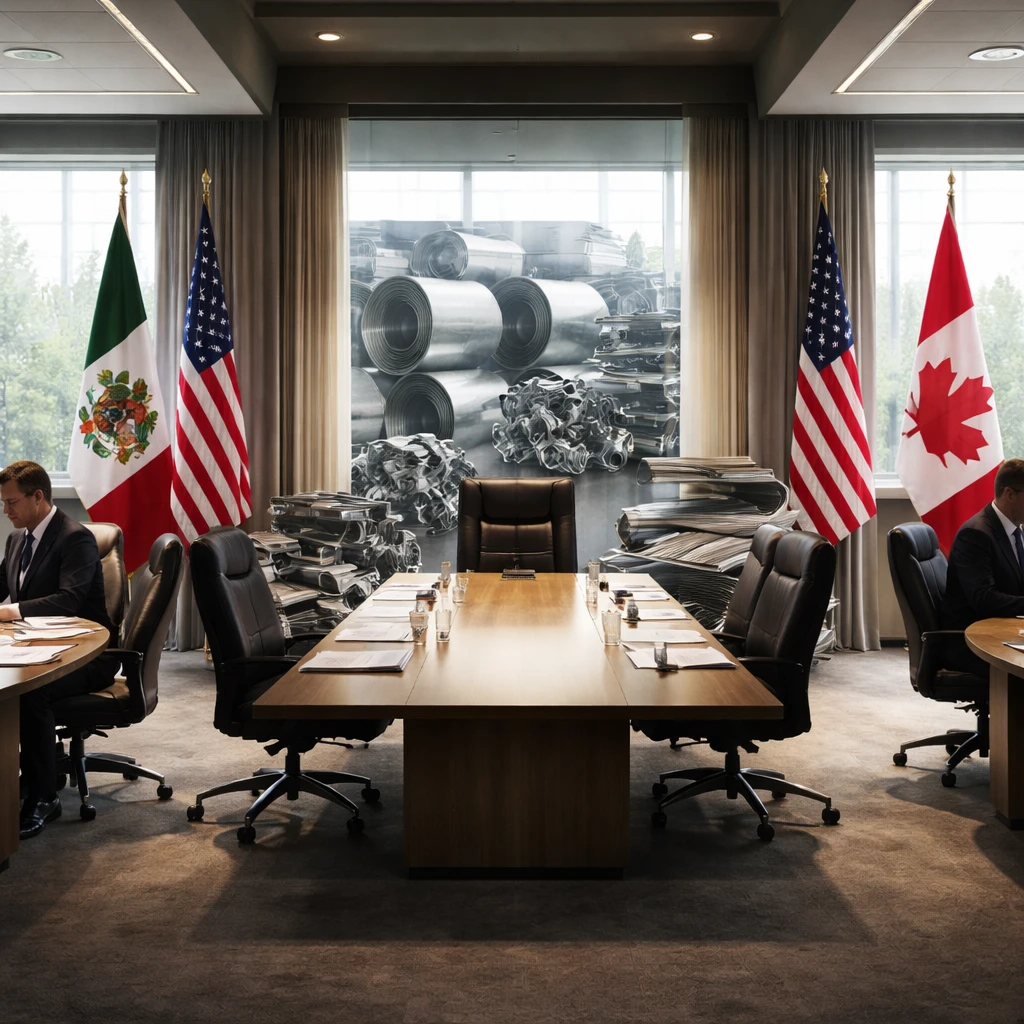
U.S. Trade Representative Jamieson Greer told the Senate Finance Committee on Wednesday that he is aiming to reach interim trade arrangements with Canada and Mexico by year-end, while reserving the most difficult USMCA revisions for consideration in 2027. His comments were the clearest indication yet that the trilateral pact will not be fully renegotiated this year.
At the hearing, Greer said he would like to have "at least some arrangements - one with Canada, one with Mexico" in place by the end of the year. He added that complex matters, including tighter rules of origin for autos and issues tied to labor and environmental regulations, may require additional time and further consultation "including with Congress in the following year."
Greer’s remarks suggest the negotiation timeline will extend beyond 2024, leaving unresolved topics that have been contributing to business and investment uncertainty in Canada and Mexico. Those two countries together have long relied on duty-free access to the U.S. market under the USMCA and its predecessor, which underpin nearly $1.6 trillion in regional trade, with most of Mexico’s and Canada’s exports destined for the United States.
Representatives of Mexico’s Economy Ministry did not provide a comment on Greer’s statements. The Canadian ministry responsible for U.S. trade did not immediately respond to a request for comment.
Greer said the United States is "moving with all due speed" on potential interim agreements and that he hoped to present options for President Donald Trump, Mexican President Claudia Sheinbaum and Canadian Prime Minister Mark Carney to review by the end of the year. He did not detail what those interim arrangements might contain.
Observers of North American trade policy said the likely outcome is a temporary political agreement that sustains momentum in negotiations while leaving the most difficult topics unresolved. Michael Camunez, chief executive of Monarch Global Strategies, said Greer’s testimony confirms the United States is no longer seeking a clean USMCA renewal this year, and that an interim political agreement would keep talks moving but preserve investment uncertainty.
Tariff relief is high on the agenda for both Mexico and Canada. The Trump administration last year imposed so-called Section 232 national security tariffs that raised duties to 25% on autos and to 50% on steel and aluminum from Mexico and Canada. Both countries are seeking exemptions from or relief on those duties as part of any renegotiation or interim deal.
Former Mexican trade official Luis de la Calle suggested that eliminating the Section 232 duties would be a logical starting point for an interim agreement with Mexico, reflecting Mexico’s initial priority of reducing U.S. tariffs on autos, steel and aluminum before negotiating the finer points of regional content rules.
Tensions with Canada have been heightened in recent weeks, according to Greer’s testimony and subsequent developments. President Trump announced a 50% tariff on about $20 billion in Canadian goods this week, including products such as beer, dairy and hockey sticks, as a response to Canadian retaliatory measures tied to the autos and metals tariffs. Those dynamics reflect the strained state of bilateral talks with Ottawa.
Greer was scheduled to arrive in Mexico City later on Tuesday to participate in bilateral discussions with Mexican officials about possible USMCA revisions. Canada has been excluded from those negotiations at times, raising the possibility that Canada could be asked to accept terms that were negotiated separately between the United States and Mexico.
The Trump administration is pressing Mexico to raise the required level of regional content in North American-built cars so that vehicles qualify for preferential trade access. The goal expressed by U.S. negotiators is to incentivize greater production within the United States and North America and to limit Chinese-origin content in vehicles. While Mexico broadly supports the objectives, it disagrees with the approach and has prioritized tariff reductions as an initial step.
Greer also told senators that the president may want to see progress on issues beyond trade before agreeing to an interim deal with Mexico. He cited U.S. demands for tougher border security measures and better compliance with a 1944 Rio Grande River treaty that governs water deliveries to Texas farmers. "The president is going to have a hard time agreeing to renewal or even revisions if Mexico isn’t playing ball in all areas, and the water treaty is one of them," Greer said.
President Trump, who signed the USMCA into law in 2020, has been a persistent critic of the pact and has threatened to terminate it over continuing trade deficits with Mexico and Canada. On July 1, the administration chose not to renew the agreement, triggering a 10-year countdown to expiration unless all three countries agree to a renewal with changes.
With interim political arrangements now the near-term focus, the most contentious regulatory and content disputes look set to be deferred. That outcome is likely to sustain a degree of uncertainty about investment and production decisions in industries most affected by tariffs and content rules, including autos, steel and aluminum, and sectors tied to cross-border agricultural and manufactured goods trade.
Summary
U.S. Trade Representative Jamieson Greer told senators he hopes to secure interim trade arrangements with Canada and Mexico by the end of the year, while deferring more difficult USMCA revisions to 2027. The approach signals that a full renewal will not occur this year and that key issues - including regional content rules for autos, Section 232 tariffs on autos and metals, and related political disputes such as water treaty compliance - will remain unresolved for the near term.