
Economy November 20, 2026 02:05 AM

UK Retail Sales Defy Expectations with 0.7% October Rise

Government stockpiling advice and colder weather lift clothing and food sales, but consumer sentiment remains fragile amid inflation and rate hikes.

By Caleb Monroe
Share
Twitter Reddit Facebook LinkedIn

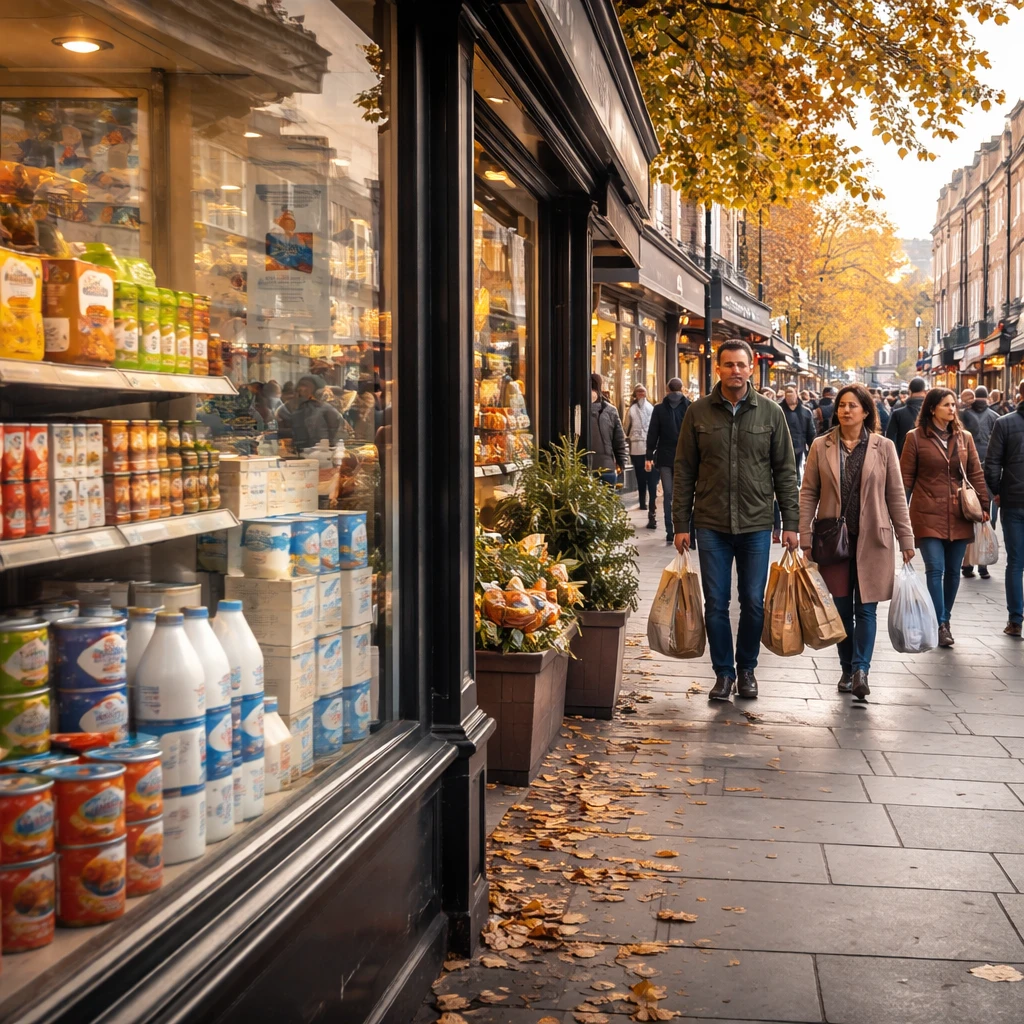
British retail sales volumes unexpectedly climbed 0.7% in October from September, surpassing all economist forecasts in a Reuters poll and pushing annual growth to a two-month high of 2.3%, up from 0.4% in September. The Office for National Statistics attributed part of the gain to the government's 'Be Ready' campaign, which encouraged households to stock up on long-life items like tinned food and UHT milk, as well as stronger clothing sales as temperatures dropped. However, consumer sentiment had fallen sharply in October due to rising fuel bills and borrowing costs, though November data showed a slight recovery. Consumer price inflation hit a one-year high of 3.6% in October, and the Bank of England, which raised interest rates for the first time in three years this month, forecasts inflation near 5% by mid-next year. Retailer updates were mixed: Marks & Spencer reported solid trading and momentum entering Christmas, Primark and Next noted a pickup in October sales, while JD Sports saw a softer UK sales trend in its third quarter compared to a World Cup-boosted second quarter, and discounter Poundland considered administration.

UK Retail Sales Defy Expectations with 0.7% October Rise
Summarize with
ChatGPT Perplexity Claude Grok Gemini

Key Points

  • UK retail sales volumes rose 0.7% in October, beating all forecasts and lifting annual growth to 2.3% from 0.4% in September, driven by government stockpiling advice and colder-weather clothing sales.
  • Consumer sentiment fell sharply in October due to rising fuel bills and borrowing costs, though November data showed a small recovery; inflation hit a one-year high of 3.6% and the Bank of England forecasts near 5% by mid-2024.
  • Retailer updates were mixed: Marks & Spencer and Next reported solid trading and a pickup in October sales, while JD Sports saw a softer UK trend and Poundland considered administration, highlighting uneven conditions across the sector.

British retail sales volumes rose by 0.7% in October compared with September, defying expectations and beating every forecast in a Reuters poll, according to official figures released on Friday. The unexpected increase was supported by a government appeal for households to stock up on long-life products and by stronger clothing sales as the weather turned colder. The jump lifted the annual growth rate of sales to a two-month high of 2.3%, a sharp acceleration from 0.4% in September.

Grant Fitzner, chief economist at the Office for National Statistics, said:

Supermarkets have told us that sales of long-life food items such as tinned food and UHT milk were boosted by the government's 'Be Ready' campaign.
The campaign encouraged households to prepare for potential disruptions, and the data suggests it had a measurable effect on shopping behavior.

Despite the strong headline figure, the backdrop for consumers remained challenging. Consumer sentiment had fallen sharply in October, according to Britain's longest-running measure of household confidence, as rising fuel bills and borrowing costs squeezed budgets. However, separate data released earlier on Friday showed a small recovery in sentiment for November.

Inflation pressures persisted: consumer price inflation rose to a one-year high of 3.6% in October, and the Bank of England forecast it would reach close to 5% in the middle of next year when it raised interest rates for the first time in three years this month. The combination of higher prices and tighter monetary policy continues to weigh on household finances.

Overall economic growth has been stronger than expected this year, but recent updates from major British retailers have been mixed. Marks & Spencer, the clothing and food retailer, said recent trading had been solid and that it entered the Christmas period with momentum. Primark and Next both highlighted a pickup in sales in October when the weather turned colder.

In contrast, JD Sports said its UK sales trend softened in its third quarter compared with a soccer World Cup-boosted second quarter. Discounter Poundland was considering administration, according to the article. These divergent signals suggest that while some segments of retail are benefiting from seasonal and campaign-driven demand, others face headwinds.

The October sales data provides a rare piece of positive news for the UK economy, but the sustainability of the rebound remains uncertain given the squeeze on consumer incomes and the prospect of further inflation. The mixed retailer updates underscore the uneven nature of the recovery across different parts of the sector.

Risks

  • Consumer sentiment remains fragile and could deteriorate further if fuel bills and borrowing costs continue to rise, potentially undermining retail sales in the crucial Christmas period.
  • Inflation is forecast to approach 5% by mid-next year, which may erode household purchasing power and dampen discretionary spending, particularly for non-essential retailers.
  • The mixed performance among major retailers, with JD Sports reporting a softer UK sales trend and Poundland considering administration, suggests that the retail recovery is uneven and vulnerable to sector-specific shocks.

More from Economy

Anthropic's Blockbuster IPO Ignites AI Enthusiasm; Fed Minutes Signal Rate Hikes Ahead Nov 19, 2026 South Korea's AI Profit Boom Meets Record Foreign Exodus as KOSPI Tumbles Nov 19, 2026 Australian Employment Contracts Sharply, Jobless Rate Climbs to Five-Year Peak Nov 19, 2026 UK Cyber Incident Reports Reach Near-Record High in October, Regulators Propose New Guidance Nov 19, 2026 Anthropic's Record IPO Debut Tests Investor Appetite for AI as Asia Markets Diverge Nov 19, 2026