
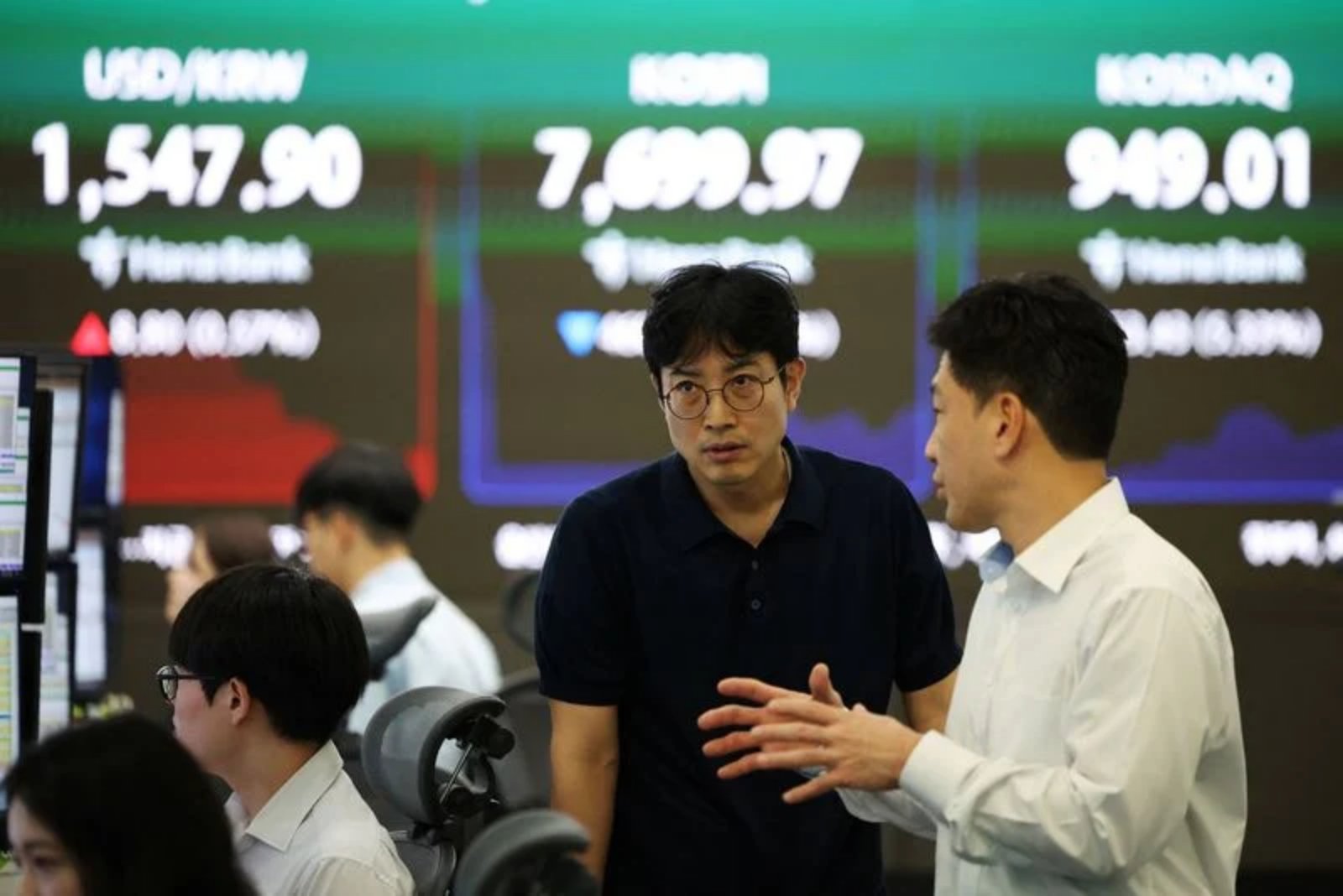
An aggressive pullback in technology stocks swept across Asian markets on Monday, as investors pared back exposure to a previously blistering rally tied to artificial intelligence themes. South Korea's KOSPI plunged by more than 8%, activating circuit breakers and underscoring how concentrated gains can reverse rapidly when sentiment shifts.
The Asian slide followed last week's turbulence on Wall Street, which was amplified after a surprisingly strong U.S. jobs report. That release heightened expectations that the Federal Reserve will raise interest rates again - a development that typically weighs on growth-oriented equities. Using the CME FedWatch tool, markets now price in better than a 70% chance of a Fed rate increase in December, up from a roughly 45% probability a week earlier.
Sentiment was already fragile after Broadcom reported results last week that disappointed investor hopes. Broadcom's stock fell and the weakness bled into other technology names, illustrating the vulnerability of richly valued companies when execution misses elevated forecasts. As one market view put it, when expectations approach perfection, even a modest shortfall can have outsized market consequences.
Most analysts and investors characterized the selloff as a "healthy correction," noting that concentrated holdings and leveraged positions tended to magnify price moves. While that assessment has been offered widely, the duration and depth of the rout remain uncertain.
Currency markets reflected the reassessment of U.S. monetary policy. The dollar climbed to a two-month high on stronger Fed hike odds and signs of resilience in the U.S. economy. The stronger dollar pushed the Japanese yen further into levels that invite intervention, keeping market participants alert to possible yen-buying measures from Tokyo to halt the currency's slide.
On the data front, revised gross domestic product figures released Monday indicated Japan's economy lost momentum in the January-March quarter compared with the prior three months, with sluggish capital expenditure cited as a driver of the slowdown.
The economic calendar for Monday itself was light, but the coming week contains several high-profile events that could sway markets: a large SpaceX listing, U.S. inflation data and a European Central Bank policy meeting. Geopolitical tensions also continued to simmer, with Israel saying it struck military targets in western and central Iran on Monday, even after U.S. President Donald Trump reportedly urged Israeli Prime Minister Benjamin Netanyahu to refrain from further attacks.
Key scheduled items that could influence market sentiment on Monday include:
- Boeing's release of May delivery and order numbers
- A meeting of global airline chief executives in Rio de Janeiro
- France reopening 3-month, 4-month, 6-month and 11-month government debt auctions
- Germany reopening 5-month and 11-month government debt auctions
Market participants are monitoring these developments alongside the broader reassessment of risk across equities, currencies and sovereign debt.
Should you invest $2,000 in AVGO right now?
ProPicks AI evaluates AVGO alongside thousands of other companies every month using more than 100 financial metrics. The tool assesses fundamentals, momentum and valuation without bias, and identifies stocks that it considers to offer attractive risk-reward profiles based on current data. The piece noted past winners highlighted by the AI include Super Micro Computer (+185%) and AppLovin (+157%). Investors seeking to know whether AVGO is featured in any ProPicks AI strategies or whether there are alternative opportunities in the same sector were directed to the service for further details.