
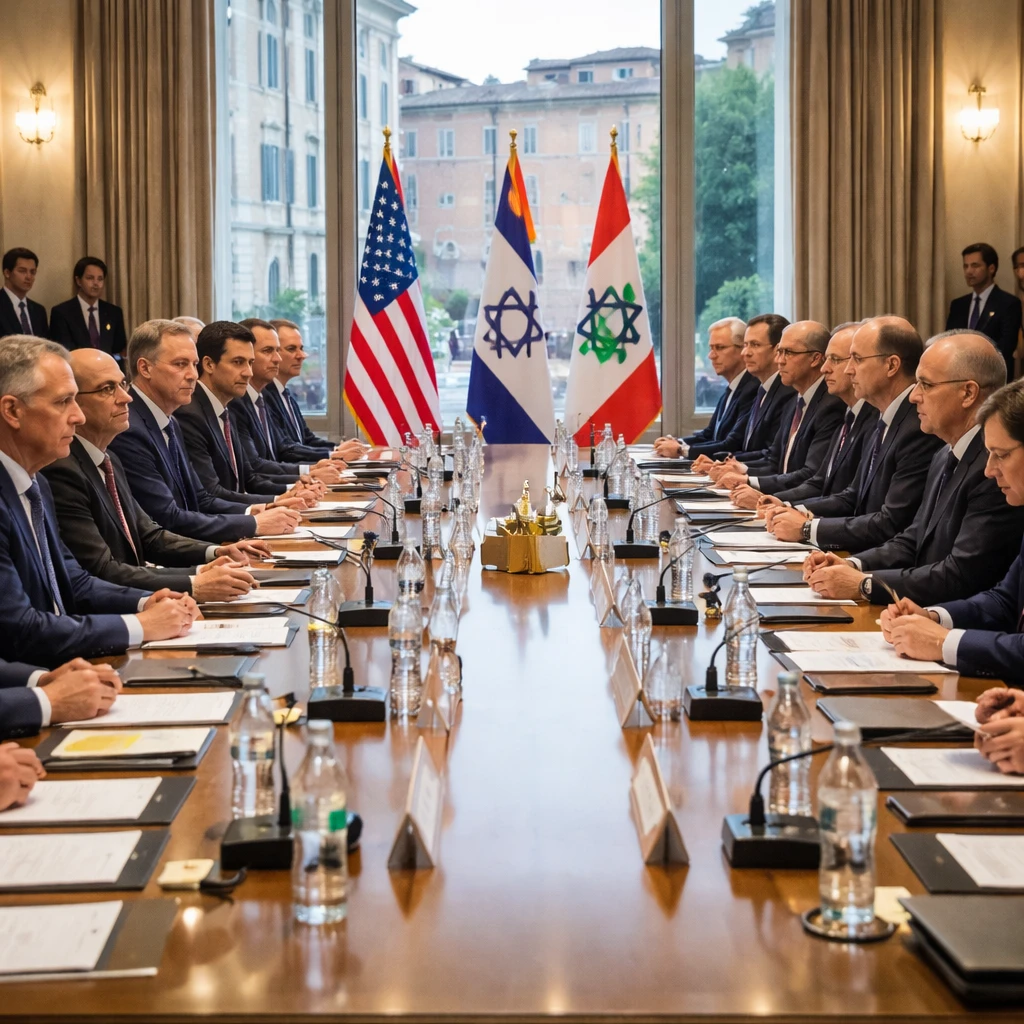
Diplomats from Lebanon and Israel concluded two days of ambassador-level talks at the U.S. embassy in Rome on Wednesday, U.S. officials said, reporting movement toward implementing a previously agreed framework that could allow Israeli forces to pull back from portions of southern Lebanon within days.
The meetings on Tuesday and Wednesday marked the sixth direct negotiation round between the two sides since open hostilities began on March 2 between Israel and Lebanon-based armed group Hezbollah. U.S. mediation followed an understanding reached on June 26 that set out a pilot zone mechanism to de-escalate the border area.
The June 26 framework sets a specific phased approach: disarmament of militant formations, deployment of Lebanese military units into southern sectors and an incremental withdrawal of Israeli forces from Lebanese territory. According to a U.S. official who provided written remarks to journalists, the Rome discussions were "productive and positive" and produced agreement on the "structure and guidelines for the pilot zone process, to be finalized and implemented in the coming days."
The official said the negotiations will now shift to a technical phase focused on putting the framework into practice and moving toward what was described as a comprehensive agreement between Israel and Lebanon. No new dates or operational details beyond those already in the framework were provided in the official comments.
Israeli forces presently maintain what they term a "buffer zone" that extends roughly 10 kilometers into Lebanese territory along the full length of the border. Israeli authorities have framed the zone as necessary to protect communities in northern Israel from attacks by Hezbollah.
Lebanon has demanded an immediate Israeli withdrawal, while Israel has maintained that its troops will remain in the south so long as Hezbollah retains its arms. The direct talks continued even as Israeli strikes have at times been deadly and despite firm opposition from Hezbollah, which refuses to disarm and has said only external pressure from its ally Iran can end the fighting and secure an Israeli pullback.
Summary
Ambassador-level discussions in Rome produced agreement on the structure and guidelines for a pilot zone process set out in a U.S.-brokered June 26 framework. The talks are moving into a technical stage aimed at implementing disarmament steps, Lebanese troop deployments in the south and a phased Israeli withdrawal, though significant objections remain from Hezbollah and no full ceasefire was announced.
Key points
- Diplomatic progress - Two days of ambassador-level talks at the U.S. embassy in Rome were described as productive by a U.S. official, with agreement reached on the pilot zone's structure and guidelines.
- Operational plan - The June 26 framework envisions disarming militant groups, deploying Lebanese troops into southern Lebanon and a gradual withdrawal of Israeli forces from parts of Lebanese territory.
- Sectors affected - The developments bear directly on security and defense dynamics along the Israel-Lebanon border and have implications for regional diplomacy and stability.
Risks and uncertainties
- Hezbollah's stance - Hezbollah has refused to disarm, which the article cites as a central obstacle to implementing the framework; this presents a primary risk to the plan's success and to security arrangements along the border.
- Continued hostilities - The talks have been proceeding despite intermittent deadly Israeli strikes, indicating that ongoing military action could undermine or delay implementation.
- Conditional withdrawal - Israel's declaration that its troops will remain in southern Lebanon while Hezbollah remains armed creates uncertainty about the pace and extent of any pullback.