
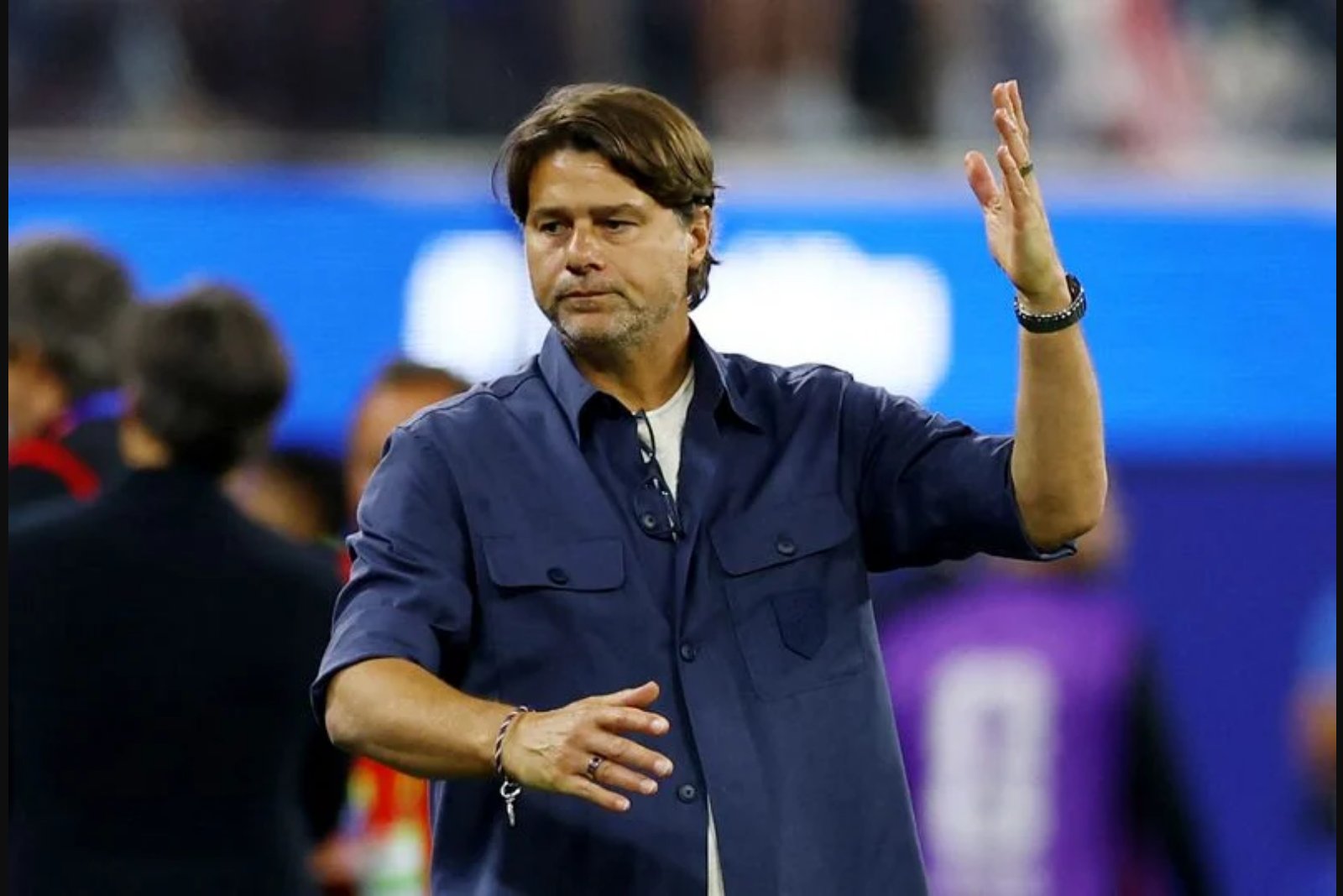
Private funding played a visible role in the recent reshaping of the U.S. men’s national soccer team, according to people familiar with the matter and a Citadel spokesman. Ken Griffin, the billionaire founder of Citadel, provided the single largest financial contribution that enabled Argentine coach Mauricio Pochettino to be hired nearly two years ago, the spokesman said.
Pochettino, who previously served as manager at Tottenham Hotspur, Paris Saint-Germain and Chelsea, was engaged to help rebuild a U.S. squad that had been eliminated from the 2024 Copa America. Under his leadership the team has progressed to the knockout rounds of the 2026 World Cup and is scheduled to meet Bosnia and Herzegovina in the round of 32 on July 1.
The involvement of a high-profile private donor drew attention not only from sports fans but from professionals on Wall Street. The U.S. team’s World Cup run has generated a surge of enthusiasm among portfolio managers, bankers and lawyers, several of whom said they have traveled across the country to attend matches and told colleagues not to contact them during crucial three-hour game periods.
Citadel’s approach to talent is well known on Wall Street. Recruiters said Griffin built his firm in part by offering top compensation to traders and portfolio managers. That tendency toward paying premium rates extended to the Pochettino hire: the Citadel spokesman confirmed that when fellow hedge fund manager Scott Goodwin asked for assistance covering Pochettino’s two-year contract, Griffin agreed to contribute. Reuters could not learn the amount Griffin provided.
Biographical details provided by the spokesman highlight Griffin’s longstanding connection to the sport. The 57-year-old began playing soccer at age 6, competed on a high school team that finished second in the state and continued to play and coach as an adult.
Financial and philanthropic footprint
Citadel, based in Miami, manages roughly $68 billion in assets. The company has been notable for its profitability: it was named the most profitable hedge fund of all time for the fourth consecutive year in 2025 by LCH Investments, which compiles an annual industry ranking. One investor in Citadel’s flagship Wellington multi-strategy fund said that fund was up 5% through June 22 of this year.
Griffin’s philanthropic record extends across multiple areas. He has given more than $2.5 billion to various causes, including a gift exceeding half a billion dollars to Harvard, where he began trading while a student. His past donations specific to soccer include a $3 million gift in 2017 to the U.S. Soccer Foundation to create 50 mini-pitches across Chicago - the city that was then Citadel’s headquarters - and a $5 million contribution six years later to support the development of 50 mini-pitches in Miami-Dade County, Florida. The latter aligns with Griffin’s home state and the current location of Citadel’s headquarters. Griffin also founded Citadel Securities, a market-making firm now headquartered in Miami.
For the 2026 World Cup, Griffin and real estate developer Stephen Ross jointly donated more than 1,200 tickets to Miami residents so they could attend matches in Miami, one of the tournament’s official host cities. Griffin commented on the experience, saying, "It’s been a special experience to have the World Cup in America," and added that "my children and I enjoyed the match in Miami on Father’s Day" when Uruguay and Cape Verde played to a 2-2 draw.
Context and remaining questions
The extent of private funding in elite sport, as illustrated by these contributions, raises questions about transparency and influence that are not resolved in the available reporting. While the Citadel spokesman confirmed Griffin’s role in financing the coach’s contract and cited Griffin’s personal history with soccer, the precise dollar amount Griffin contributed toward Pochettino’s two-year deal remains undisclosed.
The U.S. team’s advancement to the knockout stage has created a visible intersection between finance, philanthropy and sport, bringing private donors and corporate actors into the public conversation around national teams and tournament hosting. At the same time, the performance of Citadel’s funds and Griffin’s broader philanthropy remain matters distinct from on-field results.