
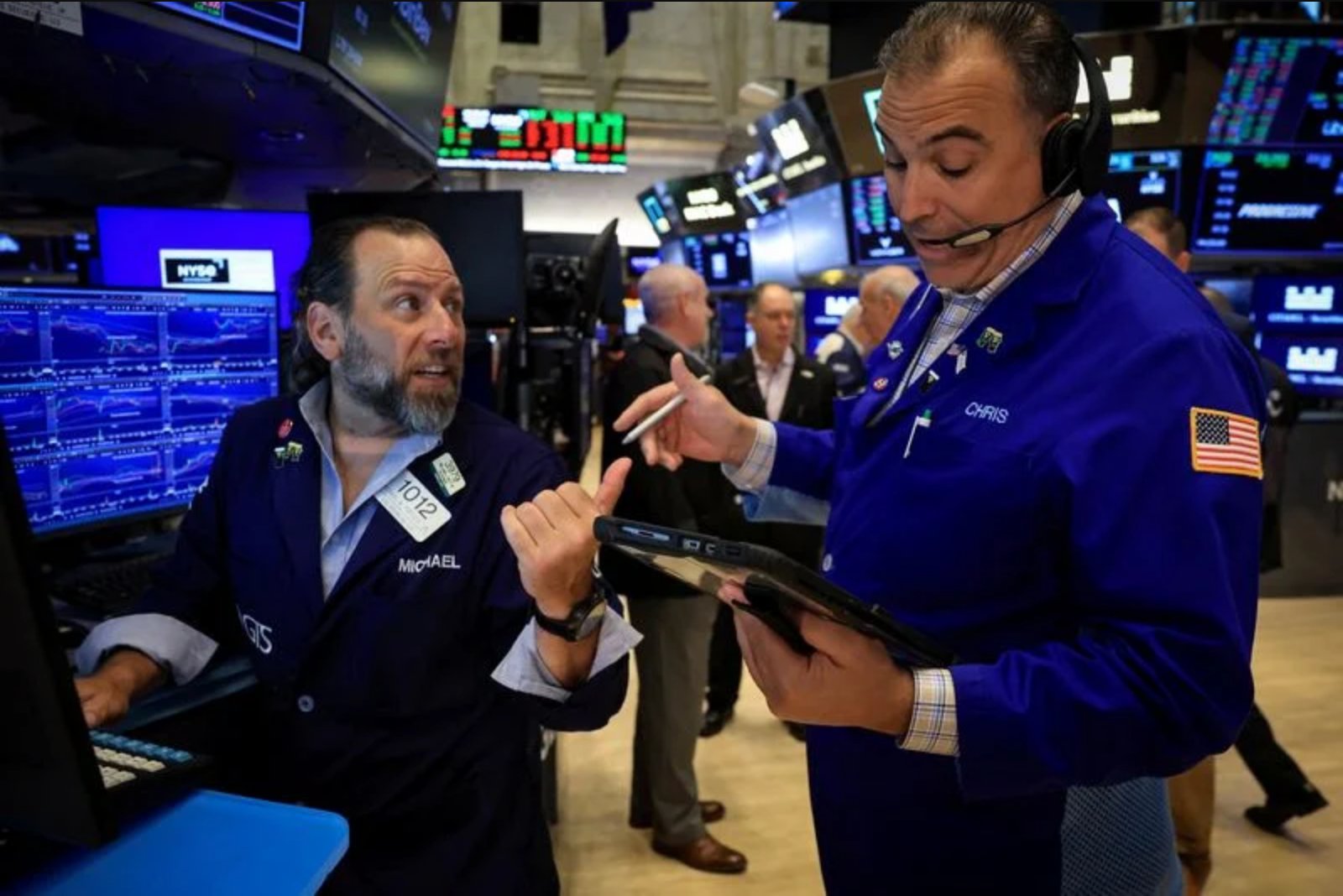
Global financial markets presented a mixed picture on Thursday as asset classes experienced varied degrees of correction and consolidation. The rally that had propelled the U.S. dollar higher and the subsequent slump in oil prices both paused, allowing for a day of modest reversals across currencies and commodities. In the equity markets, a sharp divergence emerged: Asian and European exchanges recorded gains, whereas Wall Street faced pressure due to weakness among the largest technology capitalizations.
The turbulent price action observed across Wall Street and other key global markets during the first half of the year has been pronounced. However, this volatility should not be misinterpreted as a sign of fundamental economic decline. The artificial intelligence-fueled equity boom retains significant momentum, suggesting that structural growth drivers remain intact despite short-term price fluctuations.
Market Performance and Sector Divergence
Equity markets around the globe showed uneven strength. South Korean indices rose by 5%, while Japanese markets gained 4.5%. European and United Kingdom exchanges also advanced by approximately 1%. In contrast, U.S. benchmarks remained largely static or declined slightly; the S&P 500 ended flat, the Nasdaq Composite fell 0.5%, and the Dow Jones Industrial Average edged up 0.1%.
Within the S&P 500, sector performance was split, with six sectors rising and five falling. The industrial sector led gains with a 2% increase, while communication services declined by 1%. The semiconductor sector, tracked by the "SOX" index, surged 3.5%. Specific equity movements highlighted the bifurcation in the market. Micron Technology saw its shares jump 15.95%, contributing to a 10.17% gain in the Roundhill memory stocks ETF. Conversely, megacap tech giants faced significant headwinds. Apple shares fell 6.12%, and Dell dropped 5.67%. Microsoft declined 3.46%, marking a particularly difficult month with a 21% drop in June, the worst performance in its history.
Foreign Exchange and Fixed Income Dynamics
Currency markets witnessed a shift in momentum as the U.S. dollar registered its first decline in seven days. The Mexican peso emerged as the leading gainer among emerging market currencies, supported by the Bank of Mexico's decision to hold interest rates steady. Meanwhile, the U.S. dollar index (US500) remained at 5000.00, the Dow Jones Industrial Average (DJI) at +0.14%, and the Nasdaq Composite (IXIC) showed a decrease of 0.46%.
In the fixed income space, U.S. bond yields eased slightly following a 7-year Treasury auction. The auction results were deemed acceptable, characterized by weak indirect bids but strong direct bids. The 7-year yield (US7YT=X) decreased by 0.3%. Meanwhile, high-yield investment grades (HYIN) experienced a minor decline of 0.78%.
Commodity Price Movements
Commodity markets saw oil prices rise by 2%, while precious metals increased by 1%. The West Texas Intermediate crude oil contract (WTI/USD) gained 2.24%, and Brent crude (XBR/USD) rose by 2.03%. Copper (LCO) edged up 0.89%, and aluminum (APO) fell 0.89%. Aluminum stock futures (ARES) declined by 1.23%.
Macroeconomic Indicators and Inflation
A critical focal point for market participants is the trajectory of inflation. Headline annual Personal Consumption Expenditures (PCE) inflation officially surpassed 4% for the first time in three years, according to data released on Thursday. The Consumer Price Index (CPI) also remains above the 4% threshold. These two primary benchmark measures of U.S. inflation are more than double the Federal Reserve's 2% target.
While elevated headline figures might suggest a necessity for interest rate hikes, the month-on-month PCE data proved softer than expected. Additionally, oil prices have retreated by 40% from their recent peak, returning to levels observed prior to the onset of the Iran conflict. Consequently, traders have adjusted their expectations, removing 15 basis points from the implied Federal Reserve tightening expected by year-end. Further adjustments to these expectations may follow as new data emerges.
Private Credit Market Liquidity Pressures
Underneath the surface of private debt markets, conditions remain extremely choppy. Regulatory filings published on Thursday revealed significant redemption requests in major private credit funds. Investors in Ares Management's $23 billion flagship private credit fund sought to withdraw 14.4% of their shares in the second quarter, an increase from the 11.6% withdrawal rate observed in the first quarter. Redemptions in this fund were capped at 5%. Similarly, Apollo Global Management implemented a 5% cap on redemptions from its ADS $26 billion private credit fund after investors attempted to withdraw 17% of their shares.
Although these liquidity pressures have not yet spilled over significantly into public markets, sentiment within the private credit sector remains bleak. WisdomTree's private credit and alternative income ETF is currently retesting all-time lows. The DRAM sector ETF has gained 10.17%, reflecting specific sector strength amidst broader liquidity concerns.
Hedge Fund Exposure to U.S. Treasuries
The hedge fund "basis trade" has recently receded from headlines, but a new Federal Reserve paper dissecting hedge fund exposure to U.S. Treasuries has brought the topic back into focus. The paper highlights substantial figures: hedge funds hold $4 trillion in exposure to Treasuries, representing 8.5% of the total market. Repo cash borrowing used to finance these positions amounts to $3 trillion. Between 2023 and 2025, bond holdings and repo borrowing doubled. While questions regarding systemic risk persist, the current assessment indicates that no immediate systemic risk materializes from these positions.
Upcoming Economic Data and Events
Market participants will focus on several key data releases and speeches in the coming days. Japan will release its Tokyo CPI inflation data for June. The United States will publish the final University of Michigan consumer sentiment survey and inflation expectations for June. Additionally, Minneapolis Fed President Neel Kashkari is scheduled to speak, providing further insight into regional economic conditions.