
Economy July 14, 2026 11:18 AM

Manna Launches U.S. Operations, Targets Tulsa as Testbed for Drone Delivery Scale-Up

Irish drone startup plans rapid rollout of dozens of micro-bases in Tulsa, citing low capex per site and existing delivery partnerships

By Hana Yamamoto
Share
Twitter Reddit Facebook LinkedIn

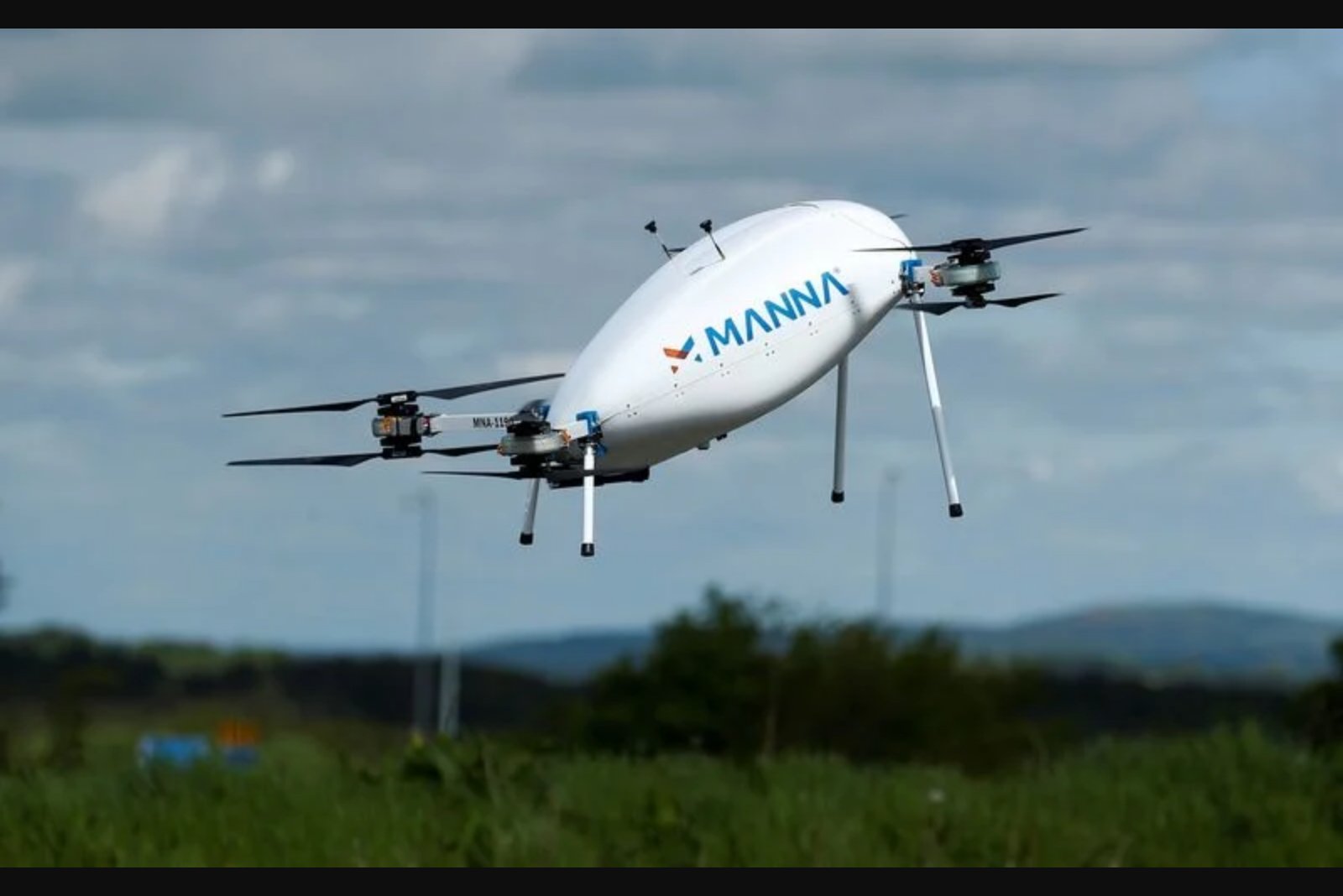
Manna, the Ireland-headquartered autonomous delivery operator, has begun full-scale U.S. operations in Tulsa, Oklahoma, and says 90% of local residents will be able to order drone deliveries within a year. The company plans to begin flying orders within two months, open 40 local bases by mid-2027 and leverage partnerships with DoorDash and Uber Eats as it competes with established U.S. and global drone players.

Manna Launches U.S. Operations, Targets Tulsa as Testbed for Drone Delivery Scale-Up
Summarize with
ChatGPT Perplexity Claude Grok Gemini

Key Points

  • Commercial rollout: Manna plans to start flying orders in Tulsa within two months and operate from 40 bases by mid-2027, aiming to reach 90% of local residents within a year - impacts logistics and last-mile delivery sectors.
  • Capital efficiency: Each local launch site is no larger than four parking spaces, enabling relatively low capex per base and supporting rapid geographic scaling - relevant for infrastructure investment and drone technology deployment.
  • Partnerships and competition: Existing agreements with DoorDash and Uber Eats will be central to U.S. operations as Manna competes with Zipline, Wing and Amazon's Prime Air - implications for food delivery, retail distribution and drone services markets.

Manna, the Irish-founded autonomous delivery firm, announced a major expansion into the United States on Wednesday, identifying Tulsa, Oklahoma as the focal point for its initial large-scale operations. The company said it expects 90% of Tulsans to be able to place orders for delivery by drone within the next year.

Executive chairman Kenny Jacobs, who joined the company this week and previously led Dublin Airport as well as Ryanair's marketing, described the American southwest - notably Oklahoma, Texas and neighboring states - as the likely "battleground" for proving the commercial viability of drone delivery at scale. Jacobs spoke from the launch of Manna's first full-scale U.S. operation.

Under the plan laid out by Jacobs, Manna will begin flying customer orders within the next two months and aims to operate from 40 launch bases across Tulsa by mid-2027. He emphasized that the company sees the technology itself as proven, and said the immediate priority is commercial scalability - specifically how rapidly it can stand up bases and move a variety of goods through the network.

Manna already has partnership agreements with two major delivery platforms, DoorDash and Uber Eats, and the company intends to use those relationships as part of its U.S. push. In describing the competitive landscape, Manna positions itself against other drone delivery operators active or seeking to grow in the U.S. market, including Zipline, Alphabet's Wing and Amazon's Prime Air.

The firm has a track record of operations in Ireland, where it has completed more than 300,000 deliveries. However, Manna recently paused services in its home market, citing the lack of clear national planning regulations as the reason for the suspension. Jacobs indicated that he does not expect comparable regulatory roadblocks in the United States.

On questions of capital intensity and rollout speed, Jacobs highlighted that each local launch site is compact - no larger than four car parking spaces - which allows the company to scale with relatively low capital expenditure per base. Manna raised $50 million in Series B funding earlier this year to support its expansion plans.

Looking beyond the immediate U.S. deployment, the company has signalled ambitions to expand into Britain by early 2028 and to press into the Middle East, with the United Arab Emirates flagged as a possible next step that could come ahead of the U.K. move.


Context and next steps

  • Manna will begin flying in Tulsa within two months and targets 40 bases there by mid-2027.
  • The company says 90% of Tulsa residents should be within reach of drone delivery within a year.
  • Manna has announced partnerships with DoorDash and Uber Eats and aims to compete with other drone delivery services operating in the U.S.

Risks

  • Regulatory uncertainty - Manna paused services in Ireland due to the absence of clear national planning regulations, demonstrating that planning and regulatory frameworks can disrupt operations; this affects regulatory risk for drone delivery and urban planning sectors.
  • Execution of commercial scalability - while the technology is described as proven, the company must still demonstrate rapid, low-cost expansion of bases and reliable service, posing operational and execution risk for logistics and last-mile providers.
  • Competitive pressure - Manna faces established and well-funded competitors in the U.S. market, which could affect market share and commercial terms; this is a competitive risk for technology, aviation and delivery-platform sectors.

More from Economy

UK banks shut out of Anthropic's Mythos underscores call for domestic AI build-out Jul 14, 2026 Warsh Pledges Advance Notice and Public Debate for Any Fed Balance Sheet Changes Jul 14, 2026 Warsh Promises Advance Notice to Congress and Markets on Any Fed Balance Sheet Shifts Jul 14, 2026 Wall Street banks post strong Q2 profits as dealmaking and trading surge Jul 14, 2026 Traders Shift Odds Toward No July Fed Rate Hike After Cooler June Inflation Jul 14, 2026