
Wall Street's biggest lenders delivered a strong performance in the second quarter, propelled by hefty advisory fees from mergers and acquisitions and a notable jump in trading revenue. Banks also cited a wave of large equity issuances and multibillion-dollar transactions as central to the quarter's gains, even as senior executives warned of underlying economic and market vulnerabilities.
A particularly large initial public offering provided a material boost to fees. Banks including Goldman Sachs and Morgan Stanley were heavily involved in an IPO that was almost $86 billion in size, with the underwriting banks collecting roughly $500 million in aggregate fees from that transaction.
Investment banking emerged as a standout source of revenue growth. The quarter featured big-ticket IPOs and other major deals that drove investment banking fees to their strongest levels since 2021. Global investment banking revenue reached $61.4 billion in the first half of 2026, a 24% increase from the prior year, based on Dealogic figures.
Trading desks also enjoyed an elevated backdrop. Higher-than-usual market volatility - attributed by bank executives to geopolitical conflict and uncertainty linked to AI disruption - helped boost client activity and trading gains across asset classes.
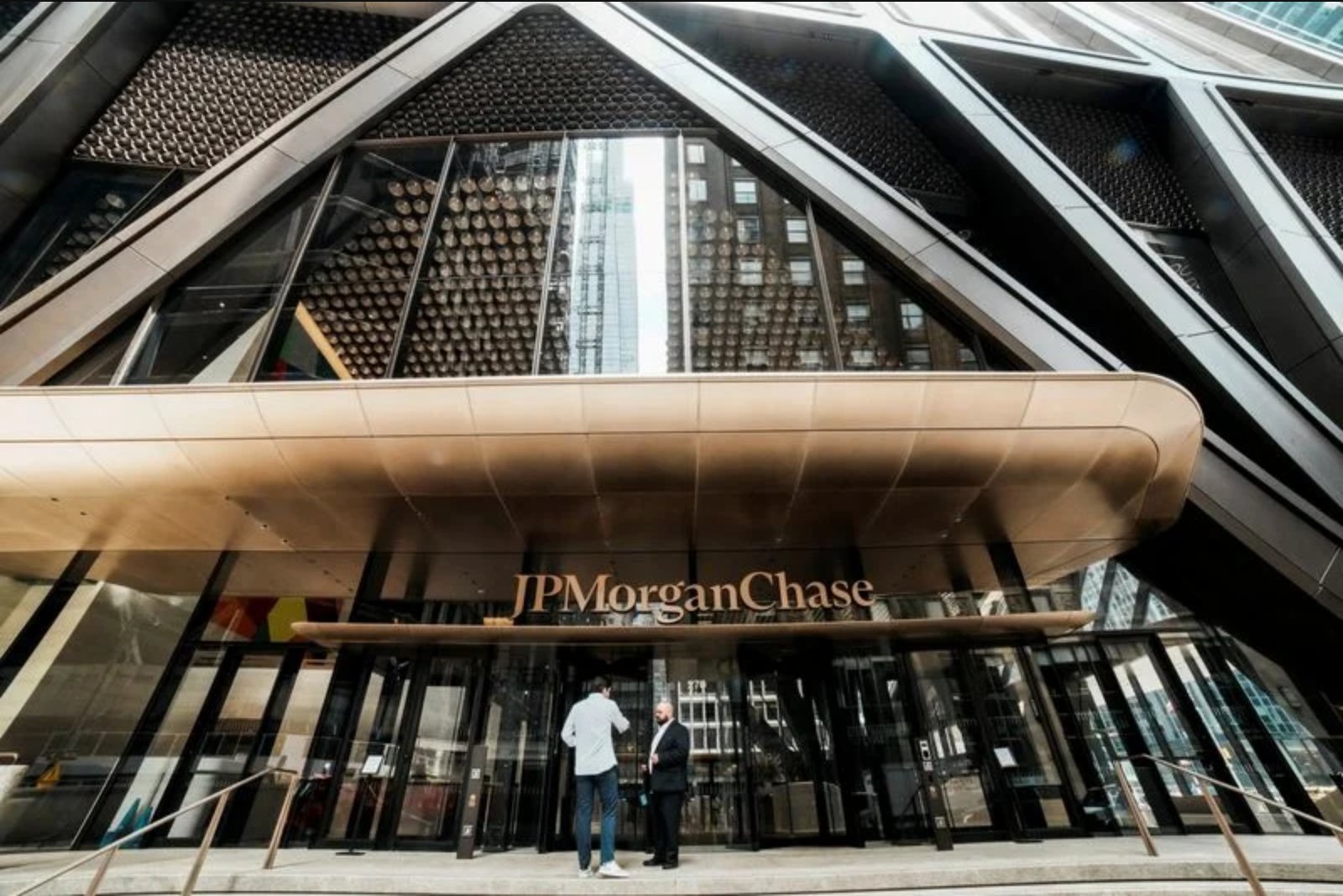
Bank of America described the environment in positive terms. "We’ve had really terrific global markets performance and investment banking performances," said Chief Financial Officer Alastair Borthwick on the bank’s media call, adding that "Business continues to feel good." The bank beat estimates for second-quarter profit, benefiting from record trading activity and a surge in dealmaking. JPMorgan Chase reported a similar pattern in its results.
JPMorgan’s finance chief framed equities as particularly active. "What’s going on in equities is a booming environment with a ton of activity, big IPOs, the AI theme, a very active environment," said JPMorgan CFO Jeremy Barnum on the bank’s media call.
Several of the quarter’s headline transactions were singled out among top deals: the chip designer Cerebras completed a $6.4 billion IPO, and Google-parent Alphabet executed an $85 billion share sale. Dealogic data showed that JPMorgan remained the global leader in investment banking revenue overall, while Goldman Sachs led on mergers-and-acquisitions advising.
Market participants and money managers noted the unexpectedly strong results. "We thought the 2Q earnings were going to be very good, but they turned out to be extraordinary," said Macrae Sykes, portfolio manager at GABF ETF, Gabelli Funds. He added that the environment for major banks looks constructive due to heightened business activity, market engagement and demand for capital, with average loans up around 10%.
Stock reactions were mixed across the large banks. At the close of the session, JPMorgan rose 0.7%, Citigroup climbed 1%, Bank of America gained 1% and Goldman Sachs jumped 4%, while Wells Fargo fell 1.7%.
Despite the upbeat results, executives sounded notes of caution. JPMorgan’s Barnum asked rhetorically, "How fragile/dangerous/overheated/exuberant is the current moment?" and pointed to nominal leverage measures and valuations being "quite high." He continued: "It would be naive not to be worried - but it’s easy to be worried and the market keeps going up."
Citi’s finance chief, Gonzalo Luchetti, warned that conflict in the Middle East could temper deal activity over time, although he emphasized that the pipeline of transactions remains strong. JPMorgan CEO Jamie Dimon highlighted a set of shifting risks in the bank’s press release, saying "several risks are shifting below the surface like tectonic plates, including geopolitical tensions and wars, sticky inflation, large global fiscal deficits and elevated asset prices," and adding that "they could also cause meaningful disruptions when they shift or collide."
Individual bank results reflected the broader themes. Goldman Sachs exceeded second-quarter profit expectations. Wells Fargo also beat Wall Street estimates for the quarter. Citigroup reported a 45% jump in second-quarter profit and said it recorded its highest quarterly revenue in a decade. Morgan Stanley was scheduled to report second-quarter results on the following Wednesday.
Analysts tracking sector drivers pointed to an interplay between technology-driven capital spending and market volatility as a contributor to the deal and trading activity. "The AI-driven capex super cycle has benefited equity issuance, M&A activity and debt financing, while trading has been helped by Iran-related volatility across asset classes," said Stephen Biggar, director of financial services research at Argus Research.
Overall, the second quarter delivered a boost to large U.S. banks through concentrated dealmaking and brisk trading, but leadership at those institutions stressed that an array of macro and geopolitical risks could still unsettle future performance.