
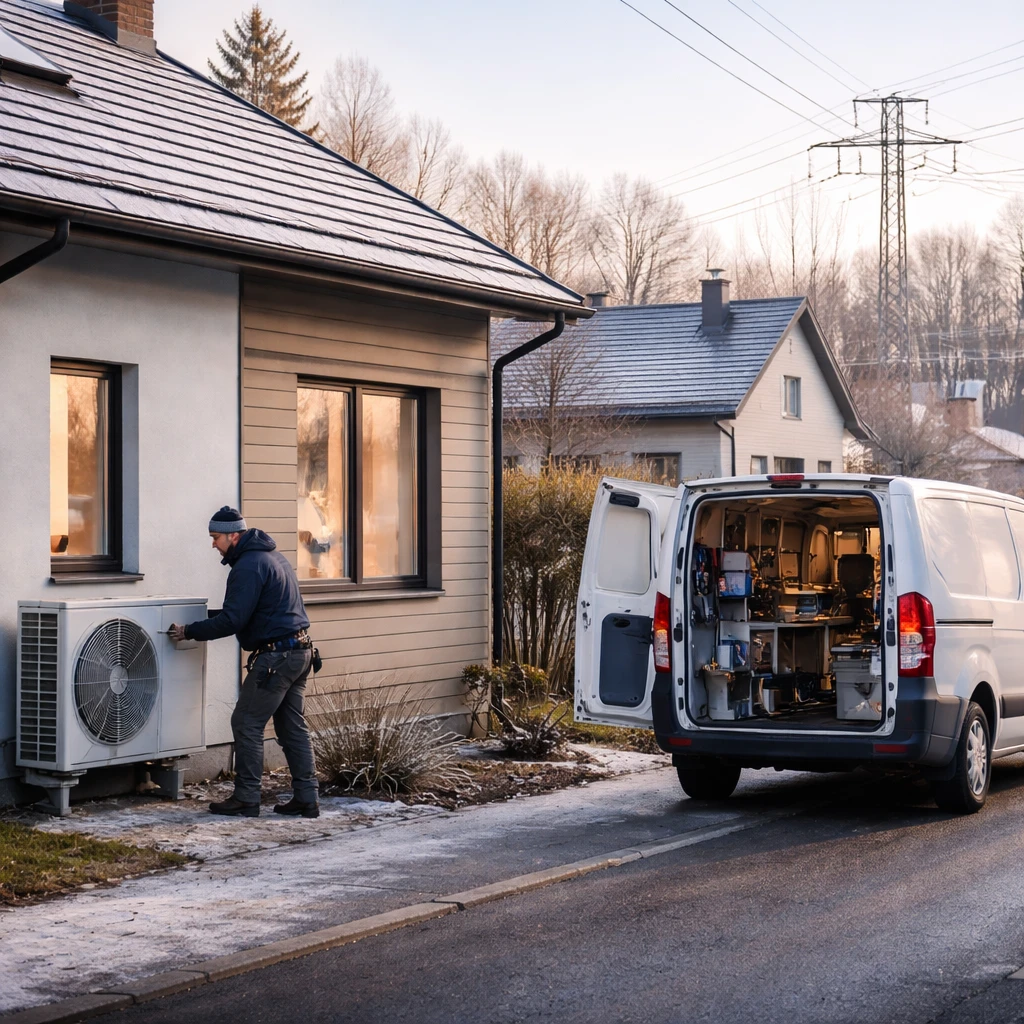
Heat pumps are emerging as a potentially under-recognized contributor to future electricity consumption in Europe as governments advance electrification and energy security measures, according to a recent note from Bernstein.
While the technology is commonly framed as a decarbonization solution, its effect on electricity demand may be larger than often assumed. The European Union has set an objective of 30 million heat pump installations by 2030, and the United Kingdom is using subsidies and policy support to speed household adoption.
Market data point to accelerating momentum. During the first quarter of 2026, heat pump sales in Finland climbed 47% year-over-year. Germany and France also registered substantial increases, with sales up 34% and 22% respectively.
Higher energy prices are prompting some households to shift away from fossil-fuel-based heating, adding to the attractiveness of electric heat pumps. For power markets, the consequence extends beyond emissions reductions to tangible increases in electricity consumption.
Bernstein’s estimates for the UK illustrate the potential scale. By 2035, heat pumps could add between 8 and 22 terawatt-hours of annual electricity demand, which is roughly equivalent to 5% to 14% of current UK demand levels. On the peak-load side, heat pumps may raise peak electricity requirements by between 8 and 21 gigawatts over the next decade, a change that could equal as much as 47% of present peak demand.
Such shifts would require significant investment in power networks. Distribution grid operators are likely to be among the primary beneficiaries as utilities strengthen and expand local networks to accommodate higher and more variable loads. Electricity generators could also see increased demand for output as a result of broader electrification trends across Europe.
Nonetheless, important barriers remain. Installation costs remain relatively elevated in several markets, and adoption continues to hinge on the scale and duration of government incentives, prevailing energy prices, and housing characteristics that affect how easily heat pumps can be installed and used.
Even with those constraints, the continued rollout of heat pumps across European markets could represent a meaningful source of incremental electricity demand. That dynamic would create opportunities across sectors tied to power supply and delivery, including distribution utilities, power generation assets, and grid infrastructure companies.
Data and projections cited in this article follow the figures and estimates reported in the referenced industry note.