
Economy July 22, 2026 03:01 PM

FCC Moves to Block U.S. Sales of Devices Containing Key Components from Chinese Firms

Regulator aims to close a loophole that allowed devices with certain Huawei parts to enter U.S. markets despite broader bans

By Jordan Park
Share
Twitter Reddit Facebook LinkedIn

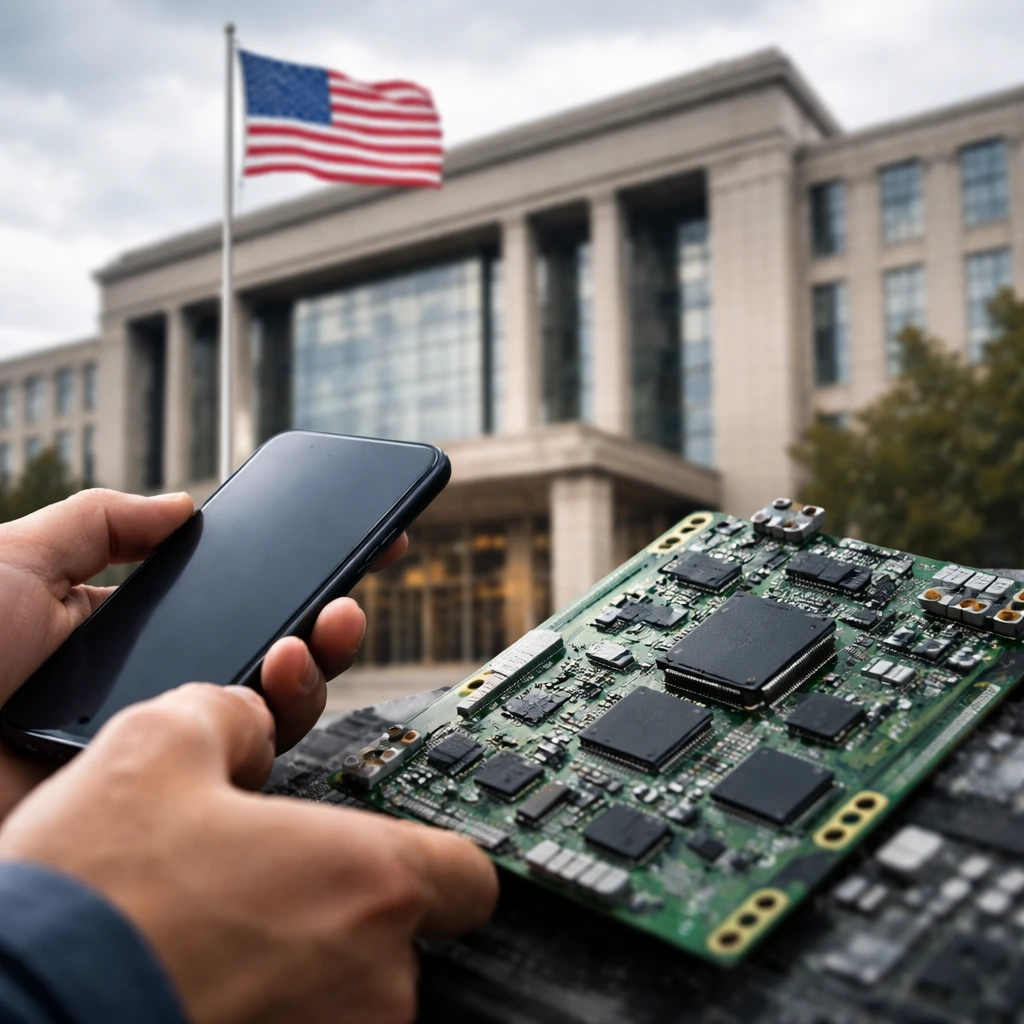
The Federal Communications Commission voted to prohibit sales in the United States of devices that include critical hardware from Chinese firms it has designated as national security risks. The measure targets component parts - including logic-bearing semiconductors - from companies such as Huawei, closing a gap that previously allowed some devices with these components to be authorized for sale.

FCC Moves to Block U.S. Sales of Devices Containing Key Components from Chinese Firms
Summarize with
ChatGPT Perplexity Claude Grok Gemini

Key Points

  • The FCC voted to ban U.S. sales of devices that include critical hardware parts from Chinese firms the agency designates as national security risks; this includes logic-bearing components made by Huawei.
  • Since 2022, devices made by listed companies were barred from new authorizations, but those containing listed-company component parts could still gain approval - the new rule closes that gap.
  • The measures affect multiple sectors, including device manufacturers, telecommunications carriers, and semiconductor suppliers, and are part of a broader set of recent FCC import bans and proposals targeting drones, routers, and interconnection with Chinese telecoms.

The Federal Communications Commission on Wednesday approved a rule that will bar devices sold in the United States if they contain essential hardware parts produced by Chinese companies the agency has identified as national security threats. The move follows an existing FCC list of firms, among them Huawei and ZTE, whose equipment has been blocked from sales in the U.S. on national security grounds.

FCC Chair Brendan Carr said the new policy will "fully close the component part loophole." Under the prior regime, devices manufactured by entities on the list had been prevented from receiving new authorizations since 2022. However, devices that incorporated component parts made by those listed companies could still be approved to enter the U.S. market. The updated rule explicitly forbids devices that include any Huawei-made logic-bearing hardware component.

Huawei did not immediately respond to a request for comment.

The FCC's action reflects concerns that compromised parts can undermine entire devices. Chris McGuire, a former White House National Security Council official under former President Joe Biden, told reporters that "compromised components, particularly semiconductors or communications devices, can be used to corrupt entire devices."

Regulatory changes affecting Chinese technology have been expanding. The article notes that the Trump administration undertook a broad crackdown on Chinese tech equipment. Recently, the FCC moved to ban the import of additional equipment from a set of Chinese manufacturers effective July 16 and proposed a restriction on the import of most military-grade drones.

In recent months the FCC has also banned imports of new foreign drone and router models and floated a proposal that would bar U.S. telecommunications carriers from interconnecting with Chinese telecom firms the agency deems national security risks. Separately, the commission is weighing whether to prohibit Chinese telecom companies that operate data centers or Points of Presence within the United States from interconnecting with other companies. If enacted, that step would effectively force those Chinese firms to cease operating such U.S. centers.

The package of measures marks a tightening of U.S. policy toward Chinese telecommunications hardware and component parts, with implications for device manufacturers, carriers, and suppliers of semiconductors and communications components that serve the U.S. market.

Risks

  • Compromised components such as semiconductors or communications devices could be used to corrupt whole devices, posing security risks to users and networks - a concern cited by a former White House NSC official. This risk is relevant to the cybersecurity and network equipment sectors.
  • If the FCC bars interconnection with Chinese telecom firms that operate U.S. data centers or Points of Presence, those companies could be required to stop operating U.S. centers, creating uncertainty for telecom infrastructure and service continuity in affected networks.
  • The tightening of import restrictions and proposed bans on military-grade drones and new drone and router models introduces regulatory uncertainty for suppliers and importers in the drone, router, and broader communications equipment markets.

More from Economy

Canada pledges firm response as U.S. tariff threat looms Jul 23, 2026 U.S. Boosts Short-Term Bill Sales as Borrowing Needs Surge, Raising Refinance Risks Jul 23, 2026 World Bank: Venezuela’s June quakes inflicted $19.6 billion in direct damage; reconstruction costs could near $50 billion Jul 23, 2026 China Sets Binding Goal to Lift Wind and Solar Output 53% by 2030 Jul 23, 2026 Bipartisan Bill Would Give DHS Power to Disable Dangerous AI Models Jul 23, 2026