
A recent European Central Bank exchange with 76 large companies operating in the euro area outside the financial sector indicates firms are struggling to push higher fuel-related costs onto consumers at a time when households are already squeezed by rising energy bills.
The ECB conducted the quarterly dialogues mainly between June 22 and July 1, shortly after a U.S.-Iran Memorandum of Understanding (MoU) on ending the conflict was signed and prior to the breakdown of that accord in early July amid renewed hostilities. The conversations reinforced the bank's read that second-round effects - where higher fuel costs feed into broadly higher consumer prices, rising wages and lifted long-term inflation expectations - remain mostly absent.
The central bank had kept interest rates unchanged the day before publishing the survey results and said it saw little or no sign of a broad pass-through from the recent increase in fuel costs. Nonetheless, policymakers did not rule out another policy rate increase in September.
Survey respondents reported that firms raised prices by less than expected in the three months to June and anticipated a slight moderation in pricing in the current quarter. Roughly 40% of the companies contacted reported price increases within their sectors, driven particularly by intermediate goods and transport categories that are directly exposed to oil and derivative costs.
The ECB flagged that some input costs have risen sharply - petrochemicals were cited as having increased by 20-30% - but this has not translated evenly along supply chains. Businesses that are closer to end consumers reported "little adjustment" so far, attributing the restraint to households being "very price sensitive." The survey added that prices for certain consumer electronics were falling as a result of cheaper imports from Asia.
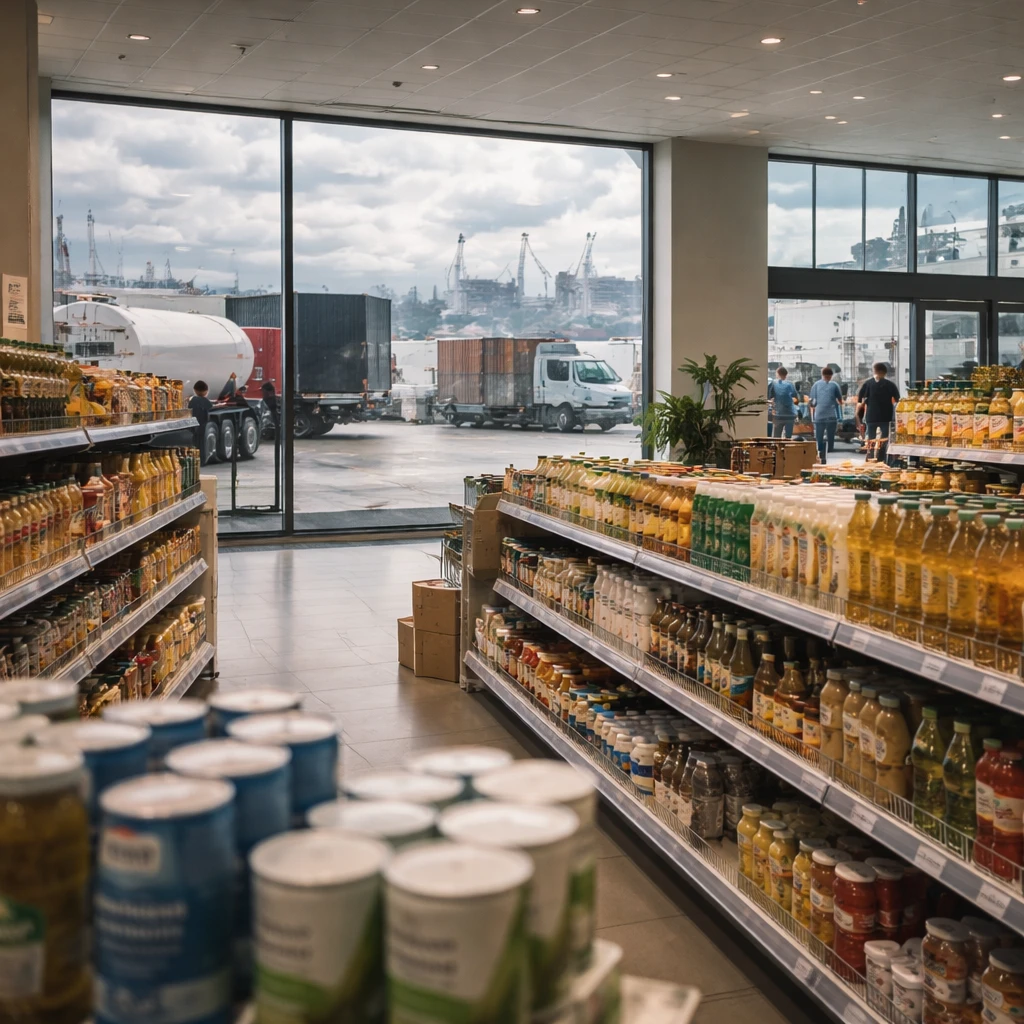
As a consequence of limited retail price pass-through, about 40% of firms said margins were being squeezed because higher input costs were not offset by comparable increases at the point of sale. Food retailers, in particular, told the ECB that higher fuel prices in the second quarter left consumers with less disposable income to spend on other items and reinforced a shift from branded goods toward private-label products.
Competitive pressure from Chinese manufacturers was flagged as another challenge. The ECB noted that Chinese firms have been increasingly offering innovative products at low prices, intensifying competition across markets and weighing on firms that face direct consumer exposures.
On investment, companies reported that a boom in artificial intelligence was supporting business investment and spending. At the same time, competitiveness concerns were tempering traditional capital expenditure, with the ECB observing that European manufacturing firms were increasingly directing investments toward Asia or eastern Europe rather than within the euro area.
Key points
- About 40% of surveyed firms reported sectoral price rises, notably in intermediate goods and transport, while consumer-facing prices have shown little adjustment.
- Input costs such as petrochemicals rose by 20-30%, contributing to margin pressure when retailers cannot pass costs to consumers.
- Chinese competition and AI-driven investment trends are reshaping capital allocation, with some manufacturers shifting investment to Asia or eastern Europe.
Risks and uncertainties
- Margins for roughly 40% of firms are being squeezed as higher input costs are not matched by retail price increases - affecting retailers and consumer goods sectors.
- Intense competition from low-priced, innovative Chinese imports is creating downside pressure on pricing and market share for euro-area manufacturers and consumer-facing businesses.
- Geopolitical developments - including the recent breakdown of the U.S.-Iran MoU and renewed hostilities - represent an ongoing source of uncertainty for fuel prices and market conditions referenced in the survey.