
The Bank of Russia surprised markets by trimming its key policy rate to 14% from 14.25% on Friday, moving even as consumer price pressures have risen amid supply disruptions tied to Ukrainian drone strikes on major oil refineries and e-commerce facilities.
In its statement, the central bank acknowledged that the recent uptick in fuel prices had materially influenced inflation dynamics and that higher inflation expectations in the summer months were mainly linked to transitory, one-off factors. The regulator also revised several of its macro forecasts, including a weaker outlook for growth and a higher inflation profile for 2026.
Forecast revisions and rate outlook
The central bank reduced its projection for GDP growth this year to a range of zero to 1%, down from a prior estimate of 0.5% to 1.5%. At the same time, it raised its forecast for inflation in 2026 to between 6% and 7%, up from 4.5% to 5.5% previously. Officials additionally nudged up the expected average level of the key rate for the current year.
Referring to the second quarter of 2026, the Bank of Russia said the economy as a whole was expanding at a moderate pace but that considerable price growth and elevated inflation expectations during the summer were largely tied to one-off factors.
Inflation, fuel prices and consumer impact
Official data showed the consumer price index rose 0.9% in June after a 0.2% increase in May, while annual inflation reached 6.0%, up from 5.3% a month earlier. Petrol prices have climbed by 16% since the start of the year, the central bank said, reflecting disruptions to gasoline supply caused by attacks on refineries.
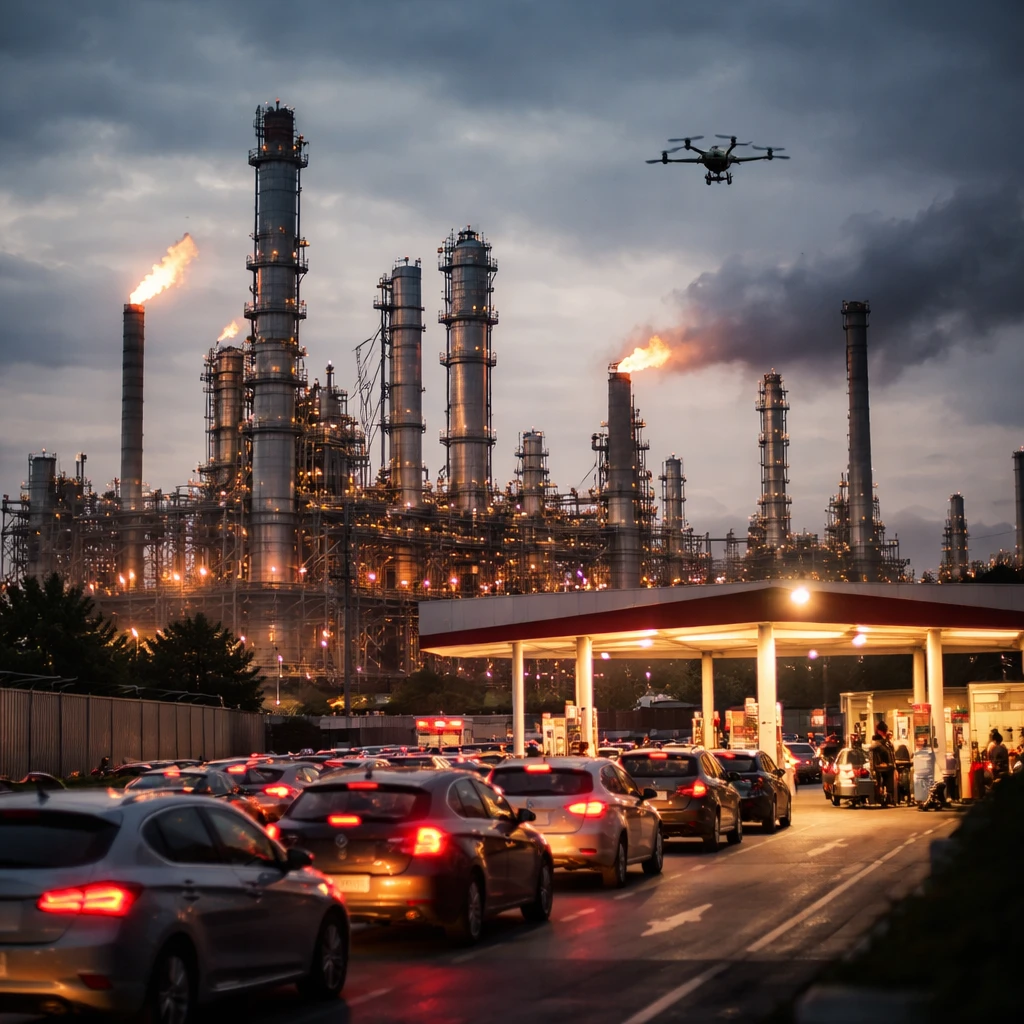
Ukrainian strikes on oil-processing facilities have led to shortages at filling stations and longer queues for fuel. Attacks on a leading online retailer, Wildberries, were cited by the central bank as having hit the consumer sector, compounding the upward pressure on prices.
Household expectations and political context
Household inflation expectations, an indicator closely monitored by the central bank, rose in July to their highest level since the market turmoil of March 2022. The bank warned that if these expectations remain elevated, they could hinder a sustained deceleration of inflation.
The revised zero-to-1% growth outlook differs from the government’s expectation of moderate expansion of 0.4% this year. President Vladimir Putin met with central bank governor Elvira Nabiullina and other officials this week, saying the economy remained stable despite what he described as external attempts to destabilize the fuel and energy sector and other areas.
Last week, President Putin said a rate cut "should be and will be a natural process based on macroeconomic indicators and economic stability." Some economists saw that comment as a signal to the central bank. One economist, Evgeny Kogan, noted an apparent coincidence between presidential remarks and the subsequent materialization of a rate cut. Separately, leading television presenter Vladimir Solovyov publicly criticized the central bank leadership on state television, calling them "a bunch of cultists" who set themselves against the commander-in-chief.
Market and sector implications
The central bank's decision to lower the key rate comes amid direct pressures on the fuel supply chain and notable impacts on consumer-facing sectors. Disruptions at oil refineries have tightened gasoline availability and driven retail fuel prices higher, while strikes on e-commerce distribution have directly affected household consumption channels.
Key data points referenced
- Policy rate cut: 14.25% to 14%.
- GDP growth forecast for this year: revised to 0% - 1% from 0.5% - 1.5%.
- 2026 inflation forecast: raised to 6% - 7% from 4.5% - 5.5%.
- June CPI: +0.9%; May CPI: +0.2%; annual inflation: 6.0% vs 5.3% a month earlier.
- Petrol prices: +16% since the start of the year.