
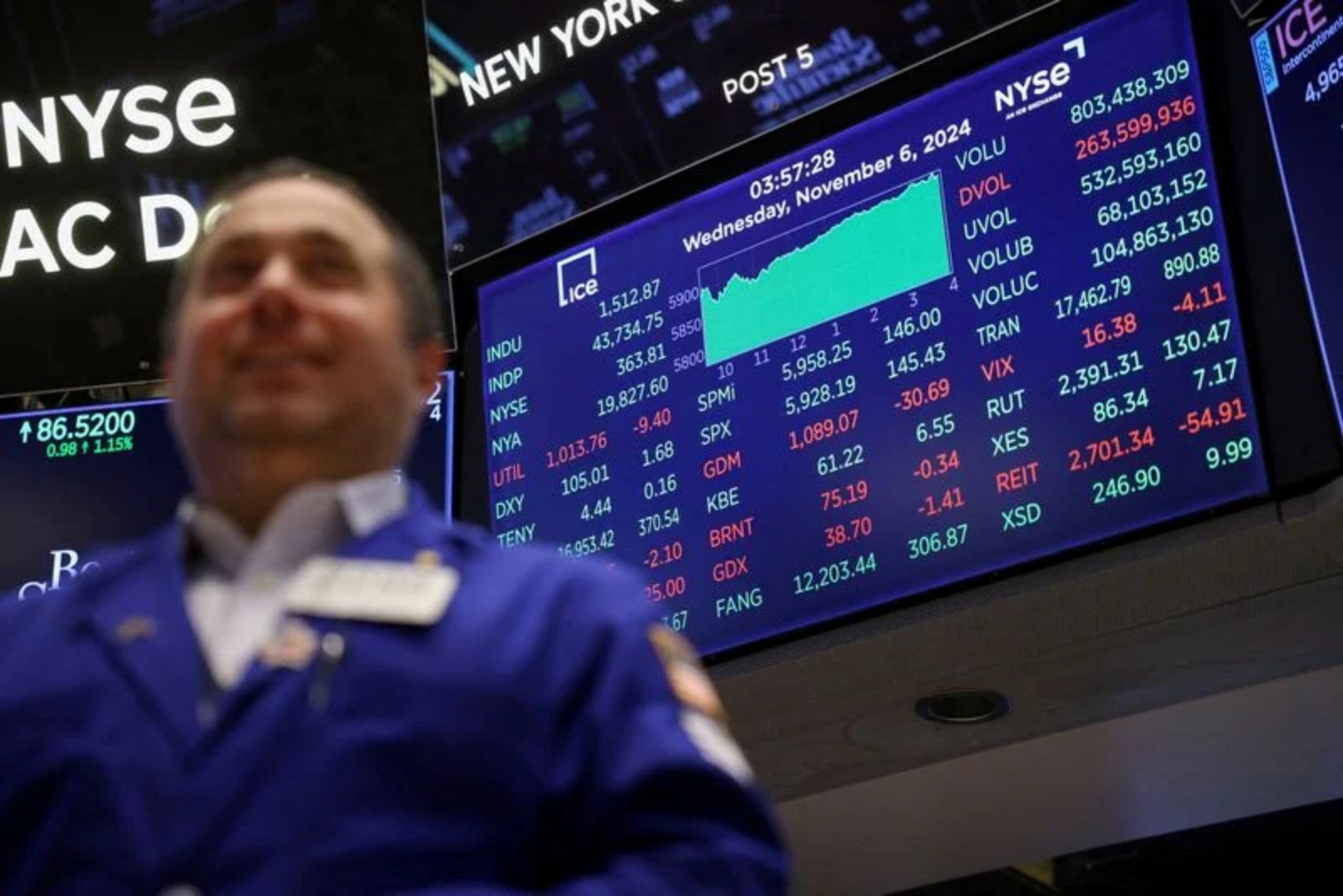
NEW YORK, June 30 - U.S. equity markets enter the second half of 2026 carrying gains but also confronting multiple risks that could challenge the rally. The benchmark S&P 500 has risen by more than 8% so far this year, extending a bull market that has lasted well over three years, while the Nasdaq Composite - a technology-heavy index - has climbed 11%. Despite those gains, both indexes showed recent weakness with pullbacks in June, leaving investors cautious.
The central role of AI investment
At the center of the market's advance is a surge in spending on artificial intelligence infrastructure. That capex wave has lifted profit forecasts across numerous firms, with a small group of large technology companies accounting for a substantial share of the projected investment. According to JPMorgan, five companies, including Microsoft, Alphabet and Amazon, are forecasting combined capital expenditures of about $730 billion this year.
Market participants broadly expect that high level of spending to continue, with Nicolas Janvier, head of North American equities at Columbia Threadneedle Investments, noting that it is "certainly priced in to the market that the level of capex that we're seeing will continue for the foreseeable future."
"The risk from the market's perspective is the technicals are so crowded within those trades that anything that starts to sow some seeds of doubt in the narrative and you are at a somewhat vulnerable position," said Garrett Melson, portfolio strategist with Natixis Investment Managers Solutions.
Investors are watching hyperscalers for signs that their heavy investment will produce adequate returns. In the meantime, the optimism around AI has driven notable gains in semiconductor stocks and has provided a lift to other technology names as well as industrial and energy companies connected to data center buildouts and power needs.
Can corporate earnings meet elevated expectations?
Equity performance through the first quarter was supported by strong corporate results, and consensus forecasts call for continued profit strength. LSEG IBES projects S&P 500 earnings will rise by over 26% in 2026. That sets a high bar for companies to clear in the coming quarters.
David Bianco, Americas chief investment officer at DWS, emphasized the importance of delivery, saying, "The main question is delivery of the earnings that are expected out of the S&P 500, but also the tech sector. That's one of those things that there can't be any excuses."
Expectations for robust returns are not confined to technology and AI-related firms. All 11 sectors of the S&P 500 are projected to report higher earnings in 2026, and Janvier pointed to solid consumer spending as another underpinning of broader earnings strength even as AI captures much of the headlines.
The flood of mega IPOs and market absorption
A recent large public offering from SpaceX is expected to be followed by IPOs from major AI-focused firms, including Anthropic and OpenAI, in the months ahead. Collectively, these mega listings would introduce a substantial amount of new equity for investors to absorb and are being watched as a test of market liquidity and risk appetite.
Bianco summed up the concern as a probe of how much capital is available to take on new risk: "It's this test of risk appetite and liquidity, just how much dry powder is out there." Market observers are attuned to whether the cycle of high-profile listings signals froth or whether demand will be sufficient to accommodate the issuance.
Policy under a new Federal Reserve chairman
Kevin Warsh is the newly installed chairman of the U.S. Federal Reserve. His early conduct has surprised some investors, with a meeting that signaled a hawkish tilt and raised the possibility of near-term rate increases as policymakers focus on reining in inflation.
The path for interest rates will influence Treasury yields and broader market dynamics. Earlier this year, fluctuations in the bond market coincided with periods of equity selling. Higher interest rates increase borrowing costs for companies and can make fixed income investments more competitive relative to equities.
Noah Weisberger, chief U.S. equity strategist at BCA Research, said valuations can be justified but warned that the market remains exposed to a potential re-rating if interest rates move higher: "Valuations, I think, are justifiable. But that doesn't mean the market's not vulnerable to a re-rating of interest rates."
Political calendar and seasonal volatility
So far this year, markets have given the midterm elections in Congress a relatively low profile. That could change as November approaches, when politics-related volatility may increase. Historical patterns referenced in market analyses indicate that midterm years tend to produce deeper intra-year drawdowns than other years in the electoral cycle.
CFRA data stretching back to 1945 show that midterm years have registered the largest average intra-year declines among the four-year election cycles, averaging 18% drops for the S&P 500. In addition, third quarters of midterm years have, on average, produced negative performance. "Midterm years certainly are open to a little bit of turmoil leading up to the elections," Melson said.
What to watch next
- Whether hyperscalers and other large spenders on AI can show returns on their capital investments and sustain their projected capex levels.
- Delivery of the elevated earnings forecasts across the S&P 500, and in particular within the technology and AI-related segments.
- Investor appetite and liquidity to absorb potential mega IPOs from AI-focused companies and other large issuers.
- How the Fed under Chairman Kevin Warsh navigates inflation and interest rates, and the resultant impact on Treasury yields and equity valuations.
- Political developments and related volatility as the midterm elections approach, which historically coincide with increased market drawdowns.
The coming months will test whether the combination of heavy AI-related investment, high profit expectations, sizeable equity issuance and a new Federal Reserve leadership can coexist without prompting significant market stress. For now, gains this year have been tangible, but market participants remain vigilant to a range of risks that could alter the trajectory.