
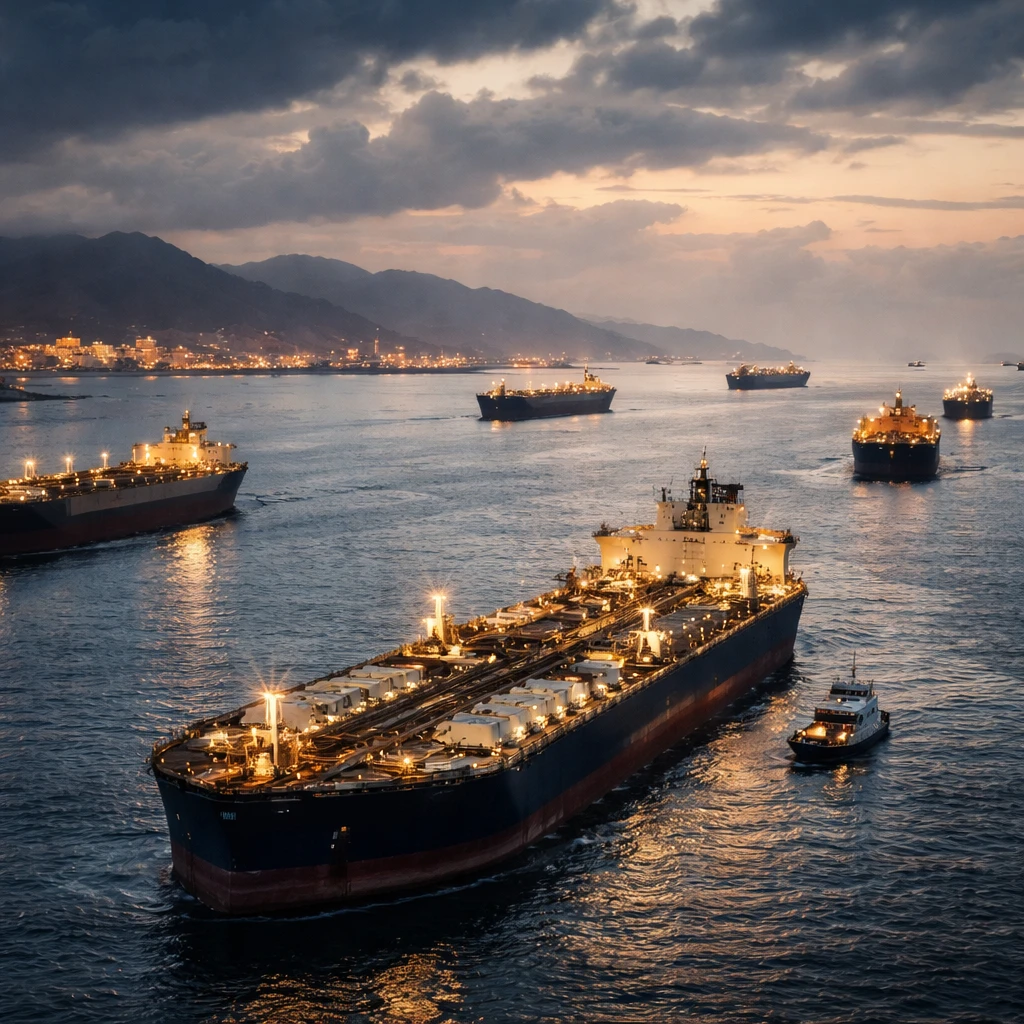
Forecasts made when the United States and Israel entered hostilities with Iran at the end of February envisioned dramatic upside for oil, with some analysts warning crude could reach $150 or even $200 a barrel if roughly one fifth of global flows through the Strait of Hormuz were interrupted. The market outcome has been markedly different.
Brent futures rose but stopped well short of those extremes, peaking around $126 a barrel - under the 2008 peak of $147 - and averaging roughly $101 a barrel from the conflict's start on Feb. 28 through June 11, the day U.S. President Donald Trump called off strikes on Iran. Prices briefly slipped back toward pre-conflict levels near $70 in early July.
Several specific forces explain why oil prices have not "gone crazy" despite prolonged fighting. Each has moderated either the supply shock or the demand surge the market feared.
1. Demand surprise from China
The most unexpected development came from China, the planet's largest oil importer, which reduced crude imports to their lowest for almost a decade by June. That decline reflected several elements: curtailed fuel exports, a shift in urban transport where electric taxis reduced private car usage, and lower volumes from China's petrochemical sector. The combined impact on demand was larger than many market participants had anticipated.
2. Record U.S. production and strategic releases
On the supply side, the United States increased output sharply. By April, U.S. crude production reached a record 13.93 million barrels per day. In addition, Washington released barrels from the Strategic Petroleum Reserve as part of an internationally coordinated, record 400 million-barrel release convened through the International Energy Agency in March. Those additional supplies helped blunt the effect of any disruptions linked to the conflict.
3. Policy signals and liquidity effects
Statements from U.S. President Donald Trump about possible peace agreements and the resumption of flows through the Strait of Hormuz repeatedly surprised markets and tempered bullish sentiment. With the risk of sudden reversals, many traders pulled back from large long positions, reducing market liquidity. As Ilia Bouchouev of the Oxford Institute for Energy Studies put it: "Everybody is bullish now, but nobody is long."
Data from the ICE exchange show that after funds reduced their bullish exposure in Brent futures to their smallest level this year in early July, they recorded the biggest addition in six months in the week to July 14. Even so, that net long position, at about $14.8 billion based on Monday's prices, remained more than 50% below its late March six-year peak. Market participants say headline fatigue - the diminished price impact of successive announcements - has also blunted reactions to fresh news, a dynamic highlighted by Ole Hansen, head of commodity strategy at Saxo Bank.
4. Alternative Gulf shipments
Saudi Arabia, the largest Gulf exporter, significantly ramped up flows from its Red Sea Yanbu terminal, helping to offset barrels that would otherwise have transited the Strait of Hormuz. Shipments via Hormuz briefly restarted in June, easing fears about availability, although they fell again in July as fighting resumed.
5. Plenty of prompt physical cargoes
Traders point to abundant immediate supplies of physical crude as another restraining factor on prices. European crude differentials, such as for North Sea Forties which feed into the dated Brent benchmark, moved from a record premium in April to a discount, reflecting easier availability. Veteran trader Adi Imsirovic summarized the situation: "There is a lot of prompt crude around for now." He added a cautionary note: "It may not last!"
These combined effects - weaker-than-expected demand from China, stronger U.S. production and strategic releases, policy-driven shifts in market positioning, rerouted Gulf exports and ample prompt cargoes - have kept oil prices substantially below the most dire predictions despite months of conflict. Each factor has interacted with the others to temper the price response to geopolitical risk, even as uncertainty remains over how long current supply cushions will persist.