
Commodities July 8, 2026 09:25 AM

Trump Signals Possible Further Strikes on Iran After Recent Attacks

Comments at NATO summit precede uncertainty over turning a temporary ceasefire into a lasting agreement

By Nina Shah
Share
Twitter Reddit Facebook LinkedIn

In Ankara on July 8, U.S. President Donald Trump warned Iran that additional U.S. strikes would likely follow on Wednesday night after recent exchanges of force. He said a memorandum of understanding that had acted as an initial ceasefire was "over," while stopping short of declaring a return to open war. The resurgence of hostilities has already pushed oil prices higher and disrupted traffic through the Strait of Hormuz.

Trump Signals Possible Further Strikes on Iran After Recent Attacks
Summarize with
ChatGPT Perplexity Claude Grok Gemini

Key Points

  • President Trump warned further U.S. strikes on Iran were likely on Wednesday night, signaling continued military activity (impacts: defense, geopolitics).
  • Trump said a memorandum of understanding that acted as an initial ceasefire was "over," and stated uncertainty about whether a permanent deal would be reached (impacts: diplomacy, geopolitical risk).
  • Renewed hostilities lifted oil prices and prompted at least four oil and gas tankers to turn back from the Strait of Hormuz, affecting energy markets and shipping (impacts: energy, maritime commerce).

Ankara, July 8 - U.S. President Donald Trump warned on Monday that the United States would probably carry out further strikes on Iran on Wednesday night, following attacks the previous day.

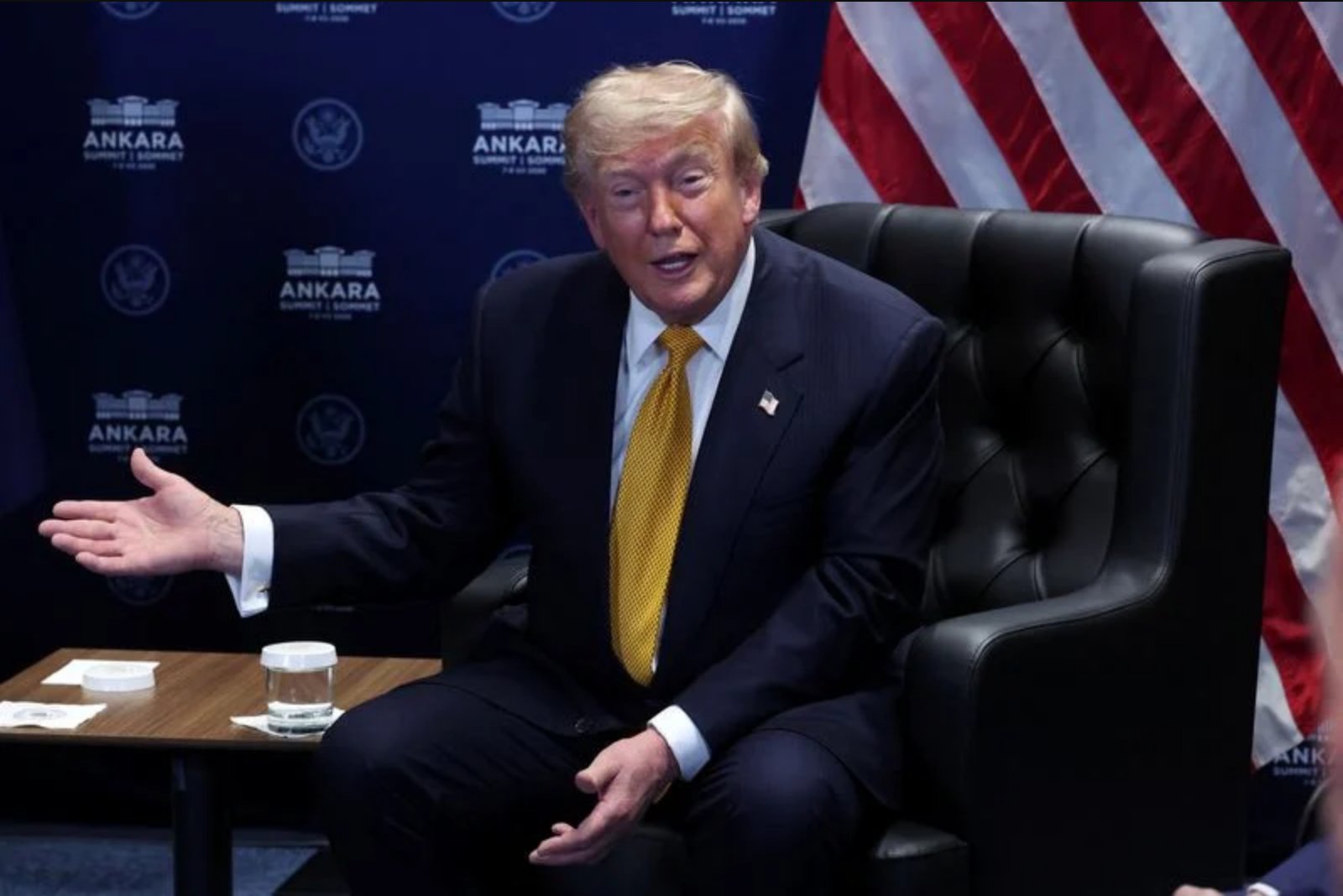
Speaking to reporters at the NATO summit in Turkey, before a scheduled meeting with Ukrainian President Volodymyr Zelenskiy, Trump said: "I'll give a little warning: We're going to hit them hard tonight."

Earlier in the day, in remarks given to reporters in Ankara, Trump characterized a memorandum of understanding that had served as an initial ceasefire between Washington and Tehran as "over." He did not, however, explicitly state that the United States would return to a full-scale war.

On the question of whether negotiations aimed at converting the temporary arrangement into a permanent deal would proceed, Trump said: "I don't know if we're going to have a deal. We may just do it without a deal," making clear the outcome of talks remained uncertain.


There has been a recent flare-up of hostilities in the region. Iran said it had targeted U.S. military sites in Bahrain and Kuwait after U.S. forces struck Iranian targets in response to attacks on tankers in the Strait of Hormuz. The exchange of strikes and retaliatory actions has elevated tensions and raised questions about the durability of the temporary ceasefire arrangement.

The renewed conflict pushed oil prices up sharply and increased concern about safety and security around the Strait of Hormuz, a crucial maritime corridor for global oil and gas shipments. Shipping data cited in the reporting showed that at least four oil and gas tankers turned back rather than attempt to transit the waterway, reflecting heightened caution among commercial vessels.

While the president's public comments signaled a readiness to continue military pressure, they left several salient questions unresolved - notably whether formal negotiations toward a permanent settlement will continue, and whether the United States intends to escalate beyond targeted strikes.


Given the limited and evolving information presented publicly, the situation remains fluid. Observers and market participants have already registered the immediate effects through price moves in energy markets and shifts in shipping patterns, but longer-term outcomes depend on whether diplomatic efforts resume and on the scope of any further military actions.

Risks

  • Uncertainty over whether negotiations to convert the temporary ceasefire into a permanent agreement will continue - this bears on diplomatic resolution and market stability (affecting: diplomacy, financial markets).
  • Possibility of additional U.S.-led strikes and retaliatory actions - heightening military and regional security risks (affecting: defense, regional trade).
  • Disruptions to shipping through the Strait of Hormuz, as evidenced by tankers turning back, create immediate supply and logistical risks for oil and gas markets (affecting: energy, shipping).

More from Commodities

Wheat Futures Advance as Markets Await USDA Supply and Demand Update Jul 8, 2026 Markets on Edge After U.S.-Iran Strikes Push Oil Higher and Chip Stocks Slide Jul 8, 2026 European Gas Rises 6% After Trump Expresses Doubt Over Iran Truce Jul 8, 2026 European Gas Prices Jump as Hormuz Clashes Raise LNG Transit Fears Jul 8, 2026 Russian Forces Deploy Jammers and Camouflage to Try to Thwart Ukrainian Mid-strike Drones Jul 8, 2026