
Commodities April 28, 2026 02:54 PM

Trump Rebukes German Chancellor After Criticism of U.S. Handling of Iran Conflict

President cites a social media post to dispute Chancellor Merz's comments as tensions between Washington and NATO allies surface

By Sofia Navarro
Share
Twitter Reddit Facebook LinkedIn

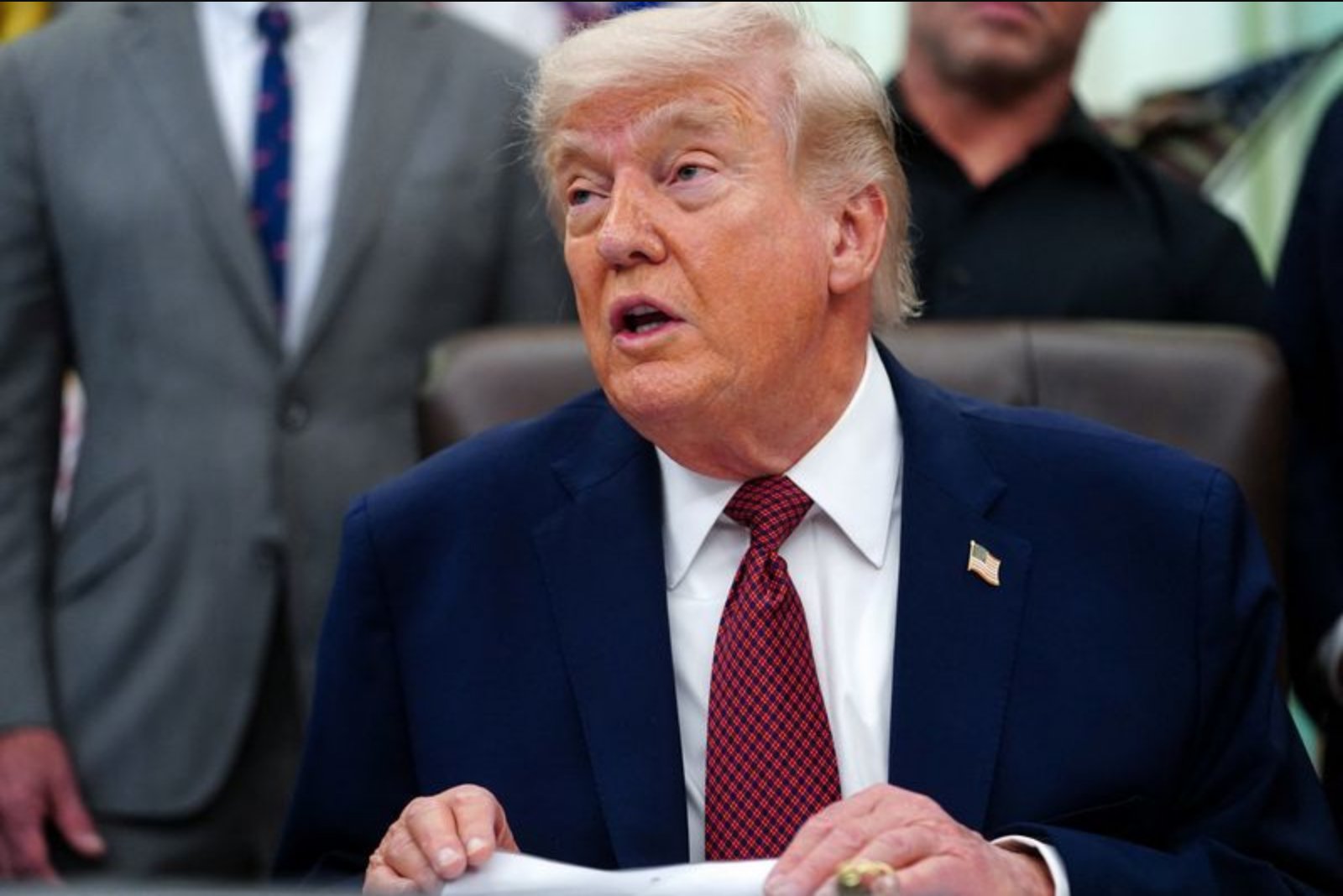
On April 28 in Washington, President Donald Trump publicly criticized German Chancellor Friedrich Merz for comments about the war in Iran, posting a remark on Truth Social that analysts say mischaracterized Merz's position. Merz had earlier said Iran should not possess a nuclear weapon and sharply rebuked U.S. diplomacy, saying Iranian leaders were humiliating the United States and that U.S. officials had been sent to Pakistan and left without results.

Trump Rebukes German Chancellor After Criticism of U.S. Handling of Iran Conflict
Summarize with
ChatGPT Perplexity Claude Grok Gemini

Key Points

  • President Trump publicly criticized German Chancellor Friedrich Merz on Truth Social, accusing him of supporting a nuclear-armed Iran in a post that mischaracterized Merz's stated position.
  • Chancellor Merz has said Iran must not have a nuclear weapon and publicly rebuked U.S. diplomacy, saying Iranian leaders were humiliating the United States and that U.S. officials traveled to Pakistan and left without results.
  • The exchange highlighted existing deep divisions between Washington and its European NATO allies, tensions that had been present over Ukraine and other issues.

WASHINGTON, April 28 - President Donald Trump on Tuesday took aim at German Chancellor Friedrich Merz over recent remarks about the war in Iran, posting a critical message on his Truth Social platform a day after Merz publicly questioned Washington's approach.

Trump wrote in the Truth Social post:

"The Chancellor of Germany, Friedrich Merz, thinks it’s OK for Iran to have a Nuclear Weapon. He doesn’t know what he’s talking about!"

Observers note that the post mischaracterized Merz's stated position. Merz has explicitly said that Iran must not have a nuclear weapon.

Merz's comments, delivered on Monday, included a pointed rebuke of U.S. diplomacy in the Iran conflict. He said Iran's leadership was humiliating the United States and had effectively caused U.S. officials to travel to Pakistan and then depart without results. In addition, Merz said he did not see what exit strategy the United States was pursuing in the Iran war.

Those remarks underscored deep divisions between Washington and its European NATO allies, a rift the Chancellor suggested had been developing over issues including Ukraine and other matters. The exchange between the U.S. president and the German chancellor highlights ongoing tensions over strategy and messaging among allied capitals.

The sequence of exchanges began with Merz's critique of U.S. diplomatic progress, followed by the president's social media response that framed Merz's stance as permissive toward a nuclear-armed Iran. The factual record in public statements indicates Merz has maintained that Iran should not acquire nuclear weapons, even as he criticized recent U.S. diplomatic results.

Diplomatic disagreements between senior officials in allied countries can amplify perceptions of disunity, and in this instance the public nature of the president's post and the chancellor's earlier remarks brought those differences into sharp relief.


Context limitations: The information above summarizes the public statements described and does not extend beyond the specific comments reported by the two leaders. Where details are limited in the public record provided, this report reflects only what was explicitly stated by the parties involved.

Risks

  • Public disagreements between the U.S. and a key European NATO ally could deepen diplomatic rifts - impacting defense and international relations sectors.
  • Uncertainty about the U.S. exit strategy in the Iran war, as noted by Chancellor Merz, represents a policy unknown that may affect diplomatic and security planning.
  • Failed or unproductive diplomatic missions, such as U.S. officials traveling to Pakistan and leaving without results, introduce uncertainty into ongoing negotiations and crisis management.

More from Commodities

Al Qaeda-aligned militants in central Mali shift from overt brutality to local governance Jun 13, 2026 Exxon Expected to Install Alex Volkov as Head of Global Trading, Sources Say Jun 12, 2026 Northwest European Gasoline Margins Rise as Crude Prices Slip Jun 12, 2026 Investor Fatigue Drains Liquidity from Oil Market as Prices Sway on Iran Signals Jun 12, 2026 Market Adjusts as Much Less Gulf Oil Than Feared Continues to Flow Jun 12, 2026