
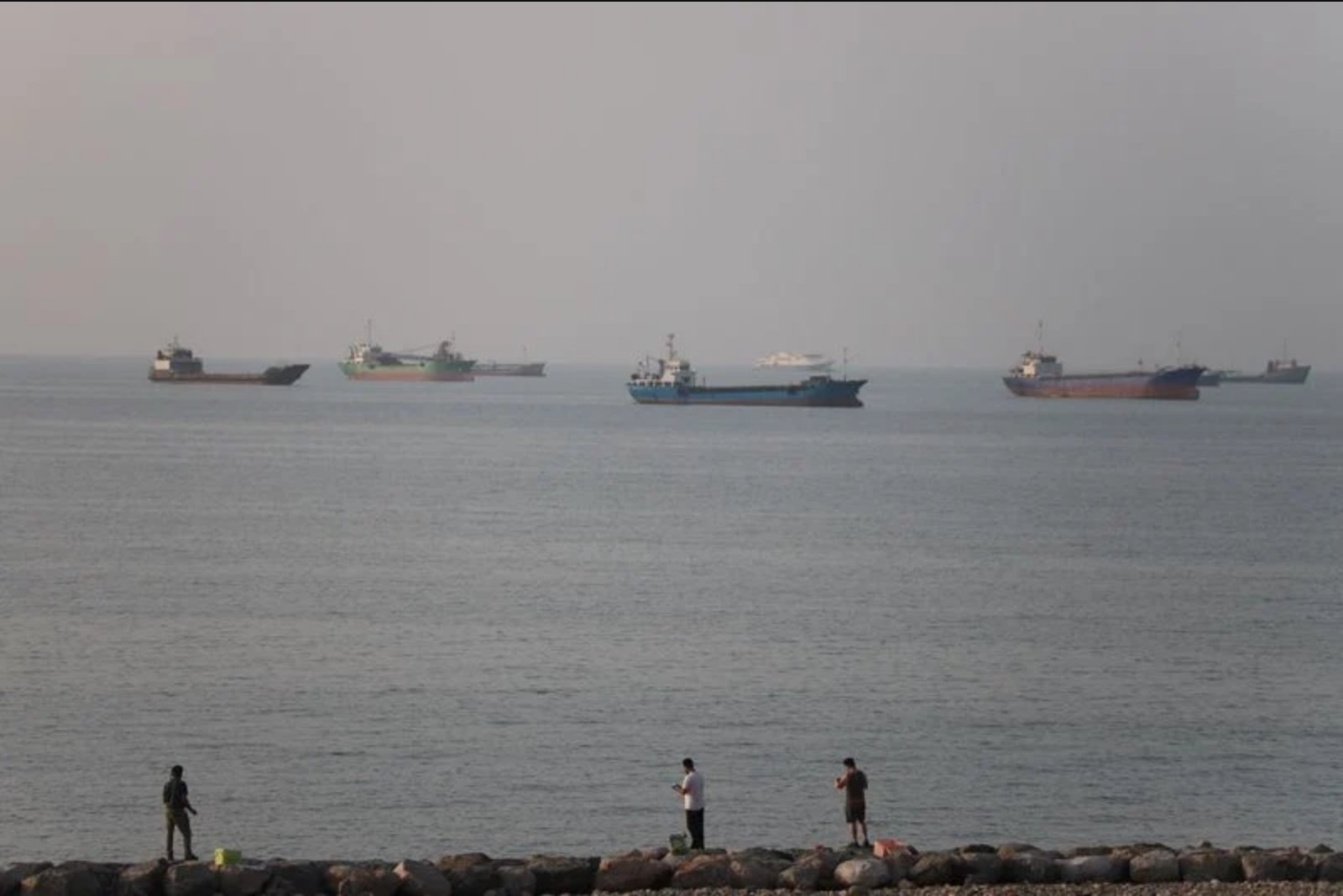
SINGAPORE, June 22 - Ship movements through the Strait of Hormuz declined sharply on Sunday following an announcement from Iran's Islamic Revolutionary Guard Corps (IRGC) that it had again closed the strategic waterway, according to shipping analytics data.
Data compiled by analytics firm Kpler showed only five vessels passed through the strait on Sunday, a steep drop from the 26 ships observed on the preceding day. The Sunday transits included three Very Large Crude Carriers (VLCCs) reported to be carrying 2 million barrels each of Saudi crude and fuel oil, one of which was bound for Japan. Kpler's count may not include vessels that have switched off their automatic identification transponders while in the Gulf.
The IRGC's declaration on Saturday came after Tehran had effectively lifted a prior blockade of the strait last week as part of an agreement with the United States to extend an April ceasefire for 60 days to allow for peace negotiations. The IRGC said the renewed closure was in response to Israeli strikes in Lebanon. The U.S. military, however, said commercial vessels were still operating.
Shipping movements earlier in the weekend showed a larger flow. On Saturday, three VLCCs exited the strait carrying crude from the United Arab Emirates, Kuwait and Iraq, and three additional tankers were recorded transporting various oil products. Kpler's records also noted that 13 ships entered the strait on Saturday, including two VLCCs.
Regional crude sellers have adjusted commercial options in light of operational uncertainty. Gulf producers Abu Dhabi National Oil Co and Kuwait Petroleum Corp issued tenders offering crude for sale with the option to load either from inside the Strait of Hormuz or from locations outside it.
Market context
The sharp reduction in observed transits over a single day illustrates how declarations over the strait can rapidly affect visible shipping activity. While Kpler's figures offer a snapshot of movements, the potential for vessels to travel with transponders off introduces an element of uncertainty into publicly available counts.
Authorities on both sides have provided differing signals - Tehran's IRGC announced a shutdown, and U.S. forces indicated commercial traffic was continuing - leaving market participants and shippers with mixed operational cues.