
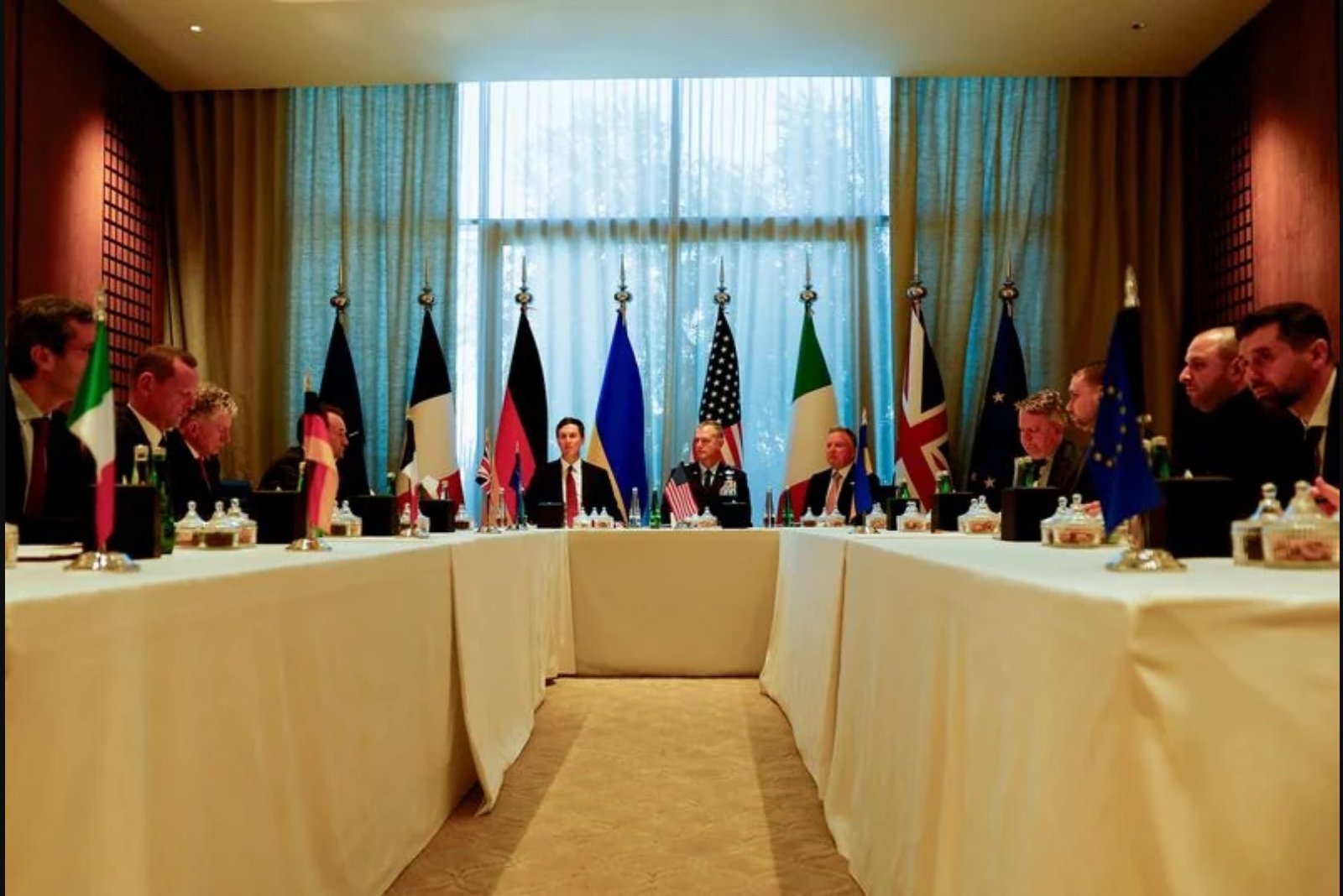
ABU DHABI, Nov 11 - Delegations from Russia, Ukraine and the United States returned to the negotiating table in Abu Dhabi on Wednesday for a second day of peace talks, continuing meetings that Kyiv and Washington characterized as constructive but that did not produce any clear breakthroughs.
Ukrainian chief negotiator Rustem Umerov confirmed the schedule on the Telegram app, saying: "We are starting the second day of the talks." He outlined that the agenda would open with a trilateral session including the United States and Russia, followed by separate discussions with European partners.
Ukrainian President Volodymyr Zelenskiy, who like Russian President Vladimir Putin is not present in Abu Dhabi, said the initial day involved "substantive" exchanges focused on humanitarian and security matters, and that the possibility of convening a summit including Russian, Ukrainian and US leaders could be a subject of talks on Tuesday.
US Secretary of State Marco Rubio described the opening day as "very productive," though he did not provide details on specific concessions or new proposals. The meetings scheduled for Wednesday represent the last day of the current round of talks.
Despite public statements suggesting guarded optimism from some participants, including US President Donald Trump, there were no public signs of major compromises. Parties entered the Abu Dhabi discussions with deep disagreements over the basic terms of any settlement - differences that have persisted since Russia launched a full-scale invasion of Ukraine more than 4-1/2 years ago.
The range of issues on the table goes beyond control of territory. Observers at the talks have highlighted future security guarantees as a central concern for both sides. Moscow has insisted that Kyiv adopt a neutral status and forego NATO membership, demands that Kyiv has repeatedly rejected. The Kremlin's insistence on control or surrender of the eastern Donbas region also remains a key sticking point, and no public indication has emerged to suggest that Russian President Vladimir Putin is prepared to abandon that position.
Russian forces currently control roughly a fifth of Ukrainian territory, but negotiators indicated that territory is only one component of a wider package of disputes to be resolved. Ukrainian leaders have repeatedly stated they will not cede land that Ukrainian soldiers have defended at great cost.
While talks proceeded in Abu Dhabi, military activity continued on both sides. Each side accused the other of launching attacks during the negotiations. Ukrainian Prime Minister Sergii Koretskyi reported that Russia struck six major electricity substations located in Ukraine's four central regions. Separately, Russia's TASS news agency cited the governor of the Smolensk region in reporting that debris from a drone strike hit an apartment building in the Russian region, killing two people; Reuters was not able to independently verify those reports.
The Russian defence ministry said its forces struck a cargo vessel in the Black Sea off the coast southwest of the Ukrainian port of Odesa, alleging the ship was transporting weapons and military equipment intended for Ukrainian forces. Reuters could not verify that claim.
Diplomatic dynamics around the talks have been affected by an intensified American push for an agreement. President Trump has increased pressure on Kyiv to come to terms, warning that Ukraine needed to end the war or face "a very bad thing." Last week he characterized the conflict as nearing resolution in what he called a "big beautiful agreement," though he has a record of forecasting breakthroughs that did not materialize.
The renewed US diplomatic effort has prompted European officials to seek involvement in the process, pressing for a seat at the table to help end what has been described as Europe's deadliest conflict since World War Two. Russian Foreign Minister Sergei Lavrov emphasized Moscow's preference to negotiate a broad European security architecture before delving into specifics of the conflict, while European Commission President Ursula von der Leyen argued that broader security talks should follow a ceasefire.
Lavrov dismissed the idea of a truce, accusing European actors of attempting to secure temporary respite for Ukraine. The Kremlin said on Wednesday that the Russian delegation in Abu Dhabi had not engaged with European representatives there and that no such contacts were planned. Kremlin spokesman Dmitry Peskov told reporters that President Putin is being kept constantly informed by the Russian delegation about the progress of the talks.
On the battlefield, Russian advances have moderated compared with earlier stages of the conflict, but Moscow has continued intensive strikes on Ukrainian cities and energy infrastructure. Ukraine, for its part, has increased strikes on Russian oil refineries and other strategic infrastructure. Those parallel military pressures have continued even as diplomats pursue negotiations in Abu Dhabi.
What to watch next
- Whether the Abu Dhabi talks yield any agreed mechanism for a ceasefire or concrete steps on humanitarian corridors.
- Whether European leaders secure a defined role in follow-on discussions, or whether Russia maintains its preference to address a wider European security framework first.
- Whether military actions escalate or abate while the diplomatic process continues, particularly strikes on energy and transport infrastructure that could influence negotiations.