
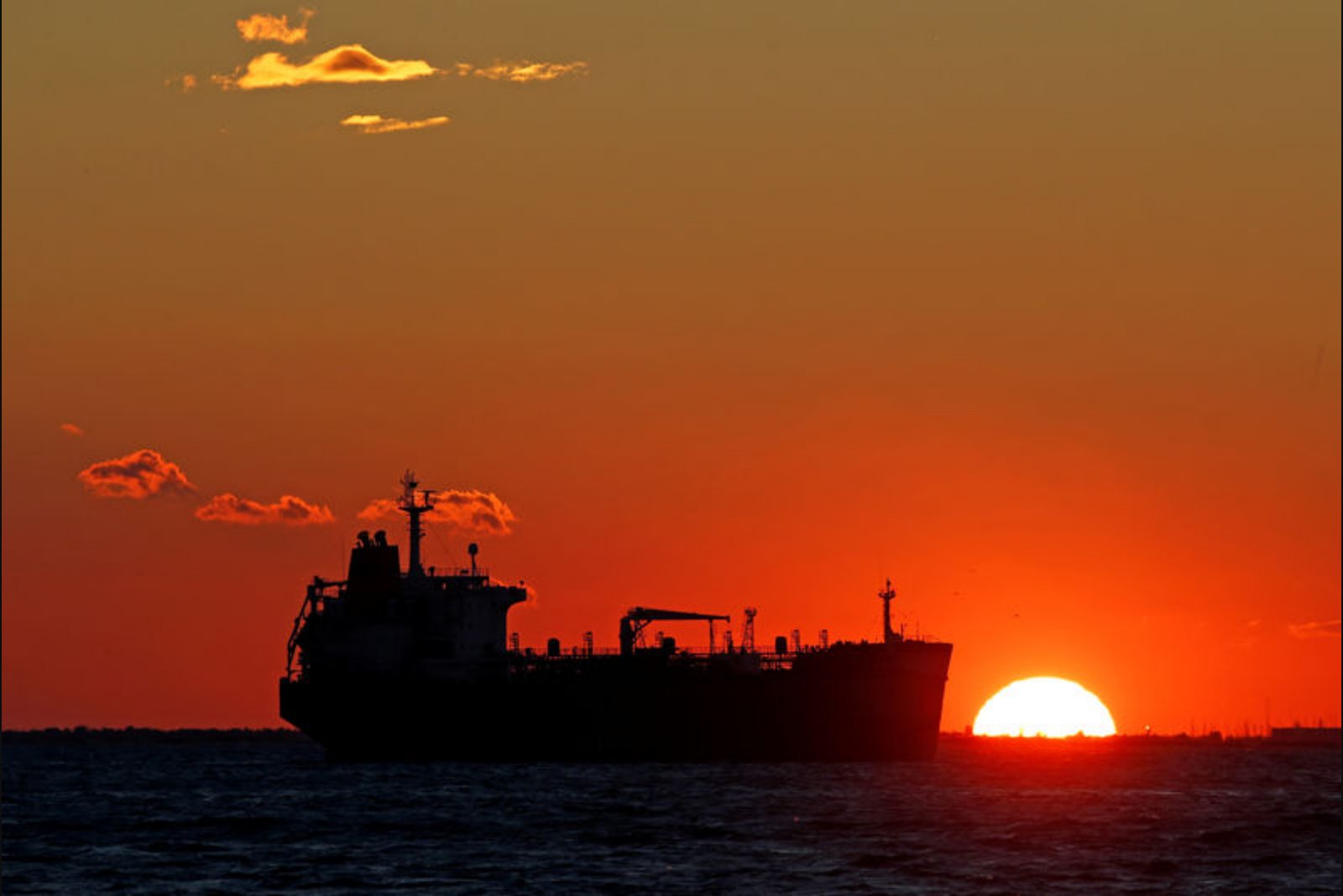
The Iran-aligned Houthi movement in Yemen announced Thursday that it had struck two Saudi oil tankers in the Red Sea, describing the action as part of a naval blockade against Saudi Arabia. The claim raises the prospect of a second strategic bottleneck for global oil supply, in addition to Iran’s near-closure of the Strait of Hormuz.
Houthi forces control territory near the Bab el-Mandeb Strait at the southern end of the Red Sea - the opposite end of the Arabian Peninsula from the Strait of Hormuz - and on Monday said they were imposing a naval blockade on Saudi Arabia. What some analysts have viewed as a tactical move by Iran to seek leverage, the blockade now risks further disrupting an already stressed maritime environment.
The Houthis identified the targeted vessels as the Encelia and the Layla, and said their forces used missiles and drones in the strikes. Saudi state media reported that the Encelia had been hit and that a fire broke out at the bow. The strike on the Layla remained unconfirmed by Saudi authorities. A maritime security source said the Encelia had transmitted a distress call reporting a missile strike near the Saudi port city of Jizan late on Wednesday.
Shipping movements indicate heightened caution in the region. Five tankers altered course in the Red Sea on Wednesday to avoid transiting the Bab el-Mandeb Strait, according to shipping reports, and three tankers loaded with Saudi oil headed for China and India carried out U-turns on Tuesday. These re-routings reflect concerns about safety and the potential for further attacks on commercial shipping.
Millions of barrels per day of Saudi oil have been routed to the Red Sea port of Yanbu as a deliberate avoidance of the Strait of Hormuz. If shipments are unable to pass through the Red Sea’s southern route via Bab el-Mandeb, the only alternative is the northern passage through the Suez Canal - a detour that would add weeks and additional costs to voyages.
Two very large crude carriers registered to China and carrying a combined total of 4 million barrels of Saudi oil were reported as heading toward the Bab el-Mandeb Strait on Thursday, according to shipping data. The movement of such large cargoes highlights the potential for significant commercial disruption if Red Sea transits are constrained.
The Houthi claims emerge against the backdrop of an intensifying military campaign between the United States and Iran. The U.S. military said on Wednesday it launched another round of strikes into Iran at the direction of President Donald Trump, characterizing the action as the 12th successive night of American attacks. In a related development, American strikes during 12 consecutive days since a June ceasefire broke down have broadened geography from southern Iran into western and central regions.
U.S. Central Command stated it intends to continue efforts to "further degrade" Iran’s ability to threaten maritime traffic. Iranian media reported that the United States twice attacked a military target near Bushehr, which is close to Iran’s only operating commercial nuclear power reactor, marking three strikes in that area over two days. State television also reported two deaths and 11 wounded in what a Khuzestan provincial official described as a U.S. missile strike on the Shalamcheh border crossing with Iraq.
Against threats from Washington, President Trump vowed earlier in the week to destroy an Iranian bridge or power plant each time Iran fires at a vessel in the Strait of Hormuz. Iran’s joint military command warned that if such strikes against infrastructure are carried out, Iranian forces would retaliate by targeting regional oil, gas, electricity and economic infrastructure and would prevent the export of "even a single drop of oil," according to Iranian state media.
Hours after that warning, Iran’s Revolutionary Guards reported an explosion in a mined route south of the Strait of Hormuz, saying one of three oil tankers had caught fire while the other two turned back. The Guards declared the strait to be under their control and "completely closed," and warned that no tanker would be permitted to enter or leave without coordination with Iran.
The two-pronged danger to major shipping lanes comes as oil prices and inflationary pressures have already been affected. Iran’s near-total blockade of the Strait of Hormuz has contributed to higher global inflation and upward pressure on oil prices, squeezing U.S. gasoline consumers at a politically sensitive moment for the presidential administration and its allies ahead of congressional elections.
The expanding theater of attacks has also produced a rising human toll and growing military strain. Iranian officials reported that 53 civilians had been killed and 592 wounded since late last month. Since the wider conflict involving the U.S. and Israel began on February 28, thousands have been killed and millions displaced, according to reports cited by regional officials. The war has claimed the lives of 18 U.S. service members and injured more than 450 American troops.
In recent days, U.S. service member fatalities have continued. President Trump attended a ceremony at Dover Air Force Base for four U.S. service members killed in Iranian strikes on military bases - three in Jordan and one in Iraq. At that event he said, "For me it’s one of the hardest things to do as a president. But it has to be done." Later in a separate public address he referred to the conflict as "a skirmish."
Both sides report continued capabilities to strike. Iranian forces have demonstrated ongoing missile and drone capacity, and Iran has carried out strikes on desalination and energy plants in Kuwait and on U.S. military assets in Bahrain and Jordan. The United States maintains that it does not target civilians, while warning that civilian infrastructure used for military purposes may be subject to attack provided civilian harm is not excessive.
For global markets and supply chains, the combination of Houthi maritime actions in the Red Sea and Iran’s control over access to the Strait of Hormuz raises the prospect of sustained logistical complications and cost increases for energy shipments. The situation remains fluid, with each development carrying the potential to further redirect cargoes, lengthen voyages, and amplify price pressure for oil and refined products.
As authorities and commercial operators reassess routes and risk, the practical consequences for transit times, freight costs, and inventories will be key indicators to watch. For now, the claims of attacks on the Encelia and the Layla, alongside announcements of blockades and continued strikes across the region, underline how maritime security has become a central front in the broader conflict.