
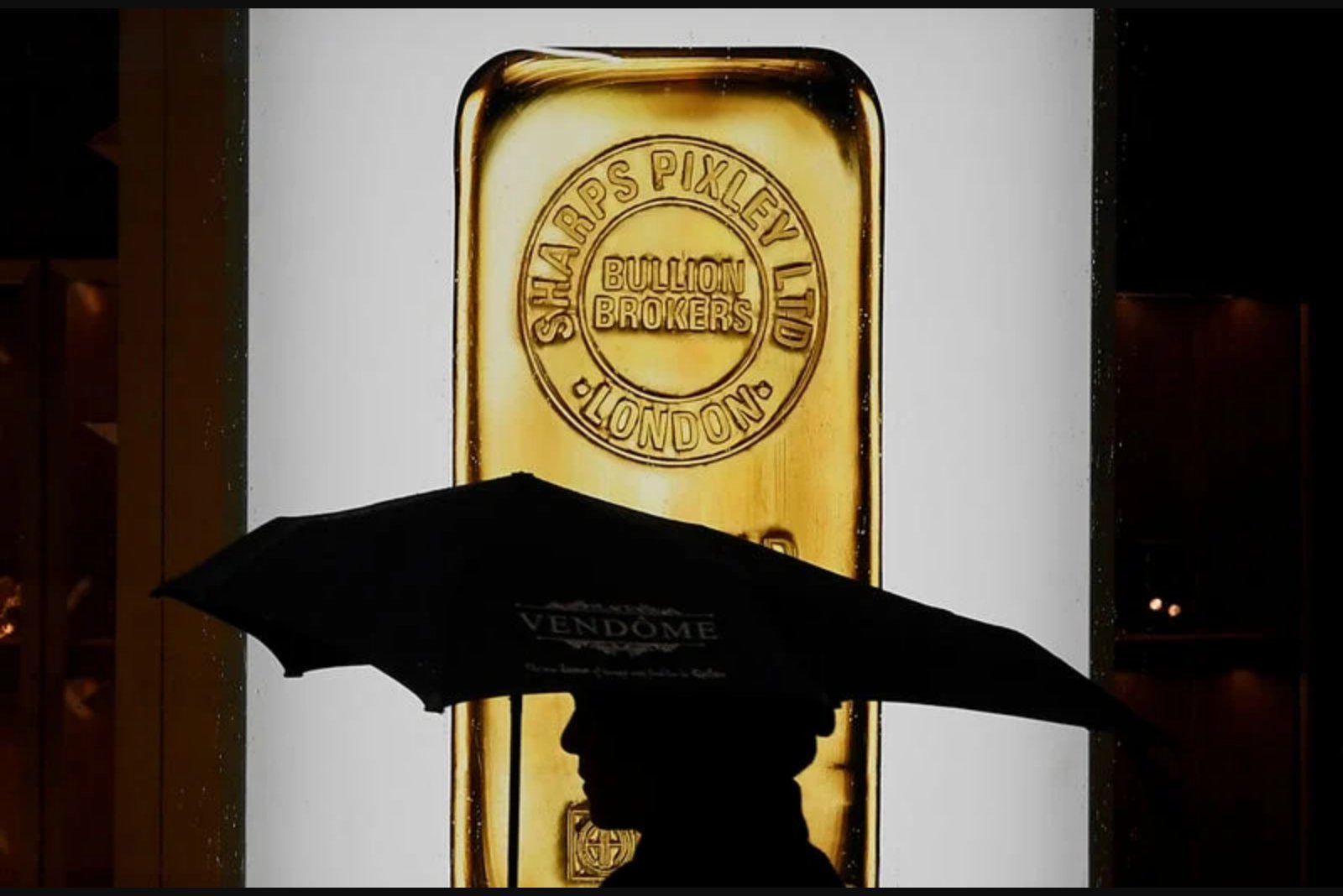
Gold extended a rebound on Wednesday, rising to a two-week peak as investors responded to technical buying after the metal repeatedly probed the psychologically important $4,000 per ounce threshold last week. A modest easing in the dollar added support, while concerns about inflation resurfaced as oil prices advanced alongside escalating military tensions in the Middle East.
Spot gold increased 1.3% to close at $4,130.09 per ounce. Gold futures also strengthened, gaining 1.4% to finish at $4,134.95 per ounce.
Market participants said the rebound followed a recent pullback. "This current rebound began on Friday after gold dipped below $3,960 to trade at lows last seen in early November. This selloff then seemed to run out of puff which meant it didn’t take a lot of buyers to push prices up," said David Morrison, senior market analyst at Trade Nation. He added that there has been "consistent support every time gold has dropped below $4,000."
Morrison also noted the interplay between gold and the greenback, observing that "this week’s rally has come even as the U.S. dollar has strengthened. The two have been negatively correlated for quite some time now, and it will be interesting to see if this relationship holds or starts to break down once again." He said that while the recovery has been notable, gold must "break out convincingly above $4,200 to get the bulls re-energized."
Geopolitical dynamics and supply concerns
The metal's gains came amid an intensification of hostilities in the Middle East. The U.S. and Iran have carried out tit-for-tat strikes for eleven consecutive days, a sequence of exchanges that has prompted a marked decline in vessel traffic through the Strait of Hormuz. Additional threats to shipping from Iran-backed Houthi forces in Yemen, targeting the Bab el-Mandeb Strait, have deepened worries about potential disruptions to regional energy flows.
In a message posted on his social platform, President Donald Trump warned of retaliatory strikes, saying: "From this point forward, any time the Islamic Republic of Iran shoots at a ship in the Strait of Hormuz, whether it be by Missile, Rocket, Drone, or any other device or weapon, the United States will bomb and destroy ONE BRIDGE OR POWER PLANT, including those located next to, or in, the Capital City of Tehran." Tehran responded swiftly. Citing a military source, Iran’s Tasnim News Agency said the country would target regional infrastructure and energy facilities with American interests if any bridges or power plants were struck.
Separately at the ASEAN summit in the Philippines, Secretary of State Marco Rubio said the U.S. remained "open to diplomacy" but that Iran did not "seem to be serious" about negotiations.
Energy prices, inflation and central bank scrutiny
Oil's advance added another dimension to market anxiety. Brent crude futures briefly topped $95 a barrel on Wednesday, marking the first time the global benchmark reached that level since June 11. The pickup in oil prices has helped revive inflationary concerns among investors, which in turn has kept focus on the possibility of further Federal Reserve interest rate increases despite recent data suggesting an easing in U.S. price pressures for June.
Traders and analysts said the combination of geopolitics and a firmer oil market kept precious metal markets attentive to central bank policy risks, even as technical factors and dollar moves played a role in the near-term direction of gold.
Other precious metals
Beyond gold, other precious metals posted gains on Wednesday. Spot silver rose 1.6% to settle at $59.7265 per ounce, while spot platinum added 1.5% to close at $1,662.85 per ounce.
Market developments will likely continue to be shaped by developments in the Middle East, movements in energy prices and updates to U.S. inflation data and Fed expectations.