
European natural gas prices ticked up on Wednesday as traders remained guarded following a fresh round of military strikes between the United States and Iran.
The benchmark ICE Dutch TTF Natural Gas futures traded 0.2% higher at 48.83 euros per megawatt-hour (MWh), according to Intercontinental Exchange data. British Natural Gas futures also rose 0.2%, reaching 117.45 pence per therm.
Risk appetite in gas markets stayed subdued after the U.S. launched new strikes on Iran, an escalation that followed President Donald Trump’s assertion that Tehran had downed a U.S. helicopter in the Strait of Hormuz. The flare-up occurred one day after Iran and Israel had signaled a pause in hostilities.
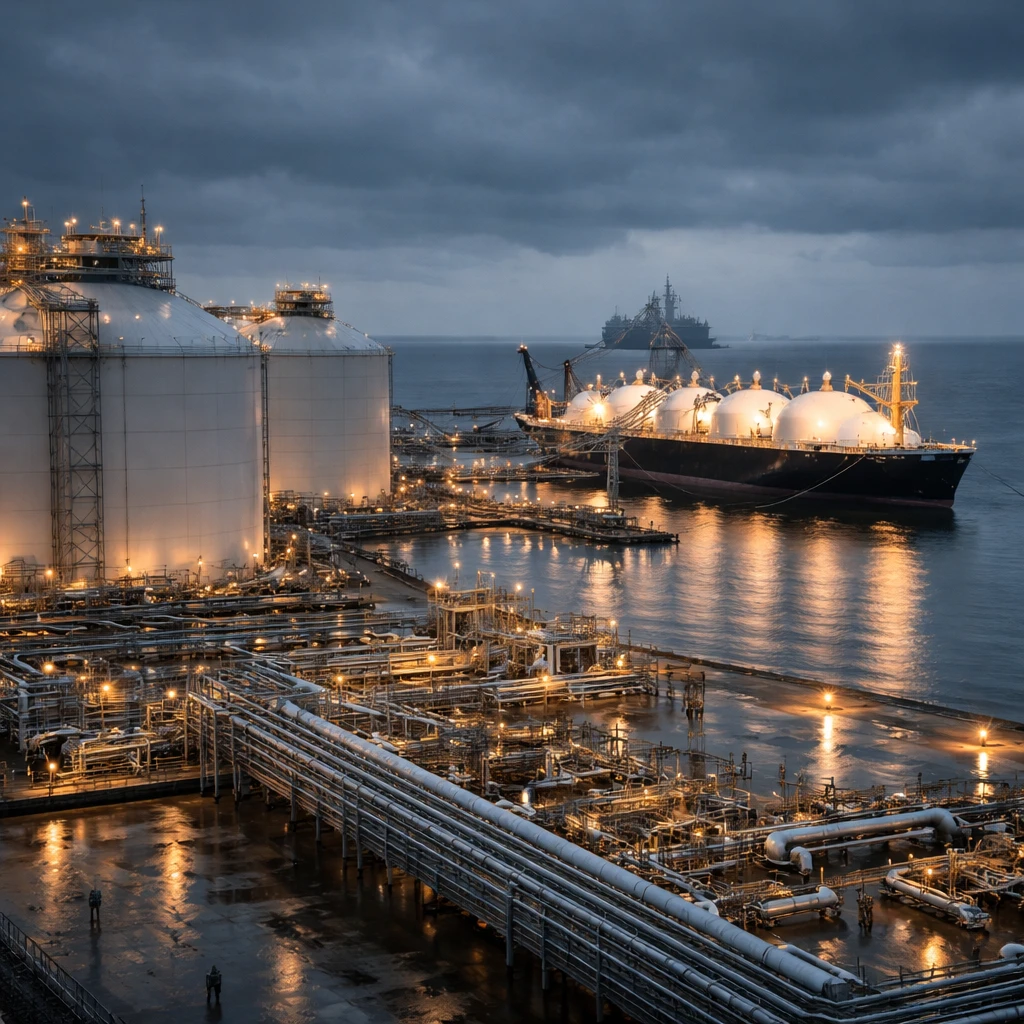
Market participants continue to assess the impact of the geopolitical tensions on global liquefied natural gas (LNG) supplies. Benchmark prices have been holding near the 50 euro-per-MWh level as the ongoing fallout from the U.S.-Iran conflict contributes to pressure on LNG flows, narrowing available supply to Europe.
Beyond geopolitics, production-side factors are also constraining flows. Maintenance at Norway’s large Troll field and at the Kollsnes processing plant is expected to reduce Norwegian gas shipments, Reuters reported, further tightening supply in regional markets.
Structural supply considerations add to the fragility of the market. The eurozone’s reliance on energy imports leaves it vulnerable to disruptions stemming from the Middle-East conflict. Prices, while off their extreme March peaks, remain substantially higher than pre-crisis norms as the energy landscape has shifted.
Storage metrics underline the constrained environment. European Union gas storage sites were reported at 42.79% full, compared with 51.4% at the same point last year, Reuters said - a gap that market participants view as significant when paired with potential supply interruptions.
Key points
- Dutch TTF and British natural gas futures were each up 0.2% - Dutch TTF at 48.83 euros/MWh and British gas at 117.45 pence/therm.
- Renewed U.S.-Iran strikes have kept risk sentiment cautious and are pressuring global LNG flows.
- Maintenance at Norway’s Troll field and Kollsnes plant, together with below-average EU storage, tightens regional supply.
Risks and uncertainties
- Further escalation in the U.S.-Iran confrontation could disrupt global LNG shipments, affecting European energy markets and gas-dependent industries.
- Ongoing or extended maintenance at key Norwegian facilities may reduce pipeline flows to Europe, impacting utilities and industrial consumers reliant on gas.
- EU gas storage levels are well below last year’s mark, leaving the region more exposed to supply shocks and price volatility.
This report presents the market moves, key drivers and immediate risks shaping European natural gas prices without drawing conclusions beyond the information provided.