
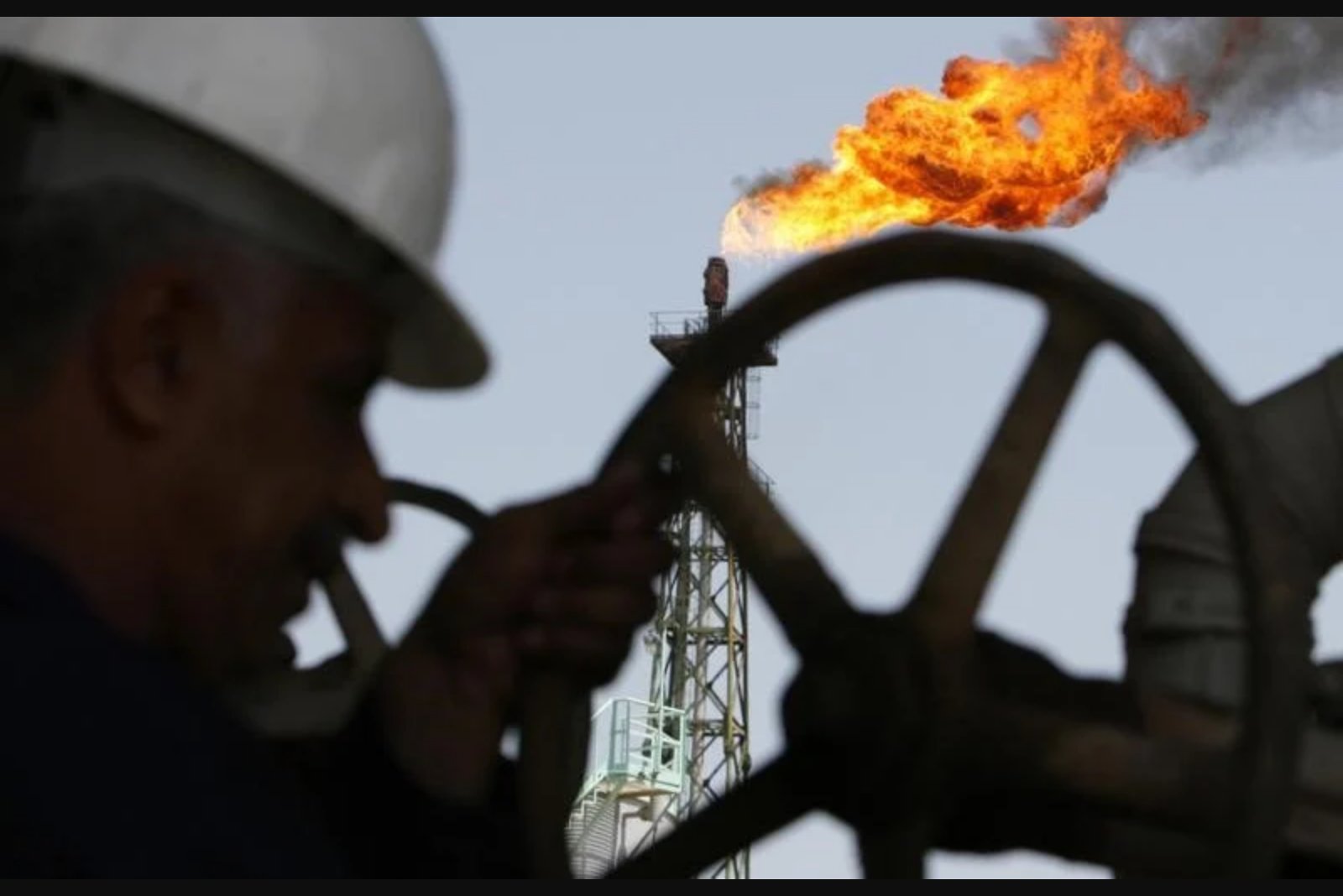
Oil futures surged more than 3% on Wednesday as markets reacted to renewed fighting between the United States and Iran and fresh threats to multiple Gulf-area shipping corridors, pushing supply-risk premiums higher. The global benchmark for crude briefly climbed above $95 a barrel for the first time since June 11 amid the escalation.
At 15:00 ET (19:00 GMT), front-month Brent crude for September delivery was trading up 3.6% at $94.32 a barrel. U.S. West Texas Intermediate (WTI) September futures rose 3.3% to $87.14 a barrel. Both contracts have recorded substantial gains this month, with Brent rising more than 29% and WTI up nearly 26%.
Market attention remained focused on the possibility of sustained supply interruptions as exchanges of strikes between Washington and Tehran continued for an eleventh straight day, unraveling a diplomatic understanding that both sides had agreed to in mid-June.
In a public post, President Donald Trump set out a hardline tit-for-tat policy toward attacks on shipping, declaring on his Truth Social service:
"From this point forward, any time the Islamic Republic of Iran shoots at a ship in the Strait of Hormuz, whether it be by Missile, Rocket, Drone, or any other device or weapon, the United States will bomb and destroy ONE BRIDGE OR POWER PLANT, including those located next to, or in, the Capital City of Tehran,"
The statement prompted an immediate reaction from Tehran. Iran’s Tasnim News Agency, citing a military source, said that the country would respond by targeting regional infrastructure and energy facilities associated with American interests should any bridges or power plants be struck. Iran’s foreign minister Abbas Araghchi warned that any aggression against infrastructure would be met with a "powerful and decisive response."
Speaking to reporters later, the president added: "They’re going to pay a big price. They’re getting, they’re being decimated," before departing for a U.S. Air Force base for the transfer of four service members killed in recent days.
Iranian state media had previously reported that the U.S. had already targeted bridges as part of the eleven-day bombardment campaign.
Beyond the direct exchange of strikes, the conflict has had an immediate operational impact on maritime traffic. Vessel transits through the Strait of Hormuz have dropped sharply and additional threats from Iran-backed Houthi forces in Yemen to the Bab el-Mandeb Strait have heightened concerns over shipping disruptions that could impede crude flows to global markets.
Data provider Kpler reported Tuesday that crossings through both chokepoints tumbled, with Hormuz transits down 31% from the previous day to nine vessels, and Bab el-Mandeb traffic falling 34% to 29 vessels. Kpler also noted four confirmed vessel U-turns near the Gulf of Aden, suggesting operators were exercising greater caution after Houthi threats against shipping linked to Saudi interests.
The shipping tracker added that confirmed maritime attacks continue around the Strait of Hormuz, reinforcing worries that sustained uncertainty at both chokepoints could force changes in routing decisions, raise freight costs and keep geopolitical risk premiums elevated for energy markets.
Analysts at ING said Houthi attacks would force tankers to divert through the Suez Canal and add "significant time and expense to voyages to Asia." They further argued that, taking into account renewed disruptions from the Persian Gulf, risks to Saudi crude exports via the Red Sea and developments in the Black Sea, Brent at just over $91 a barrel could be considered undervalued — particularly if disruptions persist into August.
Voices from Iran’s political leadership signalled a hardening stance. Mohammad Bagher Ghalibaf, speaker of the parliament and the country’s top negotiator, asserted that the strait would not return to pre-conflict conditions and framed the situation starkly: "The equation of this war is clear: either all or none! In a region where we do not sell oil, no one will sell oil. If our security is not ensured, no infrastructure will be safe, and the security of the strait is in the absence of American forces," he said.
Despite some reports this week that mediators were continuing shuttle diplomacy to try to revive a ceasefire framework, Washington signalled scepticism about Tehran’s willingness to negotiate seriously. Iranian Interior Minister Eskandar Momeni was reported to have met with Pakistani mediators, and a senior Iranian official said Iran had been presented with a mediators' proposal for a 10-day ceasefire in an effort to salvage the deal both sides agreed to in June.
U.S. Secretary of State Marco Rubio, speaking at the ASEAN summit in the Philippines, said the United States remained "open and willing to engage in positive, constructive negotiations and talks so long as the commitments that are made are kept." He told reporters the U.S. remained open to diplomacy but judged Tehran "don’t seem to be serious about that," while reiterating a commitment to protect shipping and to "degrade their ability to target global shipping" when opportunities arose.
Domestic U.S. inventory data offered a mixed picture. The Energy Information Administration reported that U.S. commercial crude oil inventories, excluding the Strategic Petroleum Reserve (SPR), unexpectedly rose by 2 million barrels in the week ending July 17, reversing expectations for a draw of 2 million barrels.
However, emergency oil stocks continued to shrink. The EIA said total inventories in the SPR fell to 311.4 million barrels, the lowest level since March 1983. The drawdown follows an administration plan to release 172 million barrels from the SPR over four months in an effort to temper price gains.
Stocks at the Cushing, Oklahoma delivery hub also declined to 19.4 million barrels, with the EIA saying tanks there were "scraping tank bottoms." The combination of lower emergency reserves and tighter physical flows because of shipping disruptions contributed to the market’s bullish tone.
Market participants and analysts cited the deteriorating security situation and dwindling emergency supplies as central drivers of the recent price rally. The potential for sustained interruptions to exports from the Persian Gulf and the Red Sea has raised the prospect of higher freight costs and longer voyage times, placing upward pressure on benchmark crude prices and adding to uncertainty for refiners and end users.
Ayushman Ojha and Scott Kanowsky contributed to this article.