
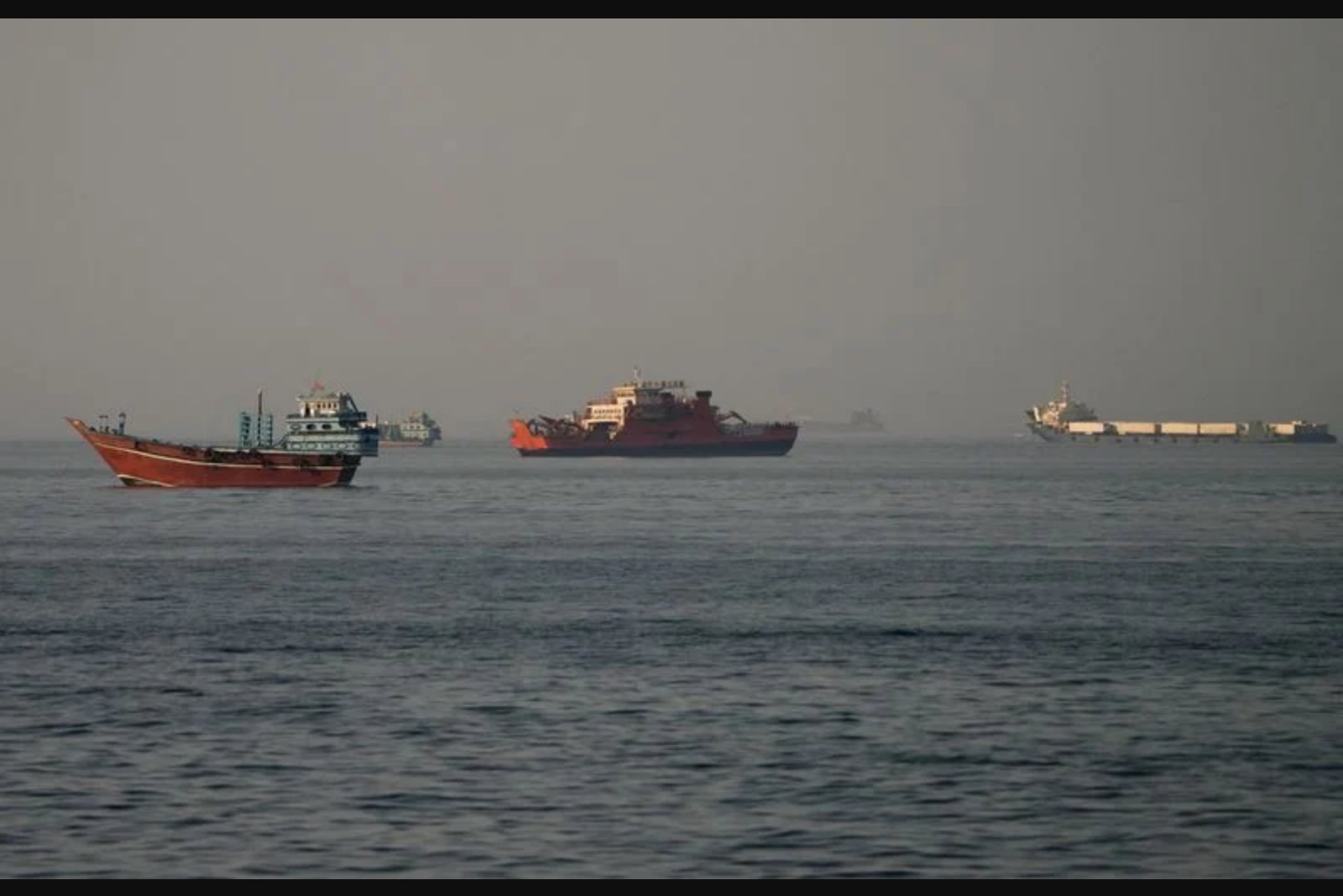
Ensuring the Strait of Hormuz is clear of naval mines could postpone a return to pre-conflict shipping volumes for weeks even after an agreement to reopen the waterway, according to multiple shipping and maritime security sources.
Assessments from five Western maritime security sources indicate that a combined operation of traditional minesweepers and advanced underwater drones could run for 40 to 50 days before insurance underwriters, ship operators and oil firms would have enough confidence to resume regular transits. That timeline, if accurate, risks holding up tens of millions of barrels of oil that remain trapped due to the blockade, on top of flows already interrupted since the United States and Israel attacked Iran on February 28, based on estimates derived from pre-war export volumes.
Every barrel leaving the Gulf matters at present. Analysis cited last week by the U.S. Energy Information Administration shows crude inventories in the world’s largest economies are headed toward their lowest levels since at least 2003, heightening the stakes attached to any prolonged restriction on exports through Hormuz.
Immediate caution from industry bodies
Even though Iran and the U.S. have recently facilitated some vessel movements through the strait, industry groups counseled caution after officials announced a preliminary deal to end hostilities and reopen the corridor. Jakob Larsen, chief safety and security officer at shipping association BIMCO, said that it remains very risky for ships to commence transits. "The threat of mines in the area remains a concern immediately as well as further down the line and mine-free routes need to be established," he said.
Shipping officials stress that uncertainty over the presence and location of mines is a central barrier to a swift resumption of large-scale shipping and tanker movements. A single sea mine is enough to cause fatalities and catastrophic damage to a vessel, industry executives warn, underlining why underwriters and operators will seek firm assurances before accepting the exposure of a full tanker's cargo and crew.
Scale and uncertainty of mine threats
It remains unclear how many mines may have been deployed in or around the strait. Before the conflict, the Strait of Hormuz handled roughly 20% of the world’s daily oil and liquefied natural gas exports. Iran, which during the conflict sought to assert control over the waterway, has threatened to deploy naval mines but has not publicly confirmed whether its forces have placed them in specific locations.
U.S. authorities have also signaled concern about mine-laying activities and have said they have targeted Iranian boats alleged to be involved in laying mines. On June 2, U.S. Secretary of State Marco Rubio told a Senate Foreign Relations Committee that Iran had "mined large segments of Hormuz - international waters", without elaborating. In a June 11 note, Germany's navy, citing U.S. and British naval information, reported mines in four locations around the strait but added it could not verify those positions directly.
Oman’s Maritime Security Centre, reporting on May 30, warned mariners to exercise caution near its side of the strait after sighting an "object suspected to be a floating mine". Authorities in Oman did not immediately respond to requests for comment on the report.
Operational challenges and insurance concerns
Even the possibility of mines can be sufficient to deter commercial interests. The high value of modern supertankers and their cargoes means insurers and operators are unwilling to accept substantial risk without clear, demonstrable safety. A single supertanker and its cargo can be worth roughly $300 million, and war-risk underwriters and oil traders would seek firm guarantees that a transit corridor is free of explosive hazards before committing to passage.
Rene Kofod-Olsen, CEO of V.Group, one of the world's major ship and crew management firms, said his company has 13 ships currently trapped in the Gulf. "One sea mine is enough to have fatalities," he said, calling the risk a "massive issue for global shipping."
The U.S. military's Central Command declined to provide details on the number or locations of mines citing operational security. A Centcom spokesperson said that U.S. military efforts to ensure the strait is fully clear of sea mines allegedly laid by Iran's Islamic Revolutionary Guard Corps are ongoing. The White House did not reply to requests for comment.
Current traffic levels and previous volumes
As negotiations between Iran and the U.S. progressed toward a temporary ceasefire, both parties enabled a number of ships to leave the strait. U.S. President Donald Trump said last week that the U.S. had been taking millions of barrels of oil out. Reuters previously reported that some states negotiated arrangements with Tehran to secure passage for certain vessels.
Recent vessel-tracking data show the number of ships transiting the strait had risen to an average of 12 to 15 vessels per day in recent weeks once ships became visible after exiting the area. That is a steep decline from the 120 to 140 ships that regularly passed through the waterway each day before the war.
Estimates of mine inventories and clearance timelines
Corey Ranslem, chief executive of maritime security firm Dryad Global, said that despite U.S. strikes aimed at degrading Iranian mine-laying vessels and stocks, Iran still was estimated to possess up to 1,000 naval mines. He cautioned that if a minefield is detected, the process to eliminate that threat could take weeks or months to complete.
Britain, France and Germany have each dispatched warships and dedicated minesweeping vessels to the region in anticipation of a potential prolonged clearance operation. Military and commercial sources say the clearance work will combine conventional sweeping methods with modern unmanned undersea systems in order to reduce risks to personnel and to increase the speed and precision of detection.
International agencies and next steps
Arsenio Dominguez, head of the U.N.'s shipping agency, welcomed the deal to reopen the Strait of Hormuz as "an important step toward restoring safety in this vital maritime corridor for seafarers and ships" but emphasized the implementation will take time to ensure all necessary safety and security guarantees are in place.
Until mine-clearance operations establish verified, mine-free lanes and insurers and operators gain comfort, shipping traffic through the strait is likely to remain below its pre-conflict throughput. That sustained reduction in flows, combined with already-tight global inventories, keeps energy markets sensitive to any prolongation of the clearance timetable.
As operations proceed, industry and security officials will be watching for verified clearance data and formal assurances that would allow insurers and shipping companies to resume fuller operations. Until those conditions are met, the presence or possibility of naval mines will continue to be the principal barrier to a rapid restoration of normal maritime trade through the Strait of Hormuz.