
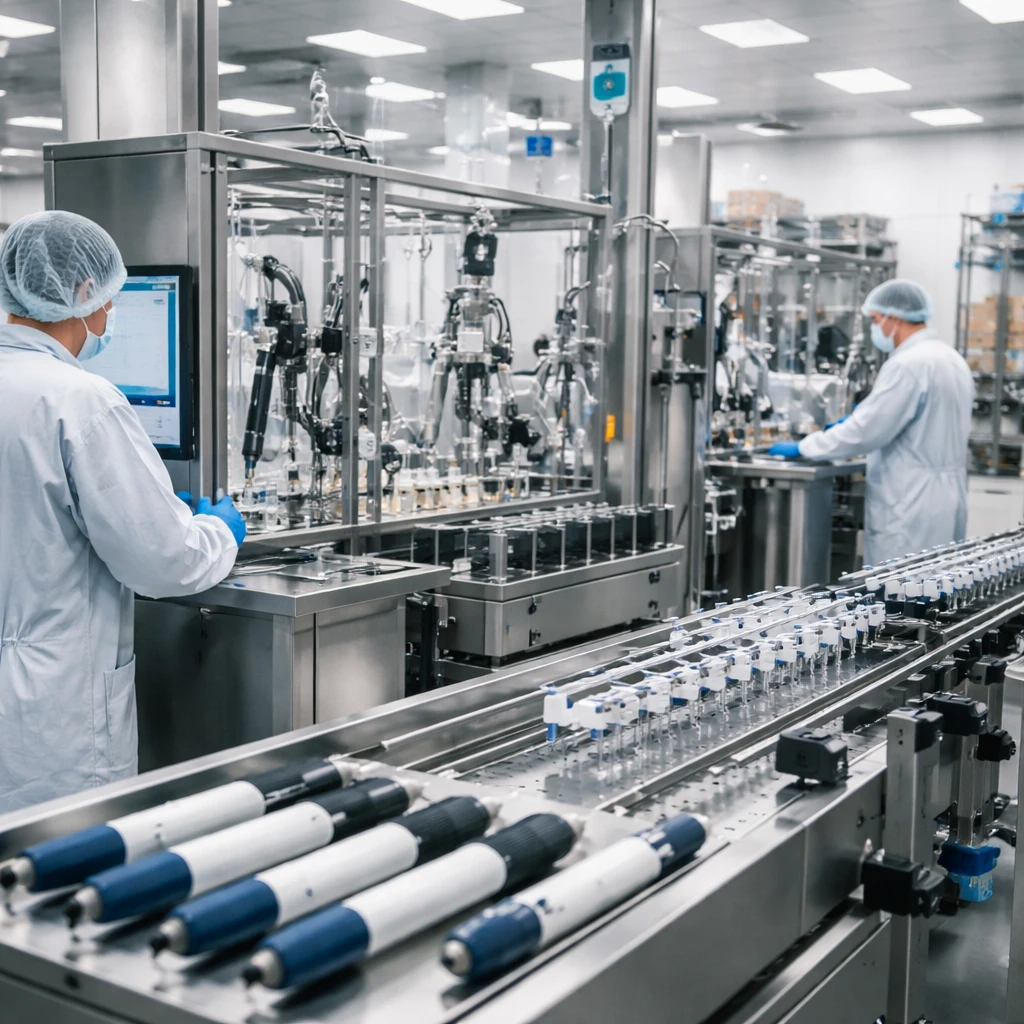
July 30 - Eli Lilly and privately held contract manufacturer Resilience announced a combined $750 million investment to expand pharmaceutical manufacturing capacity in the United States and reinforce the domestic medicine supply chain, Resilience said on Thursday.
The partners said the multi-faceted expansion is intended to increase production of critical medicines and to support U.S. supply resilience amid evolving trade and pricing pressures. The announcement follows broader industry activity in which global drugmakers have been scaling up U.S. manufacturing and building inventories as the administration of President Donald Trump moves to impose 100% tariffs on branded drugs unless companies reduce prices or bring production onshore.
What the investment will deliver
- Scale-up capital: The joint investment totals $750 million directed to U.S. manufacturing capacity.
- Job creation: The expansion is expected to create 400 new high-skilled jobs in the Cincinnati, Ohio region.
- Product integration: Lilly’s KwikPen injectable device for treating diabetes and obesity will be added to the companies’ manufacturing operations in the Cincinnati area.
Partnership background and production to date
The manufacturing collaboration between Lilly and Resilience began in 2023. According to Resilience, the partnership has already produced more than 150 million doses of medicines for U.S. patients using vial and pre-filled syringe formats. Lilly’s head of manufacturing, Edgardo Hernandez, said the tie-up underscores Lilly’s efforts to meet rising demand for its medicines.
Separately, Lilly has disclosed large-scale U.S. capital commitments: since 2020 the company’s U.S. capital expansion commitments exceed $55 billion. The company also indicated it plans to break ground on several of its recently announced U.S. manufacturing sites this year.
Implications
The announcement reiterates a coordinated push by a major drugmaker and a contract manufacturer to reinforce domestic production capability and to localize manufacturing of an established injectable device. The stated objectives include expanding capacity for critical medicines and increasing skilled employment in the Cincinnati region.
This development sits alongside reported policy measures that could materially alter incentives for where branded drugs are produced and priced, as noted in the administration’s proposed tariff approach.