
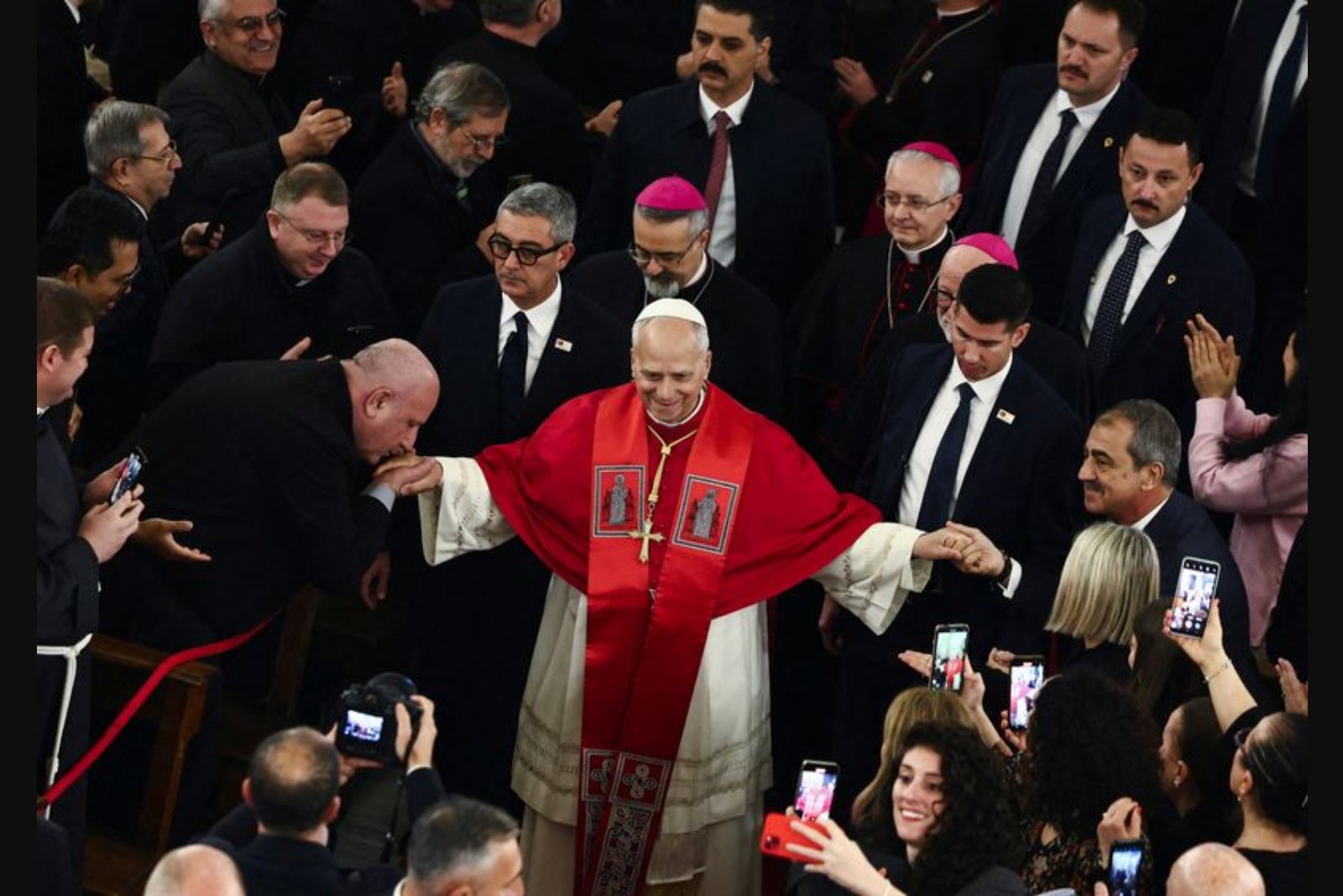
Pope Leo enters his first anniversary in office with a discernible change in tone and tempo. What began as a relatively restrained approach during his inaugural months has evolved into a more assertive public presence, visible in expanded travel, pointed speeches abroad and increased engagement with global political figures.
Selected by the College of Cardinals on May 8, 2025, after a two-day conclave in the Sistine Chapel, Pope Leo - formerly Cardinal Robert Prevost - took the helm of the 1.4-billion-member Church as a figure who until then had been lightly known on the world stage. He succeeded Pope Francis, whose 12-year papacy sought to open the institution to contemporary concerns. Prevost brought to the papacy a long record that included decades as a missionary and bishop in Peru and a role as a senior Vatican official beginning in 2023.
In the first 10 months of his papacy, Leo generally avoided the most divisive controversies. That posture shifted after he began publicly criticizing the Trump administration’s hard-line immigration policies in September and later condemned the U.S.-Israeli war on Iran, prompting sharp rebukes from President Trump. Trump’s attacks took several forms, including comments on social media and remarks on a right-wing radio program, where he repeated criticisms of the pope.
On a recent 10-day trip to four African countries, the pope delivered a string of frank speeches. He denounced the effect of the richest actors’ whims on global peace, criticized what he described as violations of international law by “neocolonial” powers and said the world was "being ravaged by a handful of tyrants." Vatican aides later said the Africa tour speeches had been drafted weeks before the trip and were not aimed directly at any single leader.
Observers inside the Vatican and beyond say Leo is likely to maintain the firmer rhetoric that emerged during that tour. "Pope Leo has become the singular clarion voice in our global community about the need for peace and safeguarding human dignity," Washington Cardinal Robert McElroy told Reuters. McElroy added that the pope "has shown an ever-growing willingness to apply the Gospel with specificity to the glaring violations of human rights that surround us." Those comments point to a papacy increasingly willing to translate moral teaching into direct critique of global conduct.
Diplomatic engagements and travel plans
As part of a busier calendar, Leo is scheduled for five domestic trips in Italy through July and a one-week visit to Spain in June. For his anniversary weekend, the pope will travel to Pompei and Naples, about 250 km (155 miles) south of Rome, to honor a Catholic shrine and lead public events. The domestic trips culminate on July 4 with a visit to Lampedusa, the Sicilian island known as the first port of call for many migrants making the perilous crossing from North Africa to Europe.
The timing of the Lampedusa visit - on the same day the United States marks the 250th anniversary of its independence - has drawn attention due to contrasting rhetoric from the Trump administration, which has framed migration as an existential threat to Europe. The Vatican announced the Lampedusa date in February, at the same time it confirmed that the pope will not travel to his native country this year. Chicago Cardinal Blase Cupich commented to U.S. media that the Lampedusa visit signals the pope’s priority "to be with those who are downcast and marginalised."
On the diplomatic front, Leo is due to meet with U.S. Secretary of State Marco Rubio - the first known in-person meeting with a Trump cabinet member in nearly a year. The U.S. ambassador to the Holy See said Rubio expects a "frank conversation" about administration policies. The meeting comes amid renewed public tensions after Trump again criticized the pope on Hugh Hewitt’s radio show.
Encyclical, technology and unresolved questions
The Vatican has signaled that the pope’s first major teaching letter, an encyclical, will arrive soon, though no publishing date has been formally announced. It is widely expected before the end of May and is anticipated to address a range of ethical challenges. Sources within the Vatican say the text will include discussion of the rise of artificial intelligence, and is also likely to touch on ongoing global conflicts and questions of leadership.
Vatican observers emphasize that the encyclical is aimed at universal moral principles rather than targeted criticism of any single political figure. David Gibson, a Vatican expert and academic at Fordham University, said the pope will speak to broad values. "If a particular leader feels attacked by Leo’s words, maybe that is their problem and not the pope’s," Gibson said.
Reactions and domestic church dynamics
Within the global Church, reactions to the pope’s evolving public stance are mixed. Conservative U.S. Catholics reacted strongly after his earlier remarks about immigration. At the same time, senior clerics allied with the pontiff have praised his willingness to speak directly about human rights violations and moral failings among the powerful. Those dynamics underscore the balancing act the papacy now faces between pastoral outreach to marginalized populations and diplomatic engagement with world leaders.
As Pope Leo’s calendar fills with domestic and international travel and a major teaching document approaches publication, the Vatican’s public posture has moved from a relatively low-profile start to a campaign of more explicit moral engagement on the world stage. How that posture interacts with political leaders, international crises and the ethical debates around technology will shape the papacy’s public influence in the months ahead.