
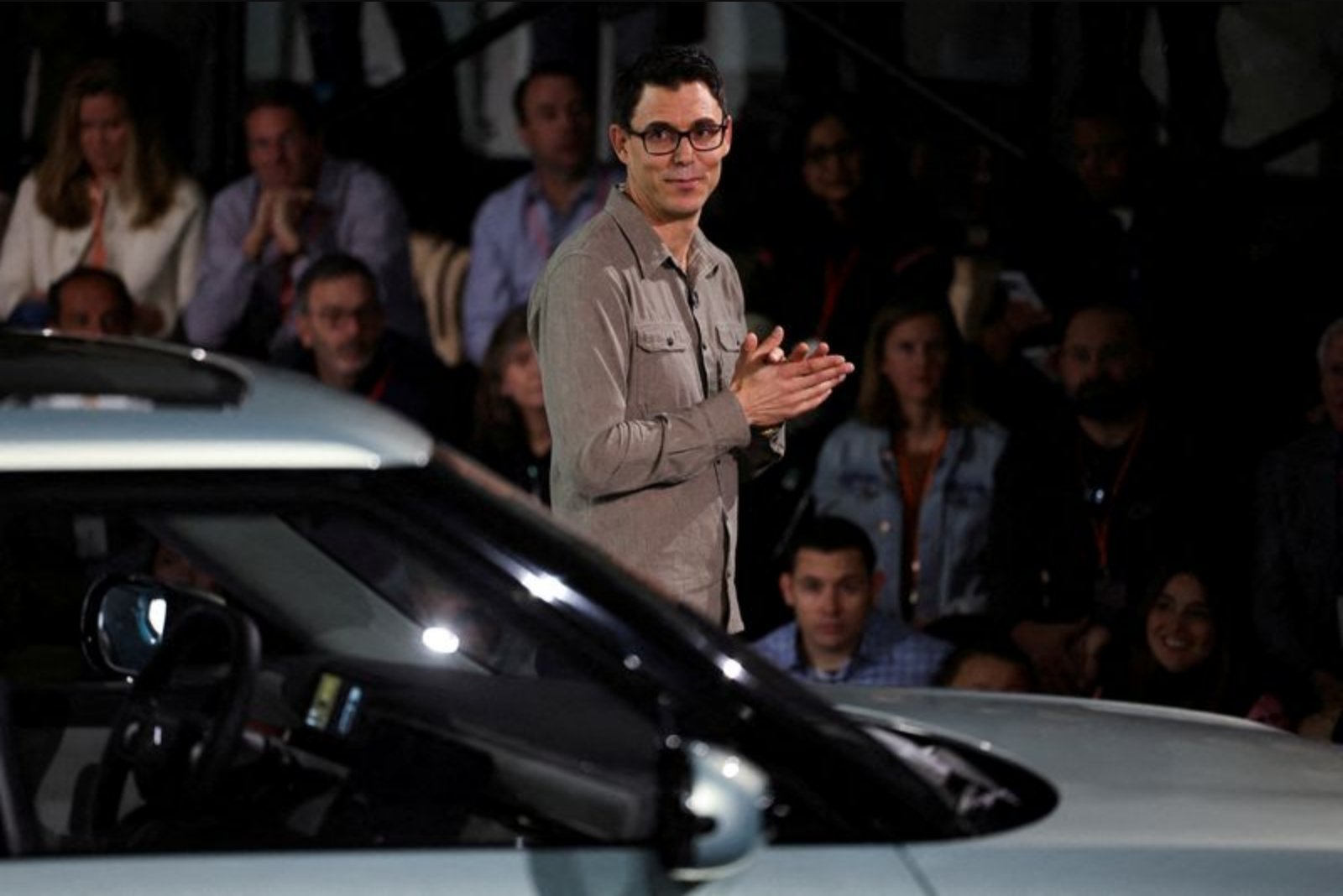
Rivian is advancing work on additional versions of its R2 electric-vehicle family even as it begins volume production of the compact, more affordable R2 SUVs, the company's chief executive said. The comments come as Rivian prepares to start delivering R2 SUVs around June, a step management and analysts view as vital to expanding the firm's customer base beyond higher-end R1 models.
Asked about a pickup variant and other potential body styles, CEO RJ Scaringe said the company has not shown some R2 variants publicly. "There are other variants of R2, which we haven’t shown," he said. Scaringe added that the manufacturing setup at Rivian's new Georgia plant has been designed to permit different configurations and variations of the R2 platform, but declined to provide specifics on what the undisclosed variants will look like.
Rivian has positioned the R2 line as a lower-cost complement to its R1T pickups and R1S SUVs. The company announced various R2 trims in March, with an initial rollout that will begin with a $58,000 R2 followed by less expensive versions later this year and into 2027. A widely anticipated $45,000 trim with more than 275 miles of range is expected to arrive by late 2027, a model company executives say could significantly broaden Rivian's addressable market.
The move toward more affordable electric vehicles follows a period of uneven consumer incentives in the United States. Demand for electric vehicles has weakened after the removal of key tax credits, even as elevated gasoline prices have supported some interest in battery-powered vehicles. Industry observers have identified affordable EVs as a potential bright spot while borrowing costs remain high.
Rivian’s product roadmap includes other vehicles built on the mid-size platform. Besides the R2 SUVs, the company has announced plans for a smaller R3 crossover and an R3X performance variant. Scaringe suggested additional combinations and variants are possible within the R2 family, saying, "So clearly there could be an R2X," and noting there will be combinations of variants while cautioning against announcing programs prematurely.
The company also produces electric delivery vans, primarily for Amazon, and first introduced the R1T pickup in 2021 followed by the R1S SUV. Management is projecting substantial growth in deliveries this year driven by the R2 launch: Rivian forecasts a 53% jump in deliveries for the year. That forecast implies roughly 22,000 to 23,000 R2 deliveries, a projection that assumes steady demand and a smooth production ramp.
Analysts and investors are watching closely. Cantor Fitzgerald analyst Andres Sheppard said the R2 is likely to materially boost Rivian's sales and capture additional EV market share because of its lower price point and autonomy features. The R2 also plays a central role in a strategic commercial partnership with Uber: under a $1.25 billion deal, Uber plans to deploy 10,000 fully autonomous R2 vehicles starting in 2028.
Rivian's near-term commercial success with the R2 rollout will depend on the company's ability to ramp production at its Georgia facility and on consumer demand remaining adequate amid evolving incentive structures and macroeconomic pressures. Management has signaled flexibility in manufacturing to support multiple R2 variants, but has withheld detailed program announcements as development continues.