
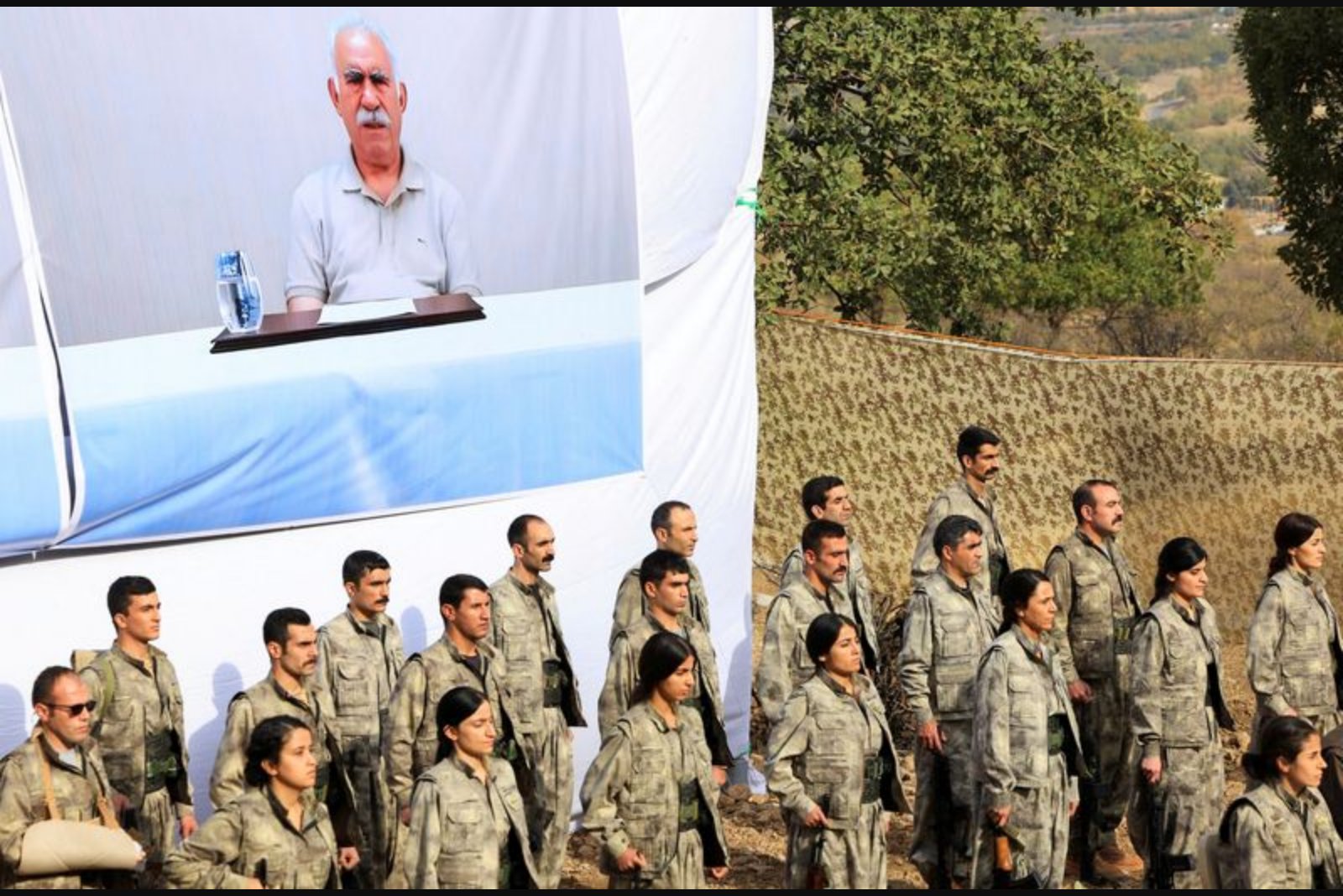
Just two weeks after a parliamentary commission in Turkey set out recommendations aimed at advancing a peace process with Kurdish militants, a war involving Iran erupted and upended the fragile political environment. The result: renewed instability across the Middle East and a near standstill in efforts to resolve one of the region's longest-running conflicts.
Turkish officials say they are closely watching Kurdish militant activity in Iran and Iraq and, according to a government official, helped block a brief U.S.-Israeli proposal to support a Kurdish militant ground incursion into Iran from Iraqi territory. Since that intervention, both Ankara and the Kurdistan Workers' Party (PKK), which operates out of northern Iraq, have adopted wait-and-see postures. Interviews with Turkish officials, members of parliament and PKK representatives indicate neither side is willing to make the next move while the wider region is destabilised.
That reticence has stalled momentum on measures that had been discussed as part of the peace process. The government appears hesitant to press ahead with potential legislative reforms, including a proposed amnesty for former PKK fighters, or to grant the PKK's jailed leader a formal position in negotiations. Ankara maintains that the PKK must fully disarm first. The PKK, which declared its dissolution last year, counters that disarmament without legal protections would expose its members and followers, and therefore insists legislation should precede any disarmament.
Senior PKK officer Murat Karayilan was quoted by the PKK-linked Firat News Agency as saying it would be "irrational" to lay down arms without Turkish legal guarantees while war "drones and missiles are flying overhead." That sentiment captures why both sides have chosen caution over risk-taking at a moment when the conflict's regional dynamics are shifting.
Waiting for democratic reforms
President Tayyip Erdogan has communicated that the peace process will continue. Yet stakeholders who expected parliamentary recommendations to translate into legislation are increasingly frustrated. Three months after a parliamentary commission pressed for reforms, no concrete legal steps have been taken.
"It is unequivocal that there is a pause, but not a complete halt," said Gulistan Kilic Kocyigit, a senior lawmaker from the pro-Kurdish DEM Party. She described the government's demand for full disarmament at this stage as "unrealistic" and said Ankara has not provided a clear explanation for its delay in pursuing democratic reforms. "I believe that they are, to some extent, waiting for developments in Iran and the broader Middle East," she added.
Failure to revive the peace process would prolong a conflict that began in 1984, has caused more than 40,000 deaths and spilled into neighbouring Syria. The ongoing stalemate therefore represents both a human tragedy and a persistent security challenge for the region.
War fallout constrains the process
Officials in Ankara say intelligence services are tracking a range of Kurdish militant factions in the region, including groups historically linked to the PKK, amid the war. Reporting in late April indicated that Turkey’s intelligence chief presented AKP party members with evidence that the PKK had not taken disarmament steps beyond a symbolic weapons-burning event last summer, a point Ankara says undermines the prospects for rapid progress.
From the PKK's perspective, the movement says Ankara's recalcitrance amounts to a unilateral freeze on the process. Zagros Hiwa, a spokesperson for the PKK's political wing, told Reuters that Turkey had "unilaterally frozen" the peace process in a manner that, in the PKK's view, served the ruling party's political interests.
The presidency has pointed to President Erdogan's recent public statements that the peace process is distinct from domestic politics, has gathered momentum and has reached a critical crossroads. Erdogan has also dismissed what he called "pessimists" who doubt the process will progress.
Political stakes and public opinion
The political stakes for Erdogan are pronounced. The collapse of a prior peace effort in 2013-2015 was followed by one of the most violent phases of the conflict. The PKK is designated a terrorist organisation by Turkey, the United States and the European Union.
Some opinion polling indicates growing public skepticism about whether peace will be achieved. A Konda Barometer survey cited in December found 79% of respondents believed the state had been wrong to engage with PKK leader Abdullah Ocalan; that view extended to 62% of voters for Erdogan's ruling AKP party. Those numbers suggest popular doubts that could complicate political calculations as Turkey moves toward another election period - the government has indicated new elections could be held as soon as next year.
Adding to the complexity, Devlet Bahceli, leader of Erdogan’s nationalist ally the MHP and an early proponent of the peace process, recently said Ocalan should be assigned an official role to reinvigorate talks. The government has not provided a response to that proposal.
Outlook
For now, the interplay between a newly destabilised Middle East and longstanding domestic divisions has produced a cautious pause in Turkey-PKK negotiations. Both sides say they remain committed in principle to resolving the conflict, but neither appears ready to accept immediate compromise on disarmament or legal guarantees while regional security risks remain elevated.