
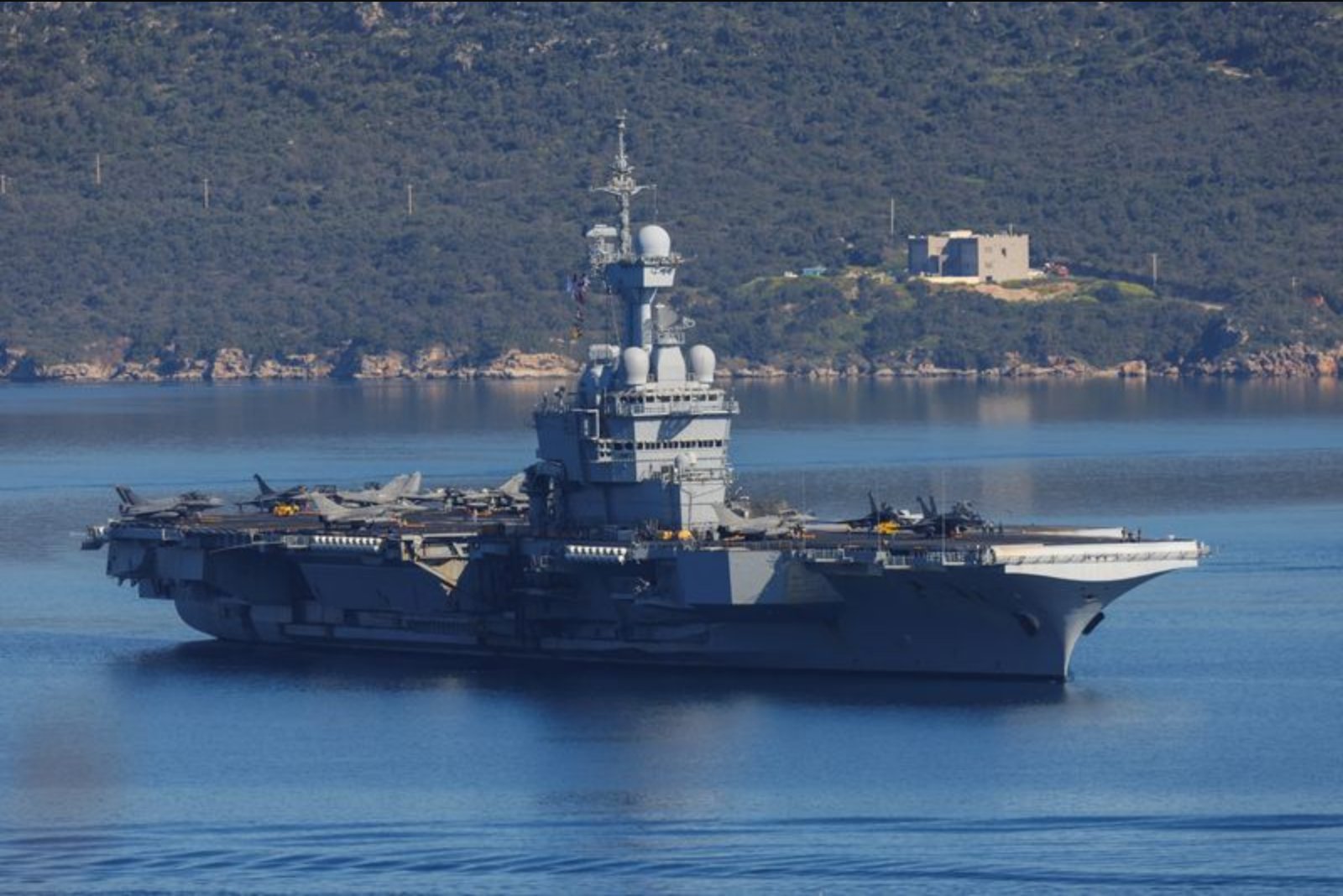
France on Wednesday ordered its carrier strike group into the Red Sea as authorities work on plans for a potential mission to protect shipping through the Strait of Hormuz. The deployment comes as Paris presses both Washington and Tehran to consider a diplomatic and security arrangement, citing the mounting economic consequences of competing maritime blockades.
Fresh exchanges of fire on Monday highlighted the risks involved. The clashes, involving U.S. and Iranian forces competing for control of the narrow waterway, have frayed a fragile four-week-old truce and bolstered rival efforts to impose blockades on the strait - a key route for global energy and trade.
Official rationale
In a briefing after the military announced the deployment, a French presidency official said the operation responds to an ongoing blockade of Hormuz that is inflicting growing harm on the world economy and carries an unacceptable risk of prolonged hostilities. "The reason why we must make a renewed effort today is simply that the blockade of Hormuz continues, the damage to the world’s economy is therefore becoming more and more pronounced, and the risk of a prolongation of hostilities is too serious for us to accept it," the official told reporters.
Franco-British plan under development
France and Britain have been drafting a proposal for several weeks aimed at preparing conditions for safe transit through the Strait of Hormuz once the situation stabilises or the conflict ends. The plan would require coordination with Iran, and officials say around a dozen countries have signalled willingness to participate following preliminary meetings.
The French army said the aircraft carrier Charles de Gaulle, accompanied by an Italian and a Dutch warship, was en route to the southern Red Sea. The military described the deployment as intended to assess the regional operational environment, broaden crisis-management options to bolster security, enable integration of partner countries' assets within a defensive framework consistent with international law, and reassure maritime trade stakeholders.
Terms being proposed
According to the French presidency official, the proposal links reciprocal commitments from Tehran and Washington to the deployment of a multinational force to secure convoys through the strait. The official outlined the concept as follows: Iran would receive passage for its ships through the Strait in return for committing to negotiate with the Americans on issues including nuclear materials, missiles, and regional concerns. The United States, for its part, would lift its blockade of the Strait and secure Iran's commitment to enter talks.
"Under these conditions we could deploy the multinational force to secure the convoys crossing the Strait of Hormuz and this obviously requires that the Iranians not fire on the ships," the official said.
Questions over Iranian acceptance
The official acknowledged uncertainty about why Iran would accept such terms, noting that control over the strait has been an element of Tehran's leverage in talks with the United States to end the war. "We collectively want to send the signal that not only are we ready to secure the Strait of Hormuz, but that we are also capable of doing so," the French presidency official said. "The question now will be to obtain Iranian consent, American consent."
European posture and economic considerations
European countries have largely remained observers in the confrontation between the United States, Israel and Iran. But disruptions to Middle Eastern shipping lanes and swings in oil prices around $100 a barrel have forced European powers to confront how best to protect their interests.
European reluctance to back the U.S.-led blockade has drawn criticism from U.S. President Donald Trump, who has accused countries of failing to align with Washington's efforts. Officials suggested that the decision to dispatch assets to the region may be intended in part to address those criticisms by demonstrating concrete engagement.
Operational aims reiterated
The military framed the deployment as multidimensional: to gather intelligence on the operational environment, to expand crisis-management options, to strengthen maritime security and to create a structure in which partners' assets could be integrated defensively and in line with international law. Reassuring shippers and other stakeholders in maritime trade was emphasised as a key objective.
How negotiations between Tehran and Washington evolve - and whether Iran would agree to refrain from firing on transit vessels - remains central to whether a multinational security mission could be established and operated effectively in the Strait of Hormuz.