
Summary
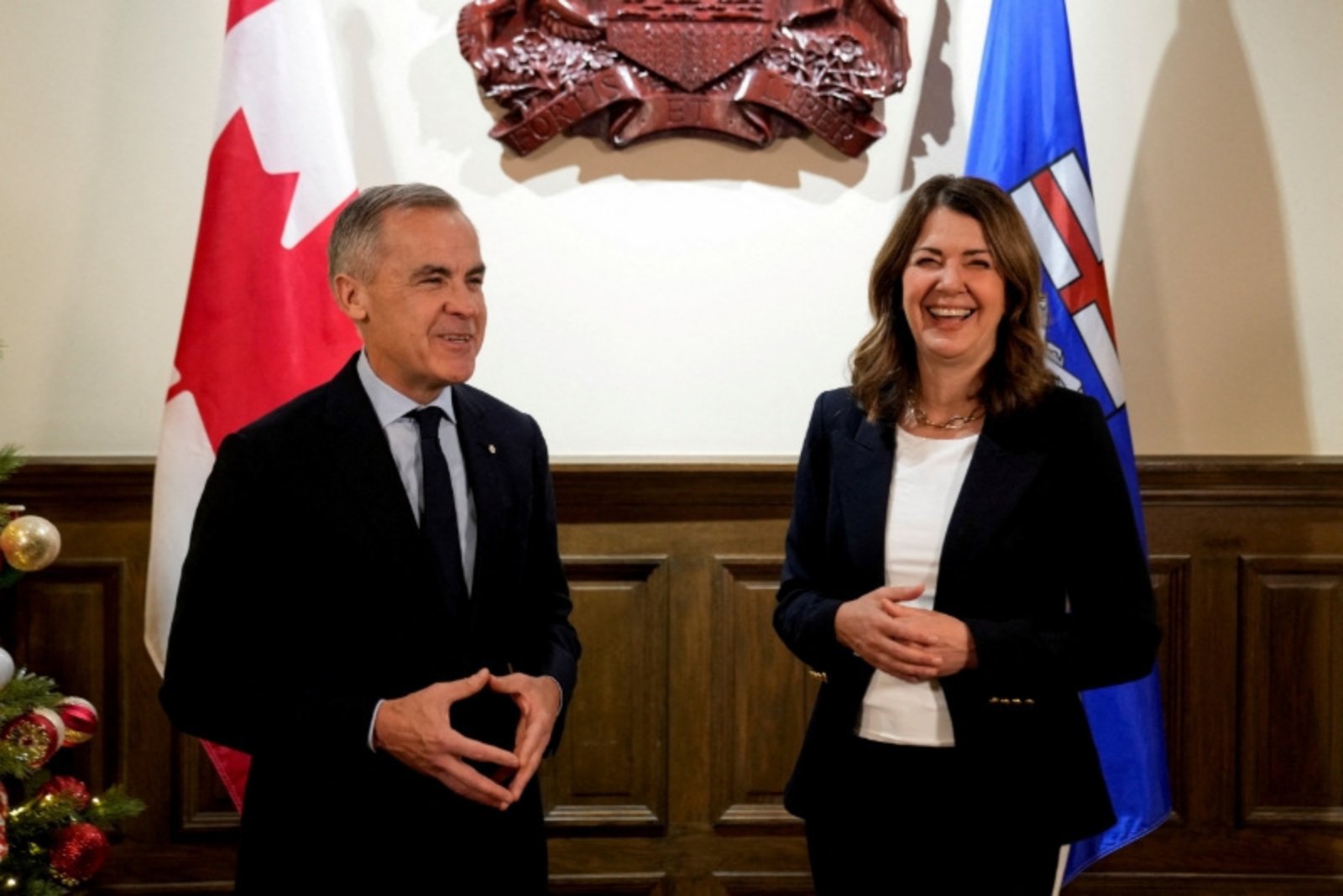
A provincial judge has temporarily halted the process by which Alberta separatists sought to trigger a referendum on leaving Canada, ruling this week that Indigenous consultation should have been required before allowing the petition to proceed. The ruling, which Premier Danielle Smith said is "incorrect in law," will be appealed by the provincial government, but it introduces a major barrier to a campaign already struggling with internal and external controversies. The decision lands as federal leader Mark Carney prepares to travel to Alberta for negotiations on parts of an energy deal with Smith.
Legal decision and its basis
On Wednesday, Justice Shaina Leonard concluded that Alberta’s chief electoral officer erred by permitting supporters of independence to collect signatures for a referendum without first consulting Indigenous peoples whose treaty rights might be affected. Justice Leonard wrote that "Alberta independence would fundamentally contravene" the land treaties Indigenous nations signed with Canada, and that the petition process should have prompted engagement with the potentially affected First Nations.
The ruling directly challenges the procedural route separatists had used to try to place a question about Alberta sovereignty on the ballot in an October referendum. Separatist organisers had delivered a petition to Elections Alberta containing more than 300,000 signatures; the signatures have yet to be validated, but the total would exceed the lowered threshold adopted last year after the provincial government reduced the number of signatures required by half.
Political reactions and next steps
Premier Danielle Smith, who enacted several legislative changes last year intended to ease the pathway for a referendum, signalled her government would appeal Justice Leonard’s ruling. Smith described the decision as "incorrect in law" and said her caucus would meet to "discuss the full context and make some decisions after we’ve had a chance to talk it through." Smith has not formally endorsed independence herself, although segments of the separatist movement have expressed support for her leadership.
Jeff Rath, a spokesman for the separatist group Stay Free Alberta, told Reuters that irrespective of the court outcome, "301,620 members of Danielle’s base expect her to call the question." Rath’s comment frames political pressure within the province even as the legal process plays out.
Indigenous rights and legal standing
First Nations argued their treaties are with Canada and predate Alberta’s creation as a province, and they urged the court to prevent the referendum petition from moving forward without prior consultation. Chief Allan Adam of the Athabasca Chipewyan First Nation emphasized that treaties are constitutionally embedded and that First Nations will continue to be recognized: "Our treaties are embedded into the constitution and we as First Nations people are always going to be recognized," he said. "The land belongs to us."
McMaster University political scientist Adrienne Davidson observed that the First Nations’ legal argument has the potential to block separation in a way that goes beyond a temporary injunction - because the treaties referenced by the court predate provincial formation and are foundational to Indigenous rights. "The treaties in question actually predate the creation of Alberta as a province," Davidson said.
Campaign vulnerabilities: data breach and foreign contacts
Separatist organisers have confronted additional setbacks in recent weeks. Elections Alberta said it was investigating the unauthorised use of a voter list by the Centurion Project, a separatist group that obtained a database containing personal information on hundreds of voters. That same database had been legally provided to the Republican Party of Alberta, another separatist-aligned organisation. Both the Republican Party of Alberta and the Centurion Project have denied wrongdoing.
The movement also attracted international scrutiny after the U.S. State Department confirmed staff-level meetings occurred with members of Alberta’s separatist movement earlier this year. While the State Department stated there would be no future meetings, Justice Leonard’s ruling noted the possibility of foreign interference as a material risk in the context of a referendum process involving potential provincial separation.
Grace Skogstad, professor emerita of political science at the University of Toronto, argued the combination of a data breach and suggestions of external engagement harms the movement’s credibility. "People aren’t going to like that voter lists are being mishandled," she said, calling the developments "a very bad look" for separatists.
Implications for federal-provincial relations and Carney’s visit
Prime Minister Mark Carney has positioned himself as seeking national unity while managing diplomatic and trade tensions, including U.S. tariffs. Carney, who spent much of his childhood in Edmonton, said he is working to strengthen Alberta along with the rest of Canada. "As someone who was raised in Alberta ... I view that very much the best place for Alberta is in Canada," he said on Thursday.
Observers caution that the federal leader faces a delicate balancing act as he travels to Alberta on Friday to finalize parts of an energy arrangement with Premier Smith. Davidson warned that it could be politically risky for Carney to be perceived as dismissing the sovereignty debate: "It could be dangerous for Carney if he steps into the conversation about Alberta and tries to dismiss the sovereignty idea," she said. "It could be seen as Ottawa just trying to run the show and could absolutely backfire for him."
For Carney, the separation debate arrives as an added complication while he navigates broader trade and diplomatic issues with the United States - matters he has identified as priorities in seeking a united Canadian front.
Where the campaign stands
Polling has consistently indicated that only about one-third of Alberta’s electorate supports separation, a persistent barrier to the movement’s ambitions. The legal decision this week, combined with the data-handling controversy and questions about external contacts, narrows the window for separatists to advance their cause ahead of any planned October referendum.
The provincial government intends to appeal Justice Leonard’s ruling, and separatist organisers maintain public pressure for a referendum question to be placed before voters. Yet the legal and reputational obstacles now in view mean the movement faces significant hurdles before any referendum could proceed.
This report consolidates statements from the court ruling, political figures, Indigenous leaders, and academics as they pertain to the current pause in the Alberta referendum petition process.