
Overview
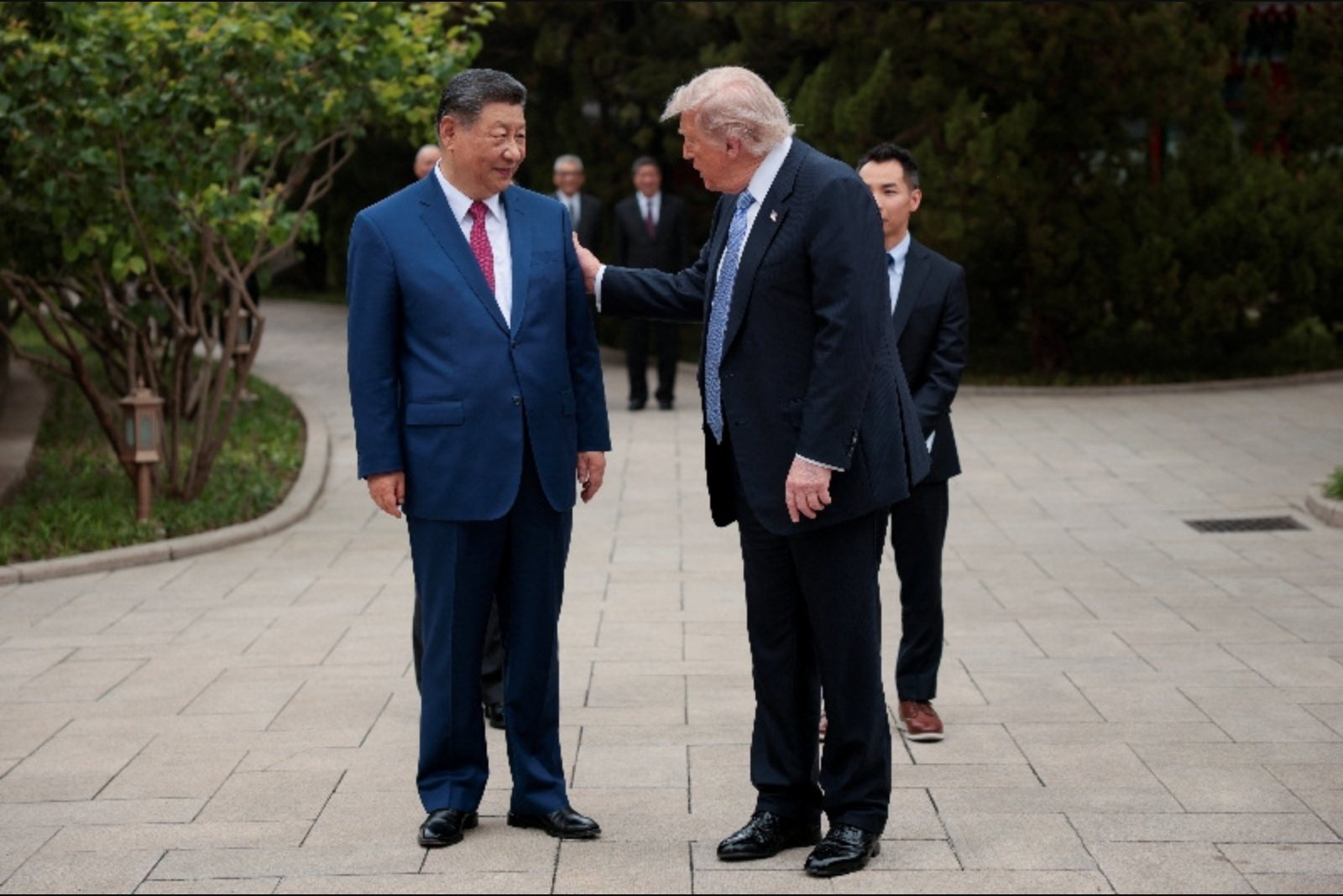
The high-profile meeting between U.S. President Donald Trump and Chinese President Xi Jinping dominated headlines but produced few market-moving deliverables. Attention instead returned to the persistent impasse in the Middle East, a development that is lifting inflation and driving bond yields higher across the globe.
Summit outcomes and energy expectations
Public ceremonies and cordial exchanges marked the summit, but substantive announcements were scarce. Observers had anticipated larger commercial agreements; instead, the visit concluded with the finalization of a Boeing deal that was smaller than markets had expected. Leaders also spoke of a potential “double-digit billions” transaction for China to increase purchases of U.S. agricultural goods, but no firm, large-scale package was unveiled.
Energy markets, which many had hoped the summit could help stabilise given the ongoing Iran conflict, found little relief. The conflict is now set to enter its 13th week, and hopes for a swift resolution were dampened. President Trump had earlier described the month-long ceasefire as being "on life support" before discussing the situation with Xi. Following talks, the White House said the two leaders agreed the Strait of Hormuz should be fully reopened and that Beijing had promised not to send military equipment to Iran. Even so, China - the largest purchaser of Iranian crude - made no binding pledge to pressure Tehran to reopen the strait, a dynamic that is already affecting China’s imports.
Oil markets: firm prices and a fragile calm
Oil remained comfortably above $100 per barrel throughout the week, rising around 3% early on Friday after last week’s hopes for a prompt resolution to the Gulf tensions evaporated. Despite the sharp headline numbers, market moves have been relatively contained given the geopolitical stakes. The physical oil market has settled into a delicate global balance: U.S. and other producers have increased exports to offset much of the Middle East supply shortfall, countries have drawn down inventories, and China has cut back on purchases. Russia has also contributed by increasing its energy exports. That combination has helped steady markets for now, but the approach of peak summer demand raises the prospect that current calm could prove temporary.
Reports have indicated that more tankers have recently transited the Strait of Hormuz, apparently with Tehran’s consent. While that trend may provide short-term relief for trade flows, analysts described it as an unsustainable new norm in the Gulf that may ultimately produce fresh security incidents and renewed disruption.
Inflation and the policy backdrop
Inflation took center stage as the dominant market story. U.S. consumer and producer price indices for April recorded their largest monthly gains in years, driven in significant part by the energy shock. Even the "trimmed-mean" inflation rate - a measure that excludes the most extreme monthly price moves - rose. That metric is noted as a preferred gauge of incoming Federal Reserve Chair Kevin Warsh, who was confirmed by a Senate vote on Wednesday.
Warsh faces a difficult set of choices. Though he might lean toward more dovish policy settings - the stated preference of President Trump - selling easing to markets and policymakers will be challenging given the recent inflation readings. There remains a stated case for rate cuts, but the April inflation prints weakened that argument. Indeed, market participants now view a rate hike as more likely than a cut in the coming year, in part because the Fed may feel compelled to demonstrate its willingness to act in order to preserve its credibility.
Bond markets under pressure
Global bond markets have taken the consequences of rising inflation and energy costs hard. The recent 30-year U.S. Treasury sale saw yields reach 5.046% - the highest level for that maturity since August 2007. Shorter-term borrowing costs are also edging upward. This surge in yields is not limited to the United States; yields are climbing across Group of Seven economies as inflationary pressures and other aggravating factors mount.
Britain has proved particularly vulnerable. Political uncertainty has pushed long-term borrowing costs to their highest levels in almost 30 years. Within the U.K., Prime Minister Keir Starmer faced calls to resign after his Labour Party suffered heavy losses in local elections last Thursday. Starmer has resisted those demands so far, but the possibility of a leadership challenge remains.
Equities and the AI impulse
Despite mounting inflation and bond-market pain, major global equity indices mostly shrugged off the negative headlines for much of the week. Optimism around artificial intelligence continued to buoy markets, with U.S. benchmarks recording fresh highs on Wednesday and momentum spilling into Thursday. A tech-led rally, driven in part by Nvidia, followed news that the U.S. had cleared about 10 Chinese firms to buy its H200 chips. Asian tech-heavy indexes also advanced earlier in the week, with South Korea’s SK Hynix appearing set to soon join Samsung in the trillion-dollar market-cap club, although those gains faltered on Friday amid the global bond-market rout.
Looking ahead, Nvidia - the world’s most valuable company - is scheduled to report earnings next week, an event that could refocus investor attention and potentially perpetuate the AI-driven market narrative that has masked other concerns.
Further reading and topical questions
For readers seeking more data-driven perspectives on markets and commodities, the publication’s Open Interest feature highlighted several timely questions for further exploration:
- Why might immigration crackdowns lead to higher taxes?
- What are likely to be some surprising casualties of the Hormuz closure?
- Which of Kevin Warsh’s potential red lines may worst worry world finance?
- Why might stock market concentration be a feature of future equity markets, not a bug?
- Why are global energy giants unlikely to boost production amid elevated prices?
- How is the Iran war shaping China’s commodity imports?
Weekend reading, listening and viewing
The weekend selection of columns and commentary highlights how different sectors are adapting to current strains across energy, metals and tech supply chains:
- One column examines how European aviation is coping with severe jet fuel disruptions from the Middle East and concludes airlines are managing the shock more effectively than expected.
- A policy analysis from a Brussels-based think tank assesses where Europe stands on chip strategy and why the region may be lagging in the global tech surge.
- An article focused on critical metals contends that the key bottleneck for rebuilding U.S. supply chains is not capital or mining projects but the availability of trained workers, noting long-term declines in mining employment and undergraduate enrollment in mine engineering.
- A guide profiling electricity-sector thought leaders offers perspectives on grids, power-system development, financing and corporate strategy related to the global energy transition.
- An economics piece argues that central-bank rate hikes could paradoxically be inflationary - or at least less effective in curbing inflation - given the country’s strained fiscal position.
On audio, an appearance on an energy markets podcast discussed the current state of oil markets and the realistic expectations from the Trump-Xi summit. The commentary also included a light note linking the summit to a humorous food-related acronym.
For video, a prominent professor hosted a discussion with an activist and former trader on wealth inequality, debating whether wealth taxes and stricter enforcement can reverse trends that show U.S. workers’ income as a share of national output at its lowest since records began in 1947.
Concluding observation
The week’s events reinforced that geopolitics and energy remain central drivers of financial conditions. The Trump-Xi meeting offered cordial diplomacy and a limited set of commercial commitments, but it did little to alter the near-term trajectory of oil markets or to remove the inflationary pressures those markets are imposing. With consumer and producer prices in the U.S. showing notable monthly gains, and with long-term borrowing costs climbing, policymakers now face a more complex backdrop. Markets will be watching how newly installed and incoming officials, notably the Fed under Kevin Warsh, navigate the trade-offs between supporting growth and maintaining monetary credibility as summer demand looms for energy markets.
If you have observations or questions about how these developments may affect specific sectors or portfolios, feedback is welcome.