
Hook & thesis
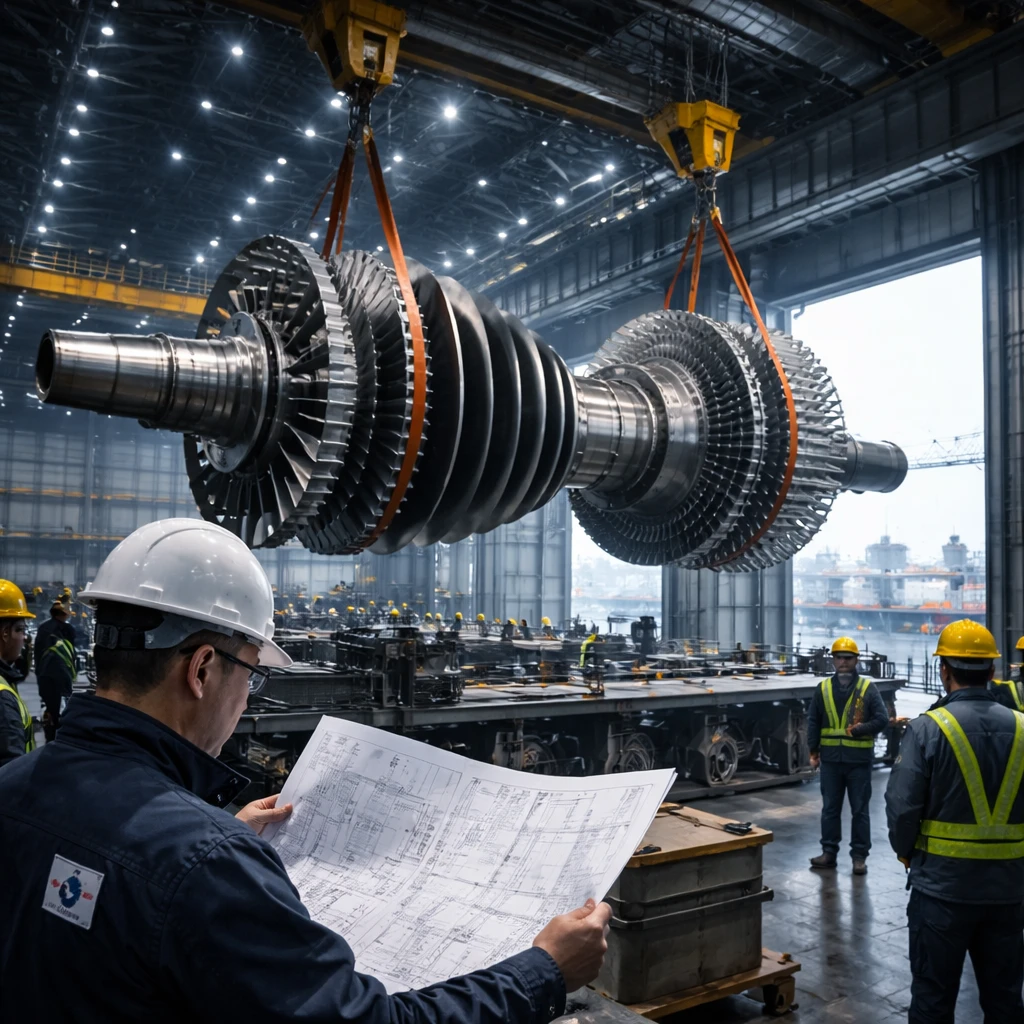
Korea Electric Power (KEPCO) is better known as a vertically integrated utility, but the practical investment angle today is its industrial footprint - heavy turbines, repair and overhaul services, and a growing push into high-volume manufacturing (HBM) for global markets. With commodity volatility and elevated energy prices, utilities and power-plant operators are prioritizing uptime and turnkey service agreements. KEPCO's scale, combined with newly focused export efforts, makes it a tactical long for investors willing to take a mid-to-long-term view tied to execution.
My trade idea: take a controlled long position now, with a clearly defined entry at $9.50, a conservative stop at $8.25 and an initial target at $12.00. The trade banks on accelerating service revenue, better margins as HBM scale kicks in, and the macro tailwind of higher fossil-fuel and electricity prices that increase serviceable demand for turbines and balance-of-plant work.
What the company does and why the market should care
KEPCO operates large thermal and nuclear power assets and has industrial capabilities in turbine manufacturing, maintenance and aftermarket services. That combination is valuable for three reasons:
- Installed base monetization - Every GW of thermal or nuclear capacity requires periodic turbine overhauls and parts. A company that both operates plants and can service third-party turbines enjoys an insider view on demand and can cross-sell field services.
- HBM scale lowers unit costs - Moving from bespoke jobs to higher-volume, standardized parts and rebuilds can compress lead times and increase margins on service work.
- Macro tailwinds - With fuel and oil prices pushing higher, many countries delay decommissioning of baseload thermal plants and extend maintenance cycles to keep capacity online. That translates to near-term demand for turbine services and parts.
Why this is a trade, not a buy-and-forget
KEPCO has structural strengths but also visible execution and regulatory risks. The timing here matters: if management can convert pilot HBM projects into repeatable contracts and lock in multi-year service agreements abroad, the stock can rerate. If not, the upside is limited by regulatory constraints and capital intensity. This trade balances those possibilities with tight risk controls.
Supporting evidence and market context
Public markets are reacting to wide energy-market gyrations; oil approaching $100/bbl and higher regional fuel costs mean power producers prioritize reliability and retrofit investments over greenfield builds in the near term. That theme supports aftermarket turbine demand. Also, broader equity-market valuations are elevated, which encourages investors to rotate into industrials with visible cash conversion - a category KEPCO can slot into as service revenue grows.
Valuation framing
KEPCO traditionally trades as a utility with infrastructure-like multiples. That baseline valuation discounts industrial upside. If the market begins to value a larger share of revenue as higher-margin industrial services, the multiple should expand. For this trade I am not assuming a speculative takeover or an extreme rerating - I expect a multiple expansion consistent with an operational beat and clearer visibility on multi-year service contracts. The target at $12.00 reflects a modest multiple re-rating combined with a step-up in margins from HBM scale; the stop prevents large capital loss if execution stalls or political/regulatory pressure intensifies.
Trade plan
| Parameter | Instruction |
|---|---|
| Trade direction | Long |
| Entry | $9.50 |
| Stop-loss | $8.25 |
| Initial target | $12.00 |
| Time horizon | Long term (180 trading days) |
| Risk level | Medium |
Rationale for the horizon: converting pilot HBM runs into steady-state production and closing the first multi-year external service contracts are 3-6 month processes. The 180-trading-day horizon gives time for visible contract wins, initial margin expansion, and the market to reprice a larger services mix.
Catalysts - what to watch
- Announcement of multi-year offshore turbine service contracts or export sales showing HBM economics.
- Quarterly results that show sequential improvement in service margins or growing backlog of external service orders.
- Regulatory signals or government-backed financing that facilitates exports and plant modernization programs.
- Macroeconomic energy shocks - sustained higher fuel prices that increase the urgency for plant maintenance and overhauls.
Risks and counterarguments
This is a real-business trade and it carries several non-trivial risks. I list the main ones and what would mitigate them.
- Regulatory and state-control risk - As a company with significant public or government interaction, KEPCO can be subject to policy decisions that limit export agility or require domestic price concessions. Mitigant: visible government programs that explicitly back export or industrialization efforts would reduce this risk.
- Execution risk on HBM and scaling - Transitioning from bespoke overhauls to high-volume standardized parts requires process change, capex and supply-chain reliability. Mitigant: early contract renewals or references from external customers prove the model.
- Energy transition risk - Faster-than-expected retirements of thermal plants in key markets would reduce long-term demand for turbine services. Mitigant: diversification into hydrogen-capable turbines, retrofits, or grid-stability services.
- Balance-sheet and capex pressure - Heavy manufacturing and export campaigns require capital. Excessive leverage or cash drain would limit upside. Mitigant: evidence of project-level financing or non-dilutive government support.
- Competition from established OEMs - Global turbine OEMs and aftermarket specialists have entrenched positions; winning share requires price, quality and logistics advantages. Mitigant: competitive pricing enabled by HBM and a fast service response using KEPCO's operational know-how.
Counterargument - why not pass: A reasonable counterargument is that the market is already skeptical of utility-related industrial pivots and will require several quarters of proof before re-rating. If HBM fails to deliver unit-cost improvements or external customers remain cautious, KEPCO's stock could languish or underperform utilities with cleaner regulatory outlooks. That outcome is fully plausible and is the primary reason for the tight stop.
What would change my mind
I will revisit the trade if any of the following occur:
- Clear signs of execution failure - missed HBM milestones, project cancellations, or deteriorating margins in service lines.
- Material regulatory setbacks - explicit government directives that constrain exports or force heavy domestic price cuts without compensatory support.
- Balance-sheet deterioration - significant new debt issuance or equity dilution to fund HBM that undermines returns.
- Conversely, a string of contract wins and visible backlog growth would move my target higher and potentially widen position sizing.
Practical trade management
Enter at $9.50 and size the position so the maximum loss to the portfolio if stopped at $8.25 is within your risk tolerance (commonly 1-2% of portfolio). If KEPCO prints two successive quarters of margin improvement driven by external service revenue and announces at least one multi-year export contract, move the stop to breakeven and consider adding to the position. If the stock reaches $12.00, take partial profits and re-evaluate against new institutional interest and backlog numbers.
Conclusion
KEPCO is a pragmatic trade: not a speculative technology call and not a low-volatility regulated-utility hold. The opportunity hinges on industrial execution and market willingness to pay for a higher-margin services profile. The entry at $9.50 with a $8.25 stop and a $12.00 initial target provides a defined-risk way to participate in that potential re-rating over a 180-trading-day horizon. Watch contract announcements, service-margin progression and any regulatory signals - those will determine whether this trade becomes a longer-term position or a tidy tactical gain.