
Hook and thesis
Luxury is not immune to technological upheaval. If anything, the rise of AI, hyper-personalization and mass-produced ‘artisanal’ knockoffs will increase noise in the luxury market. That noise matters because real scarcity - objects that are scarce by design, impossible to automate and backed by centuries of craft - becomes a clearer signal. Hermès is the archetype: deeply artisanal, tightly managed production, and margins that reflect pricing power rather than scale. Our view - Hermès is a buy for investors seeking asymmetric exposure to durable pricing power in an era of abundance.
We present a concrete trade: enter at $1,760.00, stop at $1,520.00, target $2,100.00
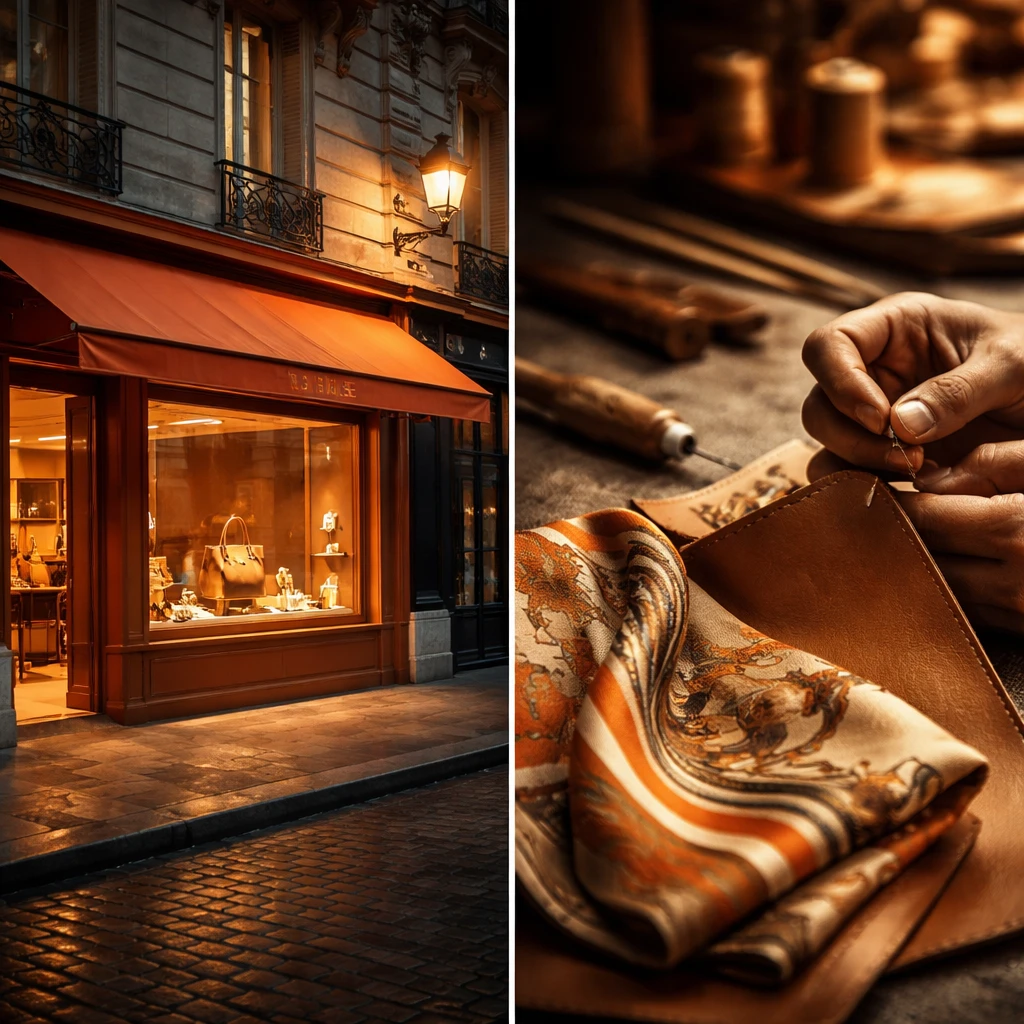
What Hermès does and why the market should care Hermès operates at the extreme high end of leather goods, silk, ready-to-wear and accessories. The business is not driven by scale; it is driven by scarcity, craft and a carefully controlled supply pipeline. That operating model produces two outcomes investors care about: persistent pricing power and structural margin resilience. In a market where AI can generate designs, recommendations and near-perfect personalization at scale, what cannot be replicated is time-honored handwork and certification of authenticity. Hermès’ scarcity is thus an investable moat. Supporting argument - qualitative but concrete Even without heavy reliance on volume growth, Hermès has historically extracted robust gross and operating margins from tier-one pricing and limited sell-through. The firm's model of limiting production of marquee items like the Birkin and Kelly creates secondary market premiums that reinforce primary-market pricing. For investors, that means the company can raise prices and sustain margins even if broader luxury demand stalls or digital channels commoditize other segments. Valuation framing Hermès trades more like an annuity tied to brand exclusivity than a fast-growth consumer name. Valuation should be judged relative to the quality and durability of cash flows, not pure revenue growth. Premium multiples are justified when margins and pricing power are structurally defended. Investors should value Hermès with asymmetric return expectations: modest top-line growth but steady margin expansion and optionality from expanding retail and private-market interest in authenticated vintage items. In short, this is a quality premium trade rather than a deep-value or momentum play. Catalysts (2-5) Trade plan - actionable and time-bound Trade direction - long. Entry price - $1,760.00. Stop loss - $1,520.00. Target - $2,100.00. Time horizon - long term (180 trading days). Rationale: Entering at $1,760 buys into a quality luxury moat at a point that leaves room for transient market volatility. The stop at $1,520 limits downside if pricing power shows signs of erosion or if macro-driven liquidation overwhelms luxury flows. The $2,100 target is achievable if Hermès can sustain price increases and the secondary market maintains its premium - a roughly 19% upside from entry. Position sizing - treat this as a core-conviction allocation within a diversified portfolio. Given the brand’s premium risk-reward, a 2-5% portfolio allocation is reasonable for most investors depending on risk tolerance. Catalytic timeline and what to watch Risks and counterarguments No investment in luxury is risk-free. Below are the primary risks to this thesis and a direct counterargument to keep the thesis honest. Counterargument The core counterargument is that technological advances - including AI-driven customization, 3D printing and high-fidelity replication - could democratize aspects of what shoppers once paid premiums for. If consumers increasingly value hyper-personalized, near-luxury items that mimic the look and feel of Hermès products at a fraction of the price, the needle could move away from exclusivity-based consumption. That scenario would pressure volumes and force Hermès to either compete on scale or narrow its exclusivity further - both outcomes would change the valuation story materially. How this trade will be won or lost This trade depends on two linked outcomes: Hermès retains scarcity via production discipline and the wealthy continue to prioritize brand-authenticated scarcity over cheaper personalization options. Signs the trade is failing would include sustained declines in resale premiums, repeated margin compression driven by wholesale discounting, or strategic decisions by management to scale production of marquee items. Conclusion and what would change my mind Hermès represents a concentrated way to play scarcity in a world trending toward abundance. The company's craft-oriented model and narrow production policy offer a durable moat, and that moat should be more valuable as AI-driven abundance increases background noise in the luxury space. Our trade is a long with entry at $1,760, stop at $1,520 and a target at $2,100 over 180 trading days. The risk is real - macro shocks, brand dilution and secondary-market dynamics are the primary threats. I would change my view if Hermès materially increases production of marquee items, if resale values tumble for a sustained period, or if management abandons scarcity as a strategic priority. Conversely, evidence of continued resale strength, repeated price hikes without demand erosion, or successful geographic expansion that retains exclusivity would reinforce this bullish stance. Key monitoring checklist Trade with discipline: enter at $1,760, respect the $1,520 stop, and aim for $2,100 over the next 180 trading days. If the market rewards well-managed scarcity in an age of abundance, Hermès should outperform a commoditized luxury cohort.