
Heightened international attention on Greenland since Donald Trump declared his aim to seize it has coincided with a renewed appetite for business activity on the island, and stakeholders say investment in tourism is likely to show returns sooner than development of large-scale mineral extraction.
While the governments of Greenland and Denmark have repeatedly rejected the notion that the self-governing territory should become part of the United States, the media spotlight has nonetheless driven an increase in external interest in commercial opportunities there.
Peder Lundquist, chief executive of Denmark’s export credit agency EIFO, said he senses a shift in momentum compared with prior periods. "I am actually convinced that it is different this time. There is a different sense of urgency," Lundquist said. He added that EIFO sees a comparatively quicker route to creating local value through tourism than through raw-material projects. "We believe there is a faster path to local value creation in tourism than there is in raw materials," Lundquist said. "Raw materials have a long-term and solid value creation, but it is over decades."
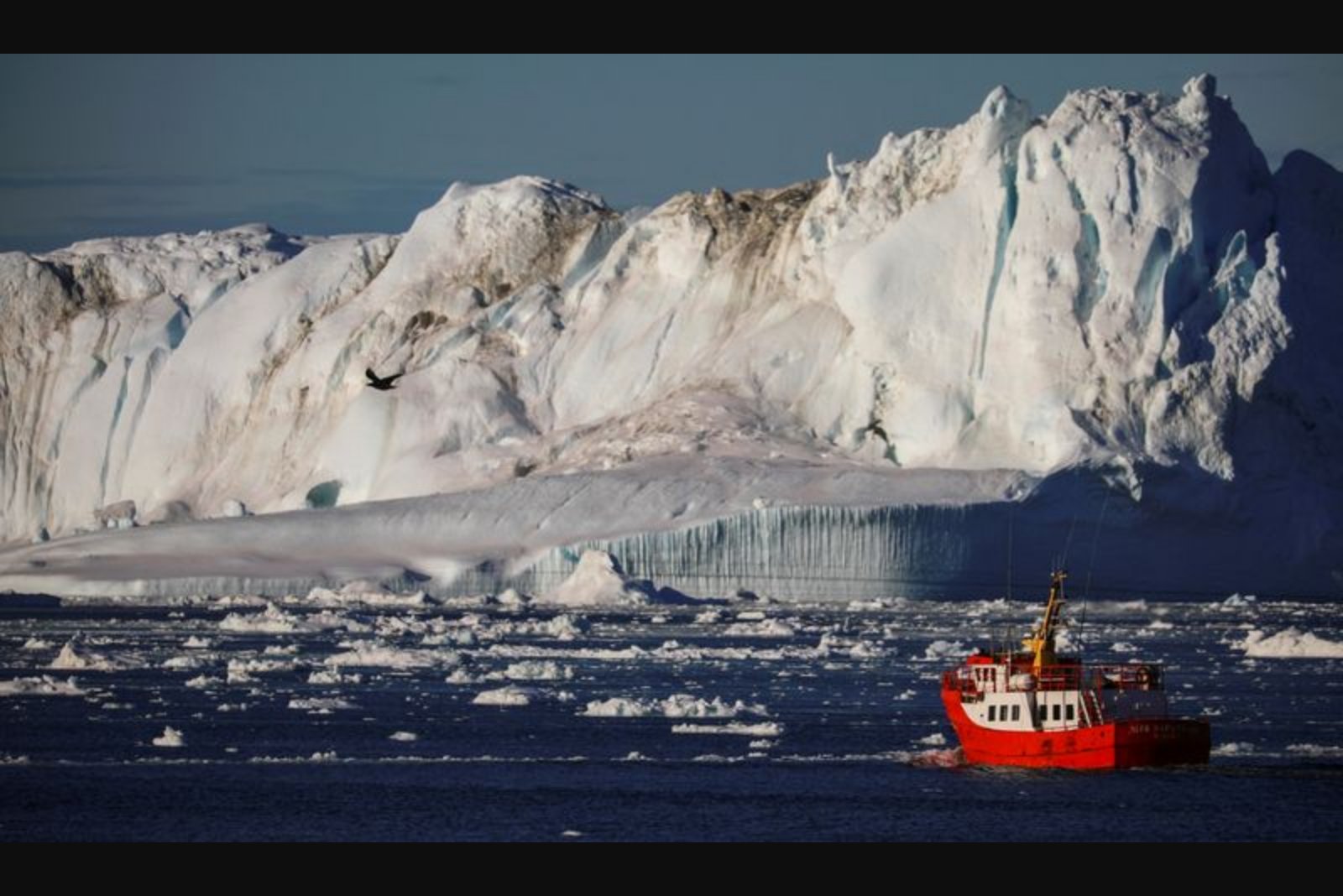
EIFO is supporting work to assess how to expand visitor numbers around Ilulissat on Greenland's west coast, the town that will soon receive an international airport. The surrounding Disko Bay area draws cruise ship visitors because of its dramatic scenery and rich Arctic wildlife. The study funded by EIFO will evaluate harbour capacity, feeder infrastructure and strategies for dispersing tourists across the region to manage peak volumes and reduce pressure on concentrated sites.
Tourism growth in Greenland has been constrained historically by limited capacity during the peak summer months. Project planners and financiers are examining ways to increase the number of visitors while improving the supporting infrastructure that channels those visitors into a broader geographic footprint.
Trump has argued publicly that Greenland's strategic location and the minerals beneath its ice - including gold and precious rare earth materials used in technology products - make it important to the United States. To date, however, significant mining activity has been limited on the island, which is home to about 57,000 residents who typically elect leaders committed to preserving the natural environment.
Greenland’s Prime Minister Jens-Frederik Nielsen, speaking to journalists in Copenhagen, reiterated that his government is willing to engage with external investors but will not forgo environmental safeguards. "We have high environmental standards and that’s just how it is in Greenland, because we live off the nature, we live off the sea and that will never change no matter how many critical rare earth minerals we have," he said.
The European Union has indicated plans to increase financial support to Greenland and has designated the GreenRoc graphite project as critical in efforts to bolster the bloc’s supply chain for relevant materials. EIFO has also provided backing to GreenRoc.
Despite that support, Lundquist cautioned that he does not expect large-scale mining projects to emerge quickly. He cited environmental standards as a limiting factor and said major extraction operations are unlikely to be commercially viable without some form of public-sector guarantees. "My claim would be that if you want this at larger scale, you need political backing of some kind," Lundquist said. He suggested that such backing could include minimum price guarantees for extracted materials, potentially from the EU or the Danish government.
At smaller scales, transactions are already advancing. EIFO anticipates completing three to five new transactions in 2026 and is weighing participation in financing for Suliaq, a subsidiary of gold miner Amaroq. Suliaq is seeking between $20 million and $35 million to procure equipment for Arctic mining that is currently scarce or unavailable in Greenland.
($1 = 6.3736 Danish crowns)
Analyst perspective
From a production and supply-chain viewpoint, projects that expand airport and harbour capacity and create feeder infrastructure can translate to revenue and local employment more quickly than the multi-decade timelines associated with large mineral deposits. Mining operations typically require substantial upfront capital, specialized equipment and often policy instruments or guarantees to de-risk investment at scale, according to EIFO's outlook.