
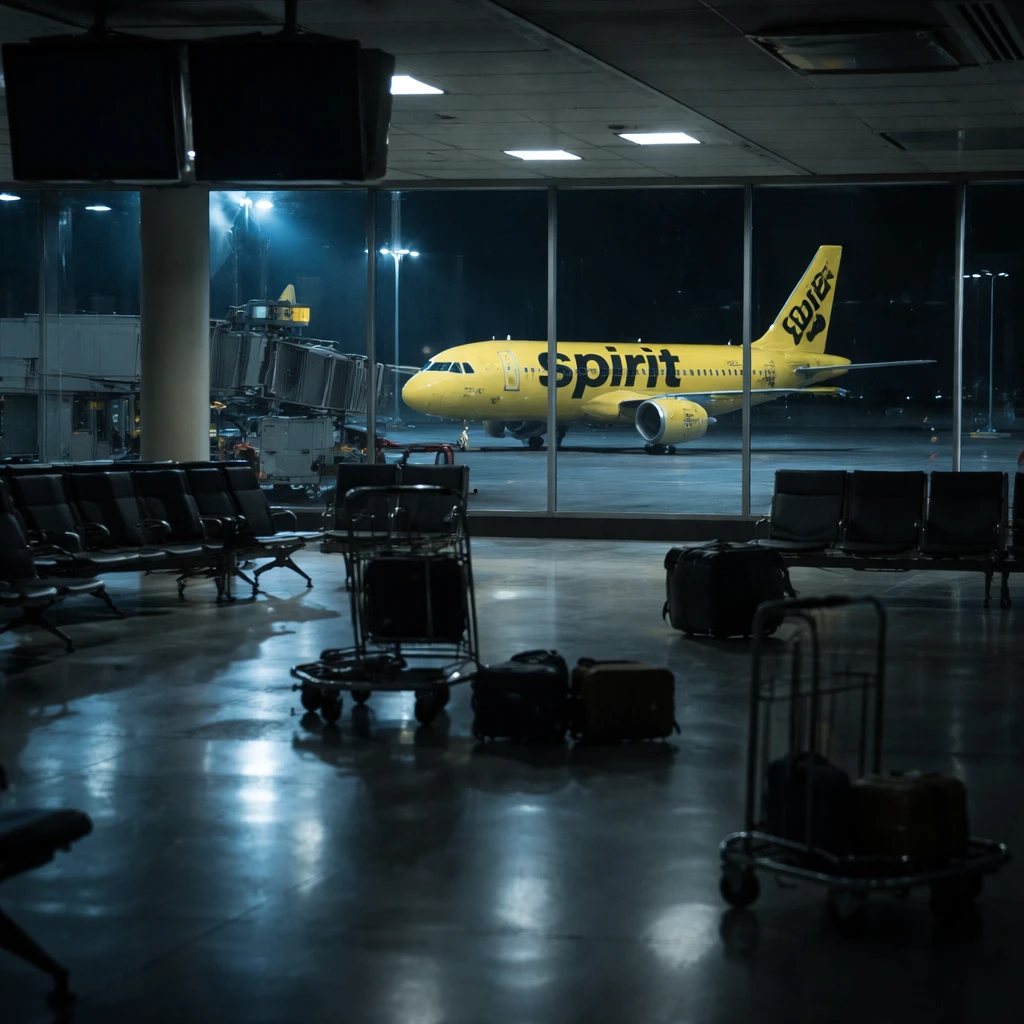
Spirit Airlines announced an immediate shutdown of operations early Saturday, cancelling every scheduled flight and effectively ending its 34-year existence as an ultra-low-cost carrier.
On its public statement page the airline said: "To our Guests: all flights have been cancelled, and customer service is no longer available." The message added, "We are proud of the impact of our ultra-low-cost model on the industry over the last 34 years and had hoped to serve our Guests for many years to come."
Passengers were explicitly told not to go to the airport and were directed to a designated shutdown website for information on refund status and next steps.
Spirit had been attempting to complete a restructuring to emerge from bankruptcy for a second time in less than a year, but those efforts were unsuccessful. The company attributed part of its difficulty to rising jet fuel costs linked to the war with Iran. In recent weeks the airline also sought financial assistance from the White House.
According to reporting in the run-up to the shutdown, President Donald Trump initially appeared receptive to providing help. Yet on Friday news emerged that an imminent shutdown was likely after discussions among the airline, its bondholders and the White House failed to produce an agreement.
Flight tracking data showed no Spirit callsigned flights in the air as of early Saturday. Social media posts and tracking records indicated the last Spirit flight, NK1833 from Detroit to Dallas, touched down at 1:08 AM EDT.
The immediate suspension of service leaves more than 15,000 employees without jobs.
Spirit’s financial troubles and prior strategic moves are part of the background to the shutdown. The carrier had pursued a sale to JetBlue in 2022 after struggling financially in the wake of the pandemic. Biden-era Justice Department officials argued that the proposed transaction would violate antitrust regulations, and a judge blocked the merger in 2024.
Months after the blocked deal, Spirit filed for bankruptcy protection for the first time, becoming the first major U.S. airline to seek Chapter 11 since 2011. The company later entered a second bankruptcy attempt in under a year, which ultimately did not succeed.
JetBlue and Frontier Airlines, identified as key rivals, along with other U.S. carriers said they stood ready to help affected travelers with travel arrangements.
Impacted sectors
- Airlines and commercial aviation
- Travel and tourism services
- Labor market in aviation and airport services