
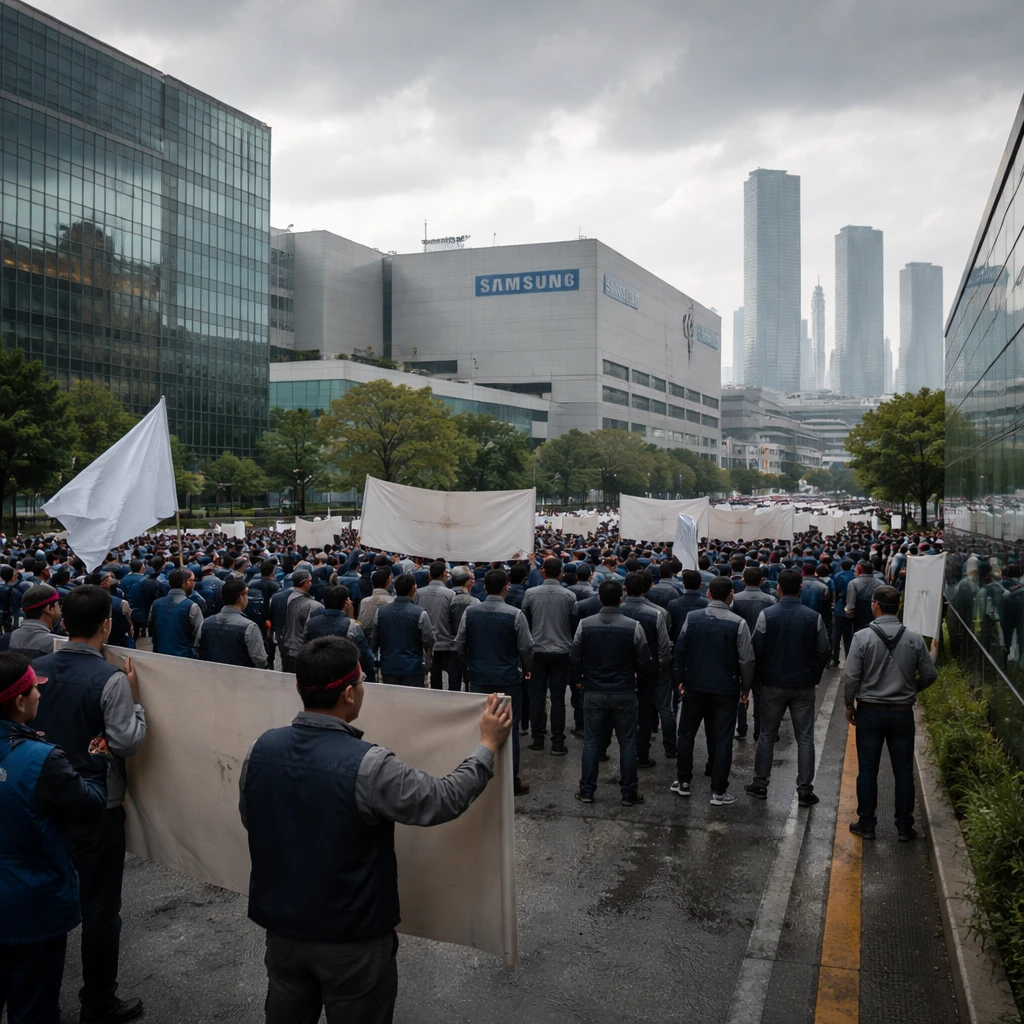
Shares of Samsung Electronics (005930) fell significantly on Friday after the National Samsung Electronics Union confirmed plans to launch an 18-day strike later this month despite an offer from the company to reopen unconditional discussions on pay and bonuses.
By 01:29 ET (05:29 GMT), Samsung's stock was trading 7.6% lower at 273,500 won, underperforming the broader KOSPI index.
The union said it remains committed to starting the strike on May 21, while signalling readiness to engage in fresh negotiations after June 7. The decision comes after government-mediated talks aimed at bridging gaps on compensation and bonus structures broke down earlier this week.
Negotiations between the company and the union did not yield a resolution, with both sides unable to narrow their differences over pay arrangements and the structure of bonuses. The union, which represents tens of thousands of Samsung employees, has demanded the removal of bonus caps and the establishment of a profit-sharing mechanism tied to operating earnings.
Union members have also pointed to a growing disparity in compensation compared with rival chipmaker SK Hynix (000660), which the union says recently accepted more generous bonus terms. That comparison has been cited by workers as part of the rationale behind their demands.
South Korean government officials, including the prime minister and the industry minister, have urged both parties to remain at the negotiating table. They warned that a strike of the duration the union has proposed could inflict damage on exports, unsettle financial markets and weigh on broader economic growth.
With the union signalling a fixed start date for an extended stoppage and the company offering to resume unconditional talks only after the strike window begins, market participants moved to price in near-term disruption to the company and potential knock-on effects for related sectors.
Context and next steps
- The union has set an 18-day strike period beginning May 21 and expressed willingness to hold talks from June 7 onward.
- Government-mediated negotiations collapsed earlier in the week when differences over compensation and bonuses remained unresolved.
- Officials are urging renewed dialogue, citing possible negative impacts on exports, financial markets and economic growth if a strike proceeds.