
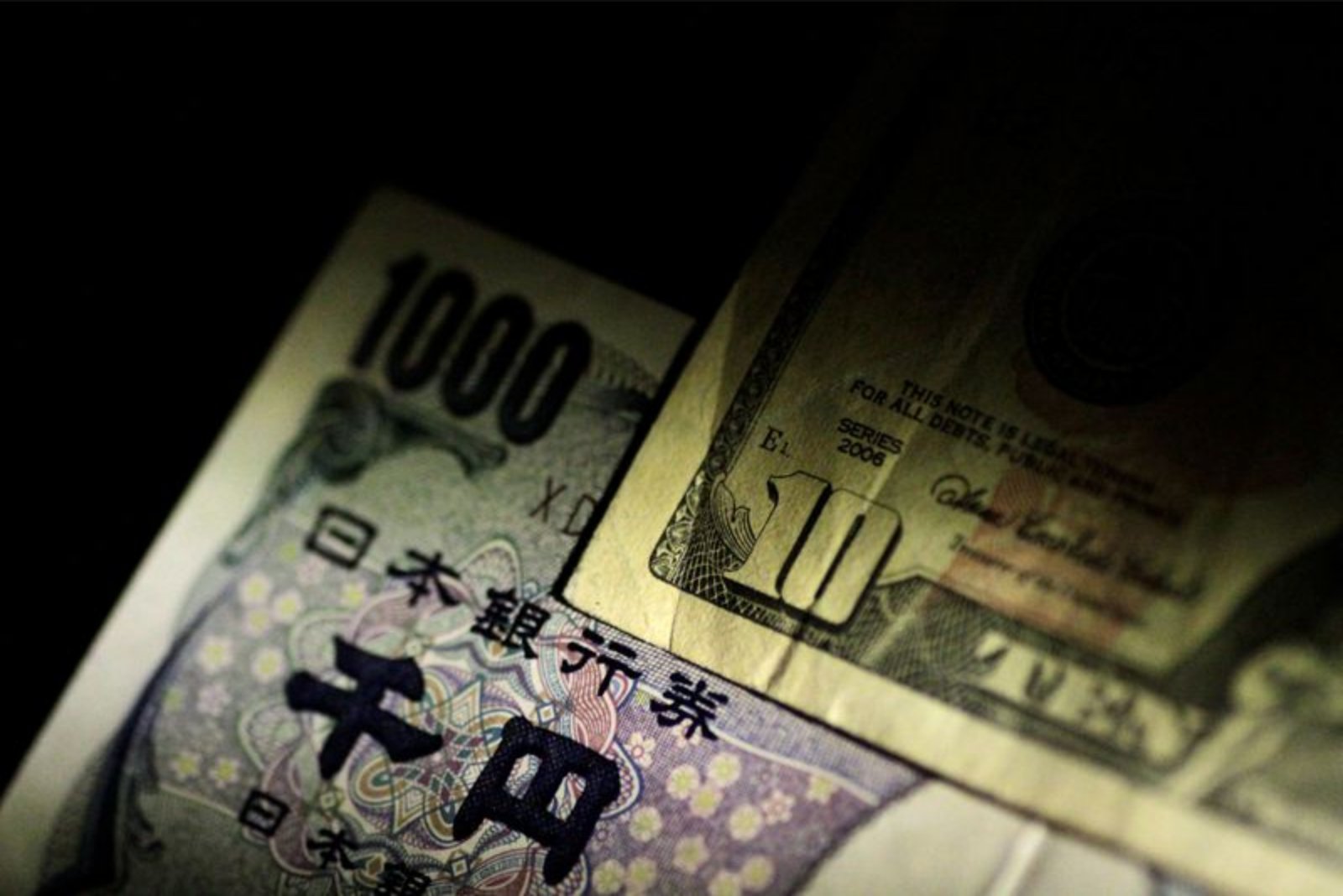
SINGAPORE, April 29 - Investors have accumulated the largest short position against the Japanese yen in almost two years, betting the currency will not be rescued by either domestic rate increases or renewed intervention. Market participants have sold the yen against the euro, Swiss franc, British pound and Australian dollar, building a position that also marks the biggest since Japan last stepped into the foreign exchange market in 2024.
The move comes after the Bank of Japan left its policy rate unchanged at 0.75% on Tuesday. The BOJ opted not to take a step that might ease pressure on the yen, even as Governor Kazuo Ueda signalled the central bank would be prepared to raise rates to combat broader inflationary pressures. The currency, however, was largely unmoved by those comments.
At a headline consumer price inflation rate of 1.5%, real interest rates in Japan remain in negative territory after adjusting for inflation. A separate inflation gauge that strips out volatile fresh food and fuel runs at 2.4%. The persistence of negative real yields underpins market forecasts that the yen may stay weak. "I don’t expect the situation of negative real interest rates to change," said Sho Suzuki, a market analyst at Matsui Securities in Tokyo. "So I believe there is a high likelihood that the yen will remain weak," he added.
Recent yen selling has pushed the currency to historic troughs against several peers: it is trading near its weakest level on record versus the Swiss franc, is at its softest against sterling since the global financial crisis, and is at its most unfavourable rate versus the Australian dollar in more than three decades. Against the euro, it is rarer for the yen to be as weak as it is now since the single currency was created.
Retail currency investors in Japan - often referred to as "Mrs Watanabe" - have also expanded their short positions. According to HSBC data, these household traders now hold their largest short yen positions against currency crosses, meaning currencies other than the U.S. dollar, since February 2020.
Against the U.S. dollar, the yen’s slide over the past year has paused near a psychological level. The exchange rate has stabilised just below 160 yen to the dollar over the past seven weeks, a threshold widely viewed in markets as a red line for Japanese authorities. That near-term stability has made it more comfortable for investors to borrow yen and fund carry trades - strategies that profit from the interest-rate spread between currencies.
"All those (rates) models point to the yen being much stronger than where it is," said Cameron Systermans, head of multi-asset for Asia at Mercer Investments in Tokyo, noting a fair value below 150 yen per dollar over a one-year horizon. He added that short yen positions are attractive because they generate carry income: "(But) being short yen, you can earn some carry on that position and so you’re getting paid to hold it, and for that reason, a lot of people are happy to run with it," he said, while warning that market momentum could turn sharply.
Intervention risk remains the principal threat to further yen depreciation. Past interventions - most notably those in 2022 and 2024 - temporarily strengthened the yen but failed to arrest a longer-term decline that has continued over the last year. With Japanese interest rates still materially lower than those available elsewhere, it is unclear whether the Ministry of Finance would achieve lasting success now even if it chose to intervene.
Finance Minister Satsuki Katayama has been publicly warning markets for months. In January, a rate check performed by the New York Federal Reserve signalled to many traders that authorities were willing to act, and that episode served to dissuade some from testing Japan further. Nevertheless, as rhetoric has intensified without consistent follow-through, market sensitivity to warnings has diminished.
Junya Tanase, chief Japan FX strategist at JPMorgan Chase & Co in Tokyo and a former special officer for FX reserve management at Japan’s Ministry of Finance, highlighted an inconsistency in messaging around intervention. He noted that the phrase "decisive action" - which some participants interpret as a cue for imminent intervention - was not used in September 2022 until after intervention had already occurred. "This suggests there is no rule, and no manual," he said.
Some investors continue to argue the yen is undervalued and could rally if conditions changed. Vincent Deluard, director of global macro strategy at StoneX in San Francisco, wrote earlier this month that "The yen is ridiculously undervalued." He suggested that a diplomatic resolution - specifically a deal between the U.S. and Iran to permanently reopen the Strait of Hormuz - would be a catalyst for a stronger yen. The current lack of such an agreement was noted as a limiting factor.
Meanwhile, short positions have climbed since February to levels not seen since July 2024, according to Commodity Futures Trading Commission data. Market participants point to a lack of urgency within Japan to raise rates and rising concerns about government spending as drivers of the shorting trend.
Olivier d’Assier, lead principal of investment decision research for Asia at consultancy SimCorp in Singapore, said government denial over fiscal pressures is compounding the problem. "Both the BOJ and the government are in denial in terms of the fiscal cliff that they’re facing, and no amount of intervention is going to really work here," he said. He argued that investors require higher yields to hold long-term Japanese debt; without higher compensation, they will reallocate capital elsewhere - selling bonds and the yen as part of that shift.
The accumulation of short positions across multiple currency pairs, coupled with a backdrop of negative real rates and intermittent official warnings, sets the stage for a renewed test of Tokyo’s willingness and capacity to stabilise the yen. Traders are weighing the income from carry trades against the ever-present, if increasingly ambiguous, threat of intervention.
Summary: Investors have amassed the largest short yen exposure in nearly two years, selling the currency across a range of crosses as the BOJ kept rates at 0.75% and inflation-adjusted yields remained negative. Retail and institutional positions have expanded despite intermittent warnings from Japanese authorities, creating a fresh test of whether Tokyo will deploy intervention to defend the currency.
Key points:
- Investors have built the largest short yen position in nearly two years, selling the yen against the euro, Swiss franc, sterling and the Australian dollar.
- The Bank of Japan held its policy rate at 0.75% and signalled readiness to raise rates to combat inflation, but the yen showed little reaction.
- Negative real interest rates and carry trade incentives are supporting yen shorts; retail traders hold their largest cross-short positions since February 2020, and CFTC data show shorts at highs since July 2024.
Risks and uncertainties:
- Official intervention remains a key risk - past interventions temporarily strengthened the yen but did not reverse its decline; any renewed intervention could create sudden market volatility (impacts FX markets, sovereign debt markets).
- Divergent interest-rate paths and rising government spending in Japan could further weaken investor confidence in yen assets, prompting more selling of bonds and the currency (impacts government bond markets, domestic fiscal outlook).
- Market reliance on verbal warnings as a deterrent has lessened, leaving uncertainty about when or how authorities might act and increasing the potential for abrupt reversals in momentum (impacts FX positioning and liquidity).