
Overview
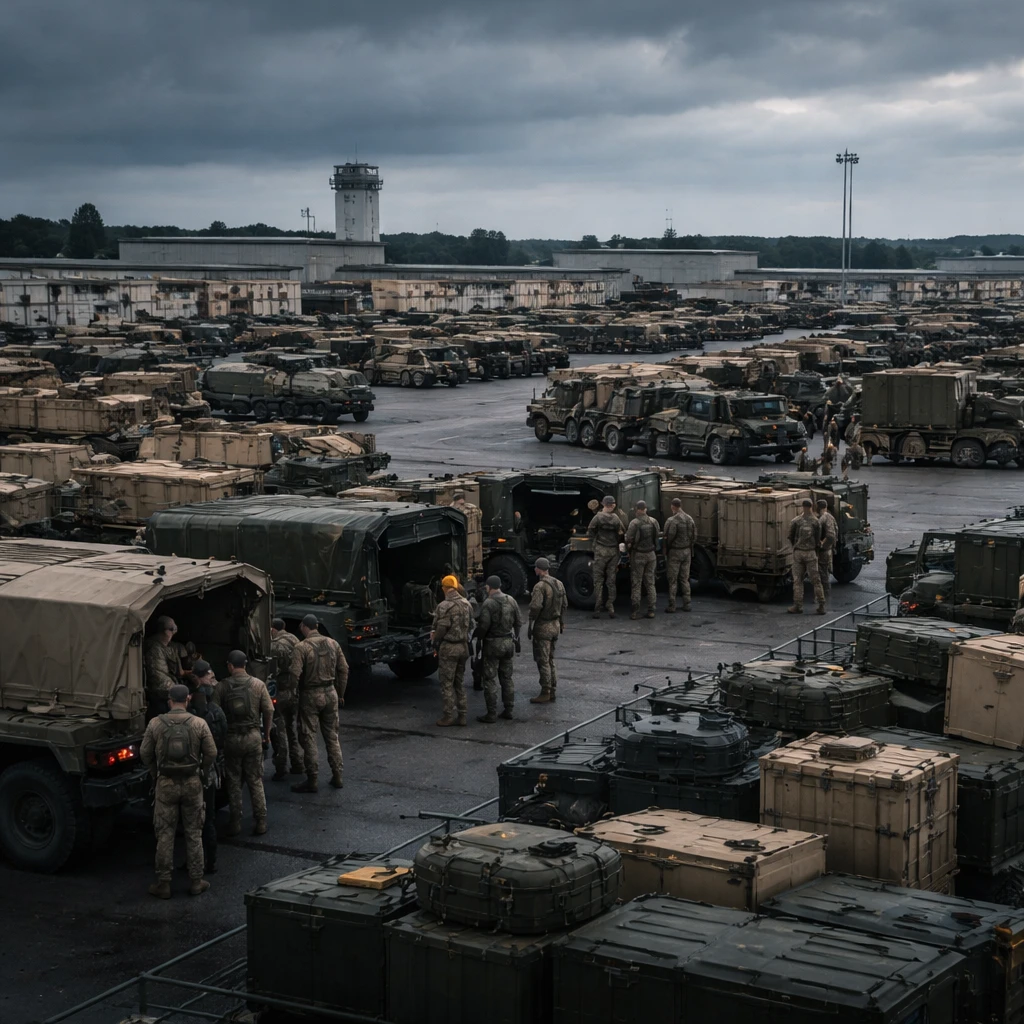
The U.S. military presence in Europe will shrink after a White House order to pull 5,000 troops out of Germany, the administration announced on Friday. The directive removes an army combat brigade and cancels a prior plan to position a long-range conventional missile battalion in the country, steps the Pentagon said reflect a broader reassessment of U.S. posture on the continent.
Diplomatic friction and the immediate trigger
Officials described the decision as emerging amid intensifying diplomatic tensions related to the ongoing Iran conflict. German Chancellor Friedrich Merz publicly criticized the U.S. approach to the war in Iran, calling the leadership's handling "humiliating," remarks that Washington officials viewed as contributing to the shift. German authorities, who have been recognized for meeting agreed military spending targets, subsequently sought to de-escalate the exchange, but U.S. defence planners moved ahead with the withdrawal order.
Scope and timeline
The Pentagon indicated the outflow of forces from Germany is likely to be completed within six to twelve months. Germany remains the principal U.S. military hub in Europe and currently hosts more than 36,000 American service members as well as key infrastructure that supports "Operation Epic Fury." Pentagon officials stated the troops removed from Germany are not being reassigned to other bases in Europe but are slated to be redeployed to the Western Hemisphere and the Indo-Pacific.
Operational and historical context
Officials noted the reduction returns U.S. troop levels in Europe to roughly the benchmarks seen in 2022, effectively reversing part of the buildup that occurred in the early phase of the Russia-Ukraine crisis. The move also echoes an earlier plan from 2020 that envisaged a larger withdrawal of 12,000 troops, a proposal that was paused by the subsequent administration in 2021 before relations deteriorated again.
Impact on NATO partners and base access
The German drawdown is part of a wider pattern of the administration signaling it may penalize partners that resist direct participation in the Iran campaign. Officials have recently threatened to withdraw personnel from Spain and Italy amid disputes over the use of local bases; Spain continues to deny permission for U.S. strikes against Iran. By contrast, Britain remains a cooperating partner and continues to permit bomber missions to operate from its territory.
Key installations such as Ramstein Air Base and the Landstuhl Regional Medical Center remain central to U.S. operations and casualty care linked to the Iran conflict. German officials do not currently anticipate the closure of those specific sites despite the broader drawdown.
Pentagon rationale
Chief Pentagon Spokesman Sean Parnell framed the action as the outcome of a "thorough review" of the Department's posture in Europe. He said the changes align with a long-term objective for European nations to assume the lead in conventional defence, while U.S. forces are repositioned to other global regions.
Key points
- President Trump ordered the withdrawal of 5,000 U.S. troops from Germany, removing an army combat brigade and cancelling a planned long-range conventional missile battalion deployment.
- The drawdown follows public criticism from German Chancellor Friedrich Merz of U.S. handling of the Iran war; German officials tried to cool tensions but the Pentagon set a six- to twelve-month timeline for the reduction.
- Withdrawing forces will be reallocated to the Western Hemisphere and the Indo-Pacific rather than to other European bases; the change restores U.S. troop levels in Europe to 2022 benchmarks and echoes a previously proposed 2020 withdrawal plan.
Risks and uncertainties
- Strained relations with NATO partners - The reduction underscores a risk of wider diplomatic fallout with European allies that decline to support U.S. operations linked to Iran, potentially affecting basing agreements and coalition coordination. Sectors affected include defence logistics and allied military cooperation.
- Base access and operational reach - Threats to remove personnel from countries such as Spain and Italy raise uncertainty around access to forward bases, which could alter force projection and medical evacuation pathways. This impacts military transport and medical support infrastructures.
- Timing of redeployments - The six- to twelve-month window for completing the withdrawal introduces short-term operational uncertainty for units and commands reliant on Germany as a hub, with implications for readiness and logistics planning.
Conclusion
The ordered drawdown of 5,000 troops from Germany represents a significant adjustment in U.S. force posture in Europe driven by frictions over the Iran campaign. While key medical and air installations in Germany are expected to remain operational, the move signals a shift toward reallocating capabilities outside Europe and reflects policy aims to have European partners assume more responsibility for conventional defence.