
Overview
When Federal Reserve officials last met just over two weeks into the U.S.-led war on Iran, they faced scant hard evidence of the conflict’s macroeconomic impact aside from a sharp rise in gasoline prices. As they gathered again this week, the set of reports released over the intervening roughly six weeks had not dramatically sharpened the picture on the issues most relevant to monetary policy - the job market, price trends and overall activity.
Employment - little visible effect so far
The labor market has, to date, shown almost no clear imprint from the war. Headline payroll figures have been affected by episodic one-off events, including a healthcare strike in California and adverse weather, which have distorted month-to-month comparisons and delivered little consistent signal about underlying labor demand.
Official numbers show nonfarm payrolls swung from a revised February change of -92,000 in one reading to a March gain of +178,000 in another. The unemployment rate moved down from 4.4% in February to 4.3% in March - a decline the reports attribute largely to a contraction in the labor force rather than a surge in hiring.
Weekly new claims for unemployment benefits - the most timely high-frequency window into layoffs and employer behavior - displayed almost no change across eight readings spanning the conflict period, six of which arrived after the Fed’s mid-March meeting. In short, the sequence of claims data offered little evidence of a meaningful deterioration or improvement in labor market slack during this stretch.
Inflation - headline pressures have risen, energy leads the move
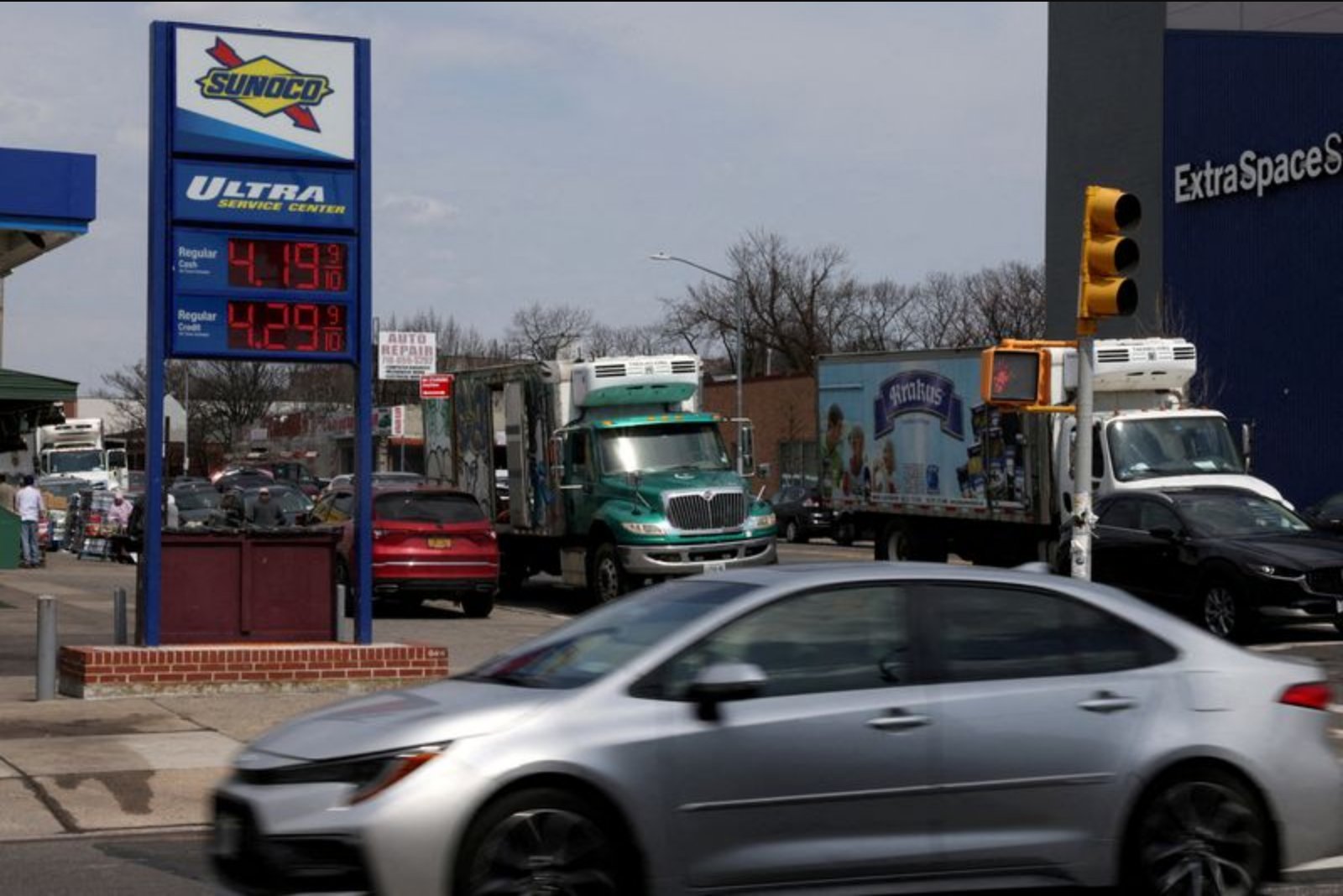
Price measures have moved higher since the war began, driven principally by gasoline, which climbed by roughly a third on average nationwide to top the $4-per-gallon threshold. Broad indices such as the Consumer Price Index (CPI) and Producer Price Index (PPI) registered the largest month-to-month accelerations in several years. By contrast, readings that strip out food and energy display more muted increases in price growth to date.
The Fed has not yet received a formal wartime reading of the Personal Consumption Expenditures (PCE) price index - the gauge it uses for its 2% inflation objective - for March, the first full month after the conflict began. That PCE report is not scheduled until Thursday, one day after the current policy meeting concludes. But analysts using CPI and PPI guidance estimate PCE has moved further above target at both headline and core levels since the war’s outset.
Manufacturing input costs, as captured by the Institute for Supply Management pricing survey, rose to a new three-and-a-half-year high in March after already soaring in February. Fed officials have voiced concern that sustained elevation in key prices - notably gasoline, which heavily shapes consumer perceptions of inflation - could lift households’ inflation expectations and complicate efforts to re-anchor inflation at 2%.
Measures of inflation expectations show a mixed picture. The University of Michigan’s Consumer Sentiment Index indicated notably higher short-run inflation expectations since the war began, while other indicators - including the New York Fed’s Survey of Consumer Expectations and market-based gauges such as TIPS breakeven rates and the five-year, five-year forward breakeven - have remained more subdued.
Key price datapoints reported since mid-March include:
- CPI - February: 0.3% month-over-month, 2.4% year-over-year; March: 0.9% month-over-month, 3.3% year-over-year. Core CPI (ex-food, energy): February 0.2% m/m, 2.6% y/y; March: 0.2% m/m, 2.5% y/y.
- PPI - January: 0.5% m/m; March: 0.5% m/m, 4.0% y/y. Core PPI (ex-food, energy, trade): latest readings include 0.3% m/m and around 3.4% y/y depending on revision.
- PCE - January: 0.3% m/m, 2.8% y/y; February: 0.4% m/m, 2.8% y/y. Core PCE: January 0.4% m/m, 3.1% y/y; February 0.4% m/m, 3.0% y/y.
- ISM prices paid index climbed from 70.5 in February to 78.3 in March.
- Inflation expectations - University of Michigan: February 3.4% (1-year), March 3.3% (1-year); April: 4.7% (1-year). New York Fed SCE: February 3.0% (1-year), March 3.4% (1-year), and around 3.0% for 3-year horizons in recent readings.
- Market-based breakevens: 5-year TIPS breakeven was roughly 2.64% on March 16 and 2.65% on April 27; 10-year moved from 2.36% to 2.45%; the 5-year, 5-year forward rose slightly from 2.14% to 2.23% over the same window.
Growth and consumption - GDP readings lag the conflict period
Real-time GDP data that include the conflict period are not yet available to Fed officials. The most recent GDP release still covers the fourth quarter of 2025, a period affected by a lengthy federal government shutdown. Reuters economists surveyed for projections expect growth to have rebounded to an annualized 2.3% in the first quarter, but the range of estimates spans from -0.2% to +3.9% - a wide band that reflects uncertainty about the war’s effect on activity.
Part of the anticipated growth pickup is attributed to recently enacted Republican tax changes, which led to larger-than-usual individual tax refunds this filing season and appear to be supporting household spending. Faster depreciation allowances are also cited as lifting business investment and corporate capital expenditures.
As with GDP, the Fed has not yet received a full personal consumption report covering the conflict period, though other consumption proxies such as retail sales data showed increases at both headline and control (core) levels. The retail sales series moved from a revised January read near 0.0% to an aggregate March reading of 1.7% with controls rising by 0.7% in March. Consumer spending in available months recorded 0.4% in January and 0.5% in February.
Industrial activity - mixed signals between surveys and output
Some manufacturing indicators point to a boost in orders and activity as customers seek to rebuild inventories ahead of possible supply disruptions tied to the war. Purchasing managers’ surveys have shown expansion, with the ISM manufacturing index at 52.4 in February and 52.7 in March, signaling continued growth in the sector.
By contrast, the Fed’s industrial output series shifted from reporting its largest gain in a year in February to recording its steepest drop in 18 months in March. Industrial production was reported at 0.2% in February and -0.5% in March; manufacturing output moved from 0.2% in February to -0.1% in March after revisions.
What officials see and what remains uncertain
Across these domains, Fed officials have more pronounced evidence of higher headline inflation driven by energy costs, while labor market indicators and GDP readings remain ambiguous or lag the start of the conflict. Officials are particularly attentive to the risk that longer-lasting price elevations - especially for gasoline - could alter consumers’ inflation expectations and complicate the path back to the Fed’s 2% objective.
Key forthcoming data - notably the PCE inflation report for March and GDP figures covering the first quarter - will provide policymakers with more complete readings on the conflict period, but as of this week’s meeting many core elements relevant to rate decisions retain substantial uncertainty.
Data notes: Throughout this article, month-over-month and year-over-year percentage changes reflect the official series and revisions available since mid-March. Weekly claims readings referenced include eight data points spanning the war period, with six released after the Fed’s March meeting.