
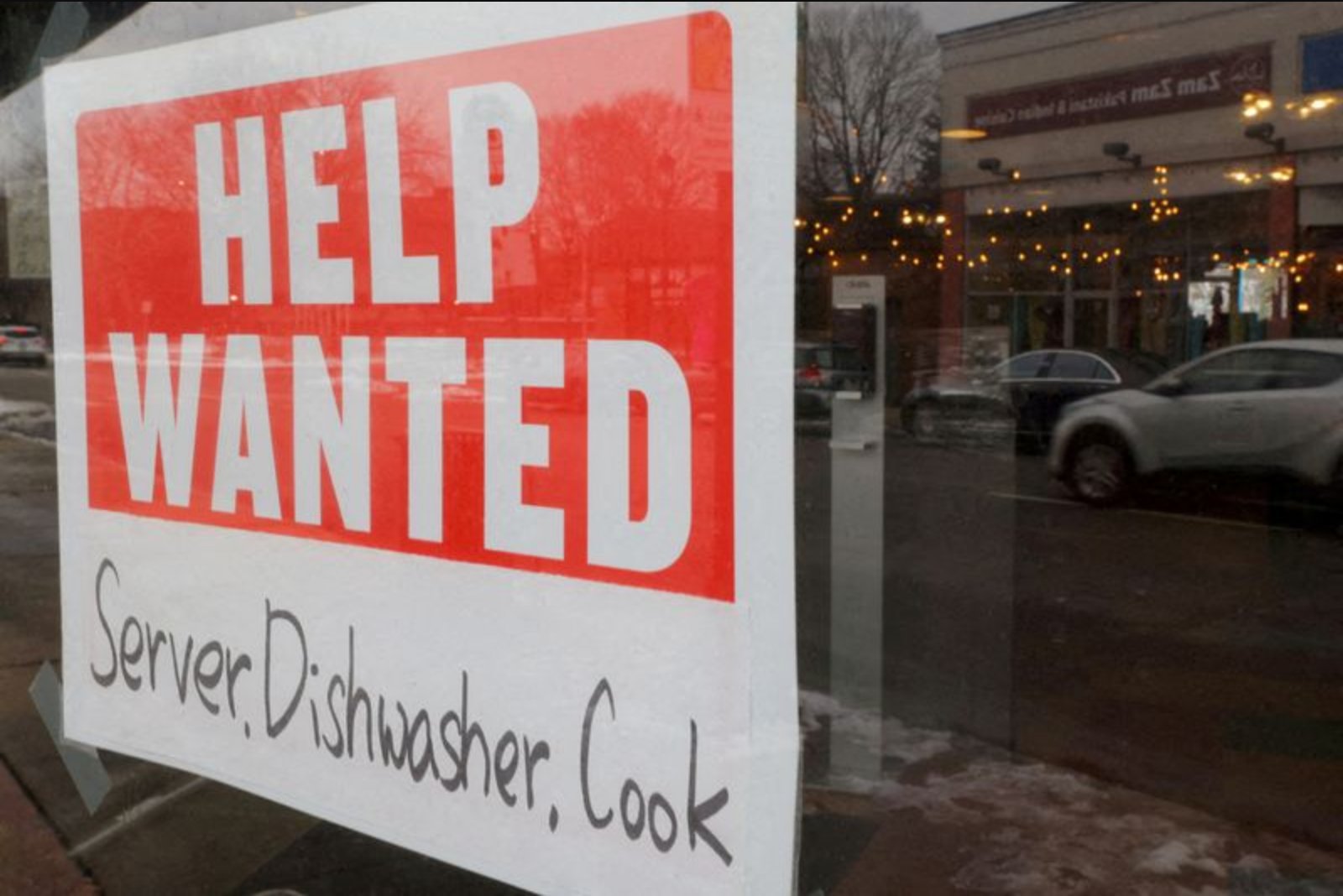
Initial filings for state unemployment benefits fell by 26,000 to a seasonally adjusted 189,000 for the week ended April 25, the Labor Department said on Thursday. Economists had expected 215,000 claims for the week, according to a Reuters poll.
The drop in initial claims, coupled with a decline in the number of people receiving ongoing benefits, points to a labor market that has not shown a material deterioration in April despite heightened geopolitical strains. Continuing claims - a proxy for hiring and the number of people receiving benefits after an initial week of aid - decreased by 23,000 to a seasonally adjusted 1.785 million for the week ended April 18. That continuing-claims period coincided with the household survey reference period for April's unemployment rate.
Observers describe the employment picture as remaining in a "low hire, low fire" mode even after an oil price shock tied to the conflict between the United States, Israel and Iran. Economists have noted that this pattern has persisted, and several said the latest data are consistent with the unemployment rate holding steady in April. The unemployment rate stood at 4.3% in March.
Consumer sentiment measures released this week showed a modest shift in perceptions of the labor market. A Conference Board survey published on Tuesday found that the share of consumers saying jobs were "hard to get" fell in April, while the percentage describing jobs as "plentiful" was little changed.
Despite the current stability in hiring indicators, economists warned of downside risks associated with shipping disruptions in the Strait of Hormuz. Those disruptions have the potential to elevate prices for a range of commodities noted in reports, including fertilizers, petrochemicals and aluminum, which could reverberate across affected sectors.
For now, the relative steadiness in labor-market metrics supports market expectations that the Federal Reserve would keep interest rates unchanged this year. The U.S. central bank left its benchmark overnight interest rate in the 3.50%-3.75% range on Wednesday, citing rising inflation concerns.
Economists assessing the suite of labor-market indicators said the combination of lower initial claims, reduced continuing claims and the Conference Board survey results align with a stable unemployment rate for April. Nonetheless, they emphasize that external factors tied to global shipping and commodity prices represent potential near-term risks to sectors exposed to higher input costs.