
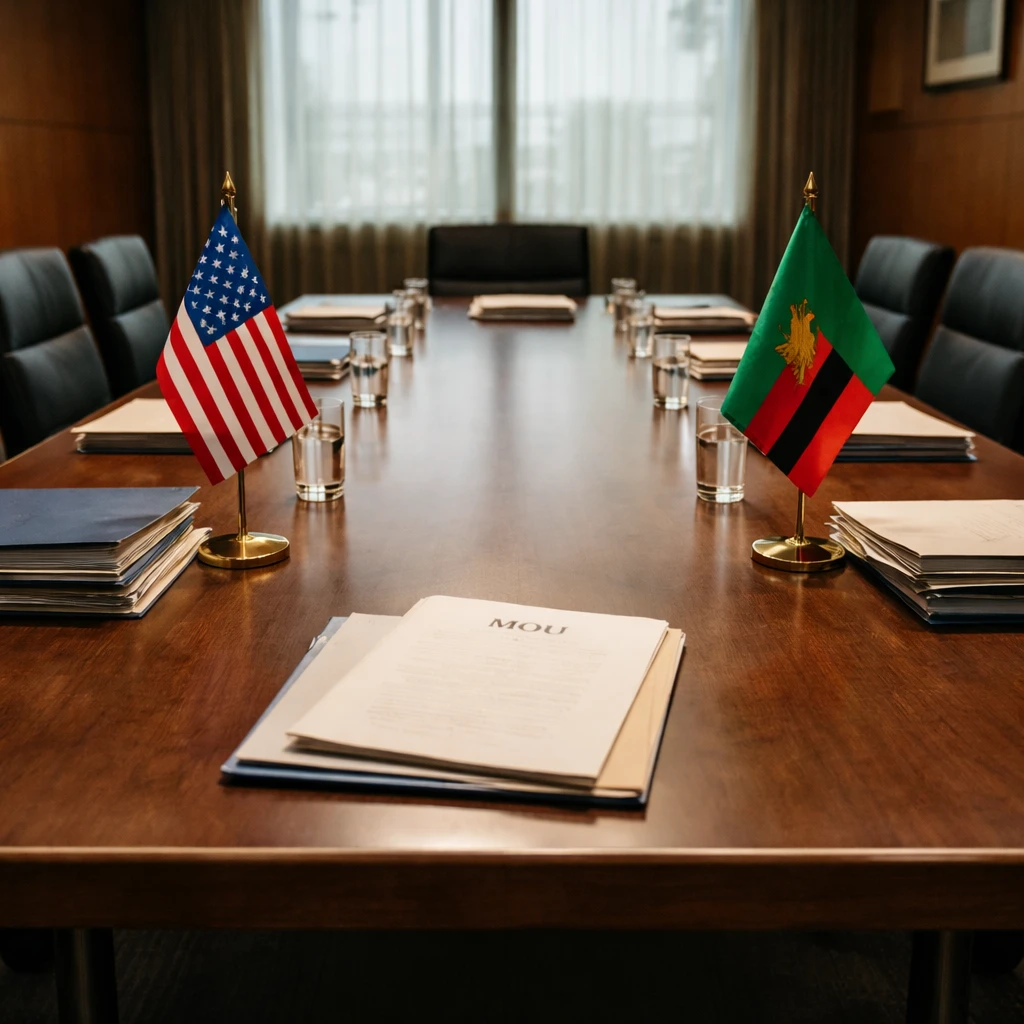
The United States has accused Zambia of insufficient engagement over a proposed health memorandum of understanding (MOU) that would oversee more than $1 billion in U.S. funding, after an April 30 deadline passed with no agreement in place.
Outgoing U.S. ambassador Michael Gonzales said repeated approaches from Washington had been ignored, and that failure to finalise the MOU meant support was continuing only on an ad hoc basis rather than under a coordinated implementation plan for programmes targeting HIV, malaria, maternal and child health and disease preparedness.
"Instead of continuing to languish without engagement, the actual funding under our Health MOU should have started this month," Gonzales said in remarks delivered on Thursday evening as he prepared to leave his post.
The proposed accord has drawn scrutiny from health advocates who warned the deal links the assistance to mining access and raised concerns about risks associated with data sharing. Gonzales rejected characterisations he described as "disgusting and patently false" that Washington was threatening to withhold life-saving healthcare support "unless we get critical minerals."
In response, Zambia's presidential spokesperson Clayson Hamasaka said the government would handle any concerns with the U.S. through established diplomatic channels. "We appreciate the support we have received from the U.S. and other countries...If there are any concerns, we are open to dialogue but that should be done through laid down diplomatic channels," Hamasaka said.
The stalled MOU has become a focal point after Washington previously reduced aid following the theft of donated medicines, a development that U.S. officials say highlights governance weaknesses in Zambia's health system.
A draft of the agreement reviewed by Reuters indicated the arrangement would also require approximately $340 million in co-financing from the Zambian government over the same period.
Gonzales said the United States had experienced "effectively zero substantive engagement" from Zambian officials since January, with phone calls unanswered and meetings cancelled, which impeded meaningful negotiation on future cooperation. The MOU had been expected to be signed in November but negotiations stalled after revised drafts were circulated.
Despite the impasse, Gonzales said the United States would continue to honour its longstanding commitments to the Zambian people, including supplying antiretroviral drugs and supporting efforts to prevent mother-to-child HIV transmission. However, he warned that large-scale assistance would be contingent on demonstrable, concrete reforms.
Key observations
- More than $1 billion in planned U.S. health funding is at risk of operating without a formal MOU after an April 30 deadline elapsed.
- The draft agreement calls for about $340 million in Zambian co-financing over the same period, tying government budget commitments to the pact.
- Health programming cited in the stalled talks includes HIV, malaria, maternal and child health, and disease preparedness; governance concerns and data-sharing issues have been raised by advocates and officials.
Contextual impacts
- Health sector - potential disruption to program planning and delivery for major disease programs.
- Government finances - the co-financing obligation could influence Zambia's budget priorities during the agreement period.
- Mining and diplomatic relations - advocates' concerns about links to mining access color the political dynamics around the deal.