
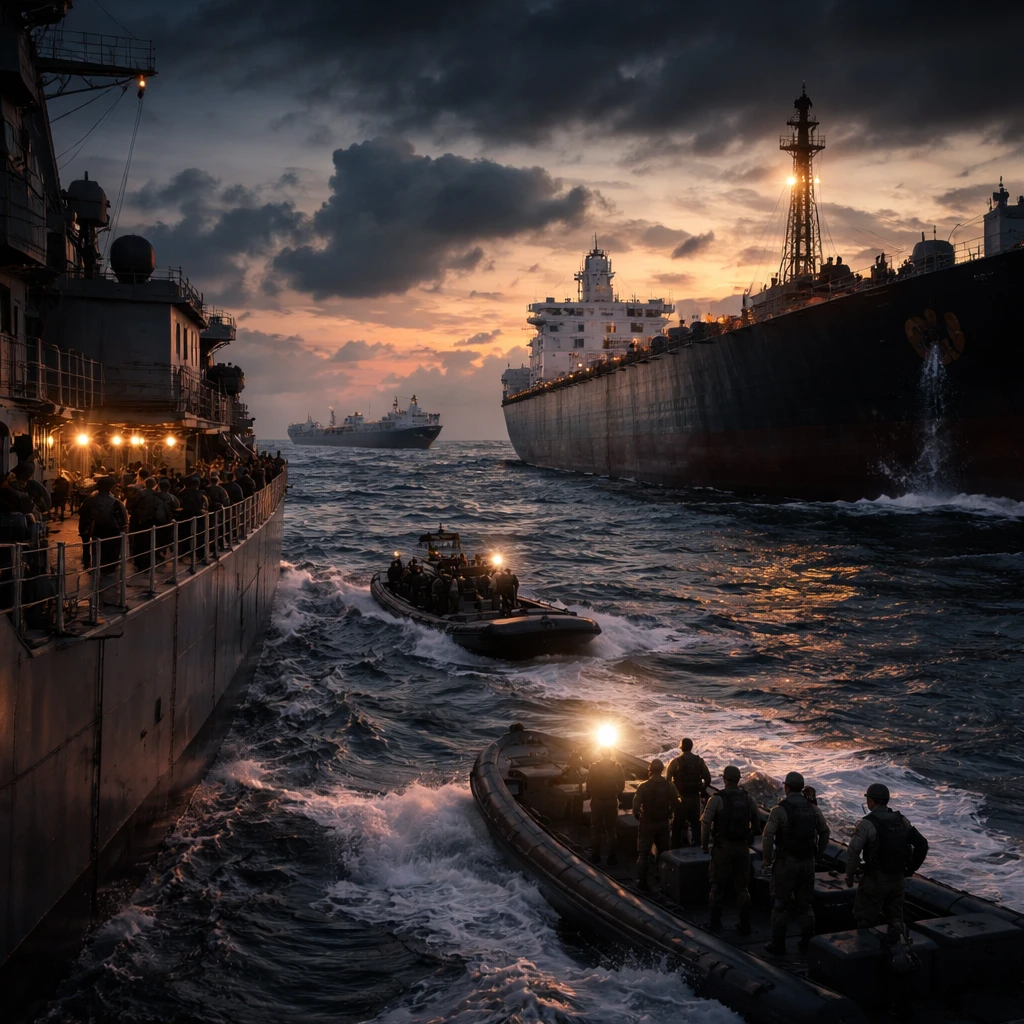
President Donald Trump on Friday characterized recent U.S. naval activity in waters near Iran as behaving "like pirates" while describing the seizure of an Iranian vessel and its cargo as a profitable undertaking. He made the remarks during an evening address, recounting details of a recent operation in which U.S. forces boarded and took control of a ship.
Describing the operation, the President said: "We took over the ship, we took over the cargo, we took over the oil. It’s a very profitable business." He added a blunt characterization of the U.S. role at sea: "We’re like pirates. We’re sort of like pirates but we are not playing games."
The naval actions detailed by the President form part of a broader U.S. campaign to intercept and seize Tehran-linked vessels. The operations have included the capture of vessels identified as Iranian, ships subject to sanctions and Iranian tankers operating in Asian waters, according to the account given during his remarks.
These U.S. seizures are taking place alongside a separate maritime blockade maintained by Iran of the Strait of Hormuz since the conflict began. The Strait remains a pivotal chokepoint for global energy movements, accounting for roughly 20% of worldwide crude oil and liquefied natural gas shipments, a figure cited in the context of the current maritime disruptions.
Analysts and market participants have linked the simultaneous blockades - one enforced by U.S. naval interdictions of Iranian-linked shipping and the other imposed by Iran at the Strait - to upward pressure on global oil prices and pronounced interruptions in international shipping lanes. The President’s comments underscore the economic as well as strategic dimensions of the interdiction campaign.
The latest developments are part of a conflict trajectory that accelerated after initial attacks on Iran on February 28, actions that were followed by retaliatory strikes against Israel and strikes on Gulf states that host U.S. military bases. Those events have fed into the evolving military and economic contest between the United States and Iran.
Mr. Trump’s remarks arrive amid growing international scrutiny of rhetoric and tactics used in the conflict. In recent weeks, the President has faced criticism for threats he made, including a comment about the potential destruction of Iran’s entire civilization. Several U.S. experts raised concerns that threats to target civilian infrastructure could cross legal and ethical lines and might be construed as war crimes.
Beyond legal and political backlash, the human cost of the fighting has been substantial. U.S.-Israeli strikes across Iran and Lebanon have been reported to produce thousands of casualties and to displace millions, contributing to a mounting humanitarian crisis connected to the broader hostilities.
As the naval blockade operations continue, official emphasis has remained on intercepting cargo to enforce sanctions and to erode Iran’s economic capacity through the seizure of vessels and their contents. The President’s statement framing such operations as profitable - and likening them to piracy - is likely to intensify debates over the tactics and legal boundaries of maritime interdiction in a major international conflict.