
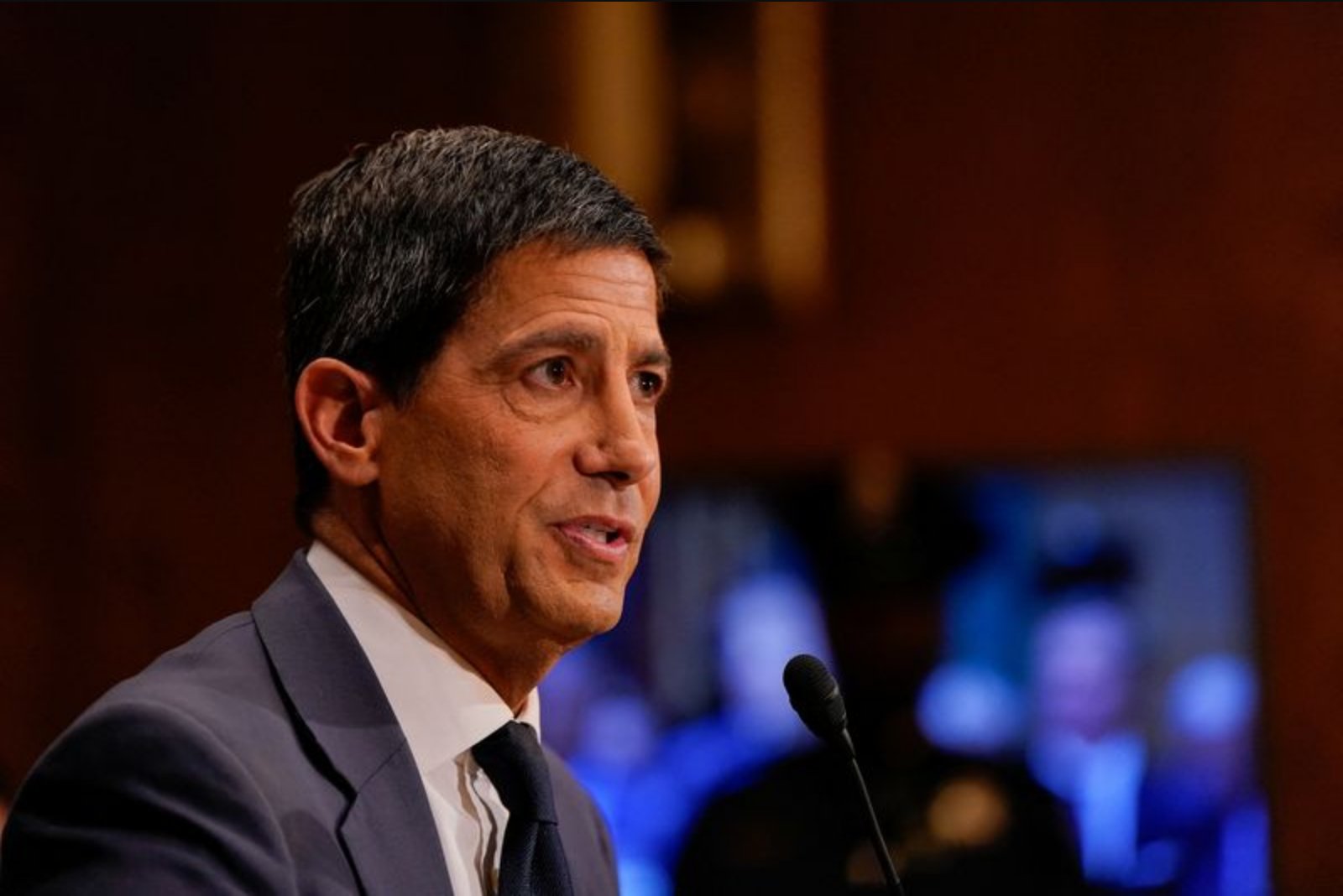
Kevin Warsh, President Donald Trump’s nominee to succeed Jerome Powell as chair of the Federal Reserve, cleared a major procedural step on Wednesday when the Senate Banking Committee voted 13-11 along party lines to advance his nomination to the full Senate. The Republican-controlled Senate is expected to hold a confirmation vote during the week of May 11, a schedule that would allow the nominee to be sworn in ahead of Powell’s term expiration on May 15.
The committee vote unfolded as Powell presided over what is anticipated to be his last policy-setting meeting as chair. The Federal Open Market Committee is broadly expected to keep its benchmark overnight interest rate unchanged in the current 3.50%-3.75% range, citing still-elevated inflation and upward pressure on prices tied to disruptions in global oil supplies stemming from the Iran war.
Trump, who initially nominated Powell for the Fed chair role in 2018 but later expressed displeasure after Powell declined to cut rates, has said he expects his new nominee to produce the rate reductions he favors. At his confirmation hearing last week, Warsh - a 56-year-old lawyer, financier and former Fed governor - told lawmakers he had not promised Trump that he would cut interest rates. He did, however, pledge what he described as "regime change" to make the central bank more answerable to the administration and Congress on matters outside traditional monetary policy.
Wednesday’s vote moved forward after North Carolina Senator Thom Tillis dropped his opposition to advancing the nomination. Tillis said he was reassured by the Department of Justice’s decision on Friday to end a criminal investigation into Powell, which Tillis had viewed as a threat to the Fed’s political independence. "I’ve got confidence that this investigation is over," Tillis said after casting his vote with the Republican majority. He added that while the Justice Department does plan to appeal a federal judge’s decision related to the case, prosecutors told him the appeal is intended to resolve a legal matter tied to the department’s subpoena authority rather than to reopen the investigation.
Senate Republican Tim Scott, who chairs the Banking Committee, described Warsh as "battle-tested and ready to serve, and not only serve, but to lead." The panel’s 11 Democrats, skeptical of Warsh’s assurances that he would set policy without regard to President Trump’s wishes, opposed the move to advance the nomination. Committee top Democrat Elizabeth Warren warned before the vote, "Members of this committee who vote for Mr. Warsh and help facilitate President Trump’s takeover of the central bank will come to regret it."
Republican leaders in the Senate indicated they planned to press forward with consideration of the nomination as early as Thursday, aiming toward a confirmation vote in the week of May 11, according to a person familiar with the process. That timetable would enable Warsh to be sworn in by May 15 when Powell’s leadership term officially ends.
It remains unclear whether Warsh’s installation as Fed chair would mean Powell’s departure from the central bank entirely, or whether Powell would remain on the Board of Governors. Also uncertain is whether President Trump would pursue his stated threat to try to remove Powell from the board if he stays; such an effort would likely prompt a legal challenge similar to past disputes over presidential attempts to remove Fed officials. Powell’s board term runs through January 2028.
Fed chairs traditionally step down to allow their successors to take over, and Powell, a lawyer by training, is noted for his strong adherence to procedural norms. Powell has characterized the federal criminal probe into his conduct as political intimidation and an element of the administration’s attempt to influence Fed interest-rate policy. He said last month that he would not leave the Fed until the criminal probe reached "finality," leaving open the possibility that he could remain if he deems it best for the Federal Reserve and the country.
U.S. Attorney for the District of Columbia Jeanine Pirro said on Friday she would not hesitate to resume her investigation of Powell "should the facts warrant doing so." Market analysts at Evercore ISI commented on Wednesday that "We would not be at all amazed if he decides to leave on May 15." They added their expectation in a separate sentence that "However, our hunch is that Powell does stay, but in the base case only for some months until all the legal loose ends are wrapped up and Fed chair independence is fully reasserted."
The confirmation battle and surrounding legal developments come amid broader concerns about inflation and energy-driven price pressures. Lawmakers and market participants are watching closely, as leadership changes at the Federal Reserve could influence policy direction, financial market expectations and the trajectory of interest rates. For now, the immediate procedural hurdle has been cleared, setting the stage for a full Senate decision in the coming days.
Clear summary
The Senate Banking Committee voted 13-11 to advance Kevin Warsh’s nomination to be Fed chair, paving the way for a full Senate confirmation vote expected the week of May 11. The vote followed the Justice Department’s decision to end a criminal investigation into Jerome Powell, a development that prompted North Carolina Senator Thom Tillis to drop his opposition. Powell presided over what is likely his final Fed meeting as chair while questions remain about whether he will remain on the Fed board after May 15.
Key points
- Committee advancement: The Senate Banking Committee voted 13-11 along party lines to advance Warsh to the full Senate, which is expected to vote the week of May 11 - impacting the leadership of the central bank and policy direction.
- Policy backdrop: Powell led a meeting of the Federal Open Market Committee expected to hold the benchmark rate at 3.50%-3.75% amid still-elevated inflation and upward price pressure from global oil supply disruption related to the Iran war - relevant for monetary policy, bond markets and borrowers.
- Legal and political uncertainty: The Justice Department’s decision to end the criminal probe into Powell influenced at least one senator’s vote, but questions remain about appeals, potential legal challenges, and whether Powell will remain on the Fed board beyond May 15 - matters that could affect Fed independence and regulatory certainty for financial institutions.
Risks and uncertainties
- Potential legal appeals and investigations - the Justice Department plans to appeal a judge’s decision in the probe, creating uncertainty for Fed leadership and potential market reactions. Impacted sectors: financial services, markets.
- Ambiguity over Powell’s future - it is not certain whether he will remain on the Fed board after May 15 or whether the president will attempt removal, which could provoke legal challenges and governance uncertainty. Impacted sectors: banking, regulatory oversight.
- Inflation and energy-driven price pressure - ongoing elevated inflation and disruption to global oil supplies due to the Iran war are cited as reasons the Fed is expected to keep rates unchanged, affecting consumers, energy markets and interest-rate-sensitive sectors.