
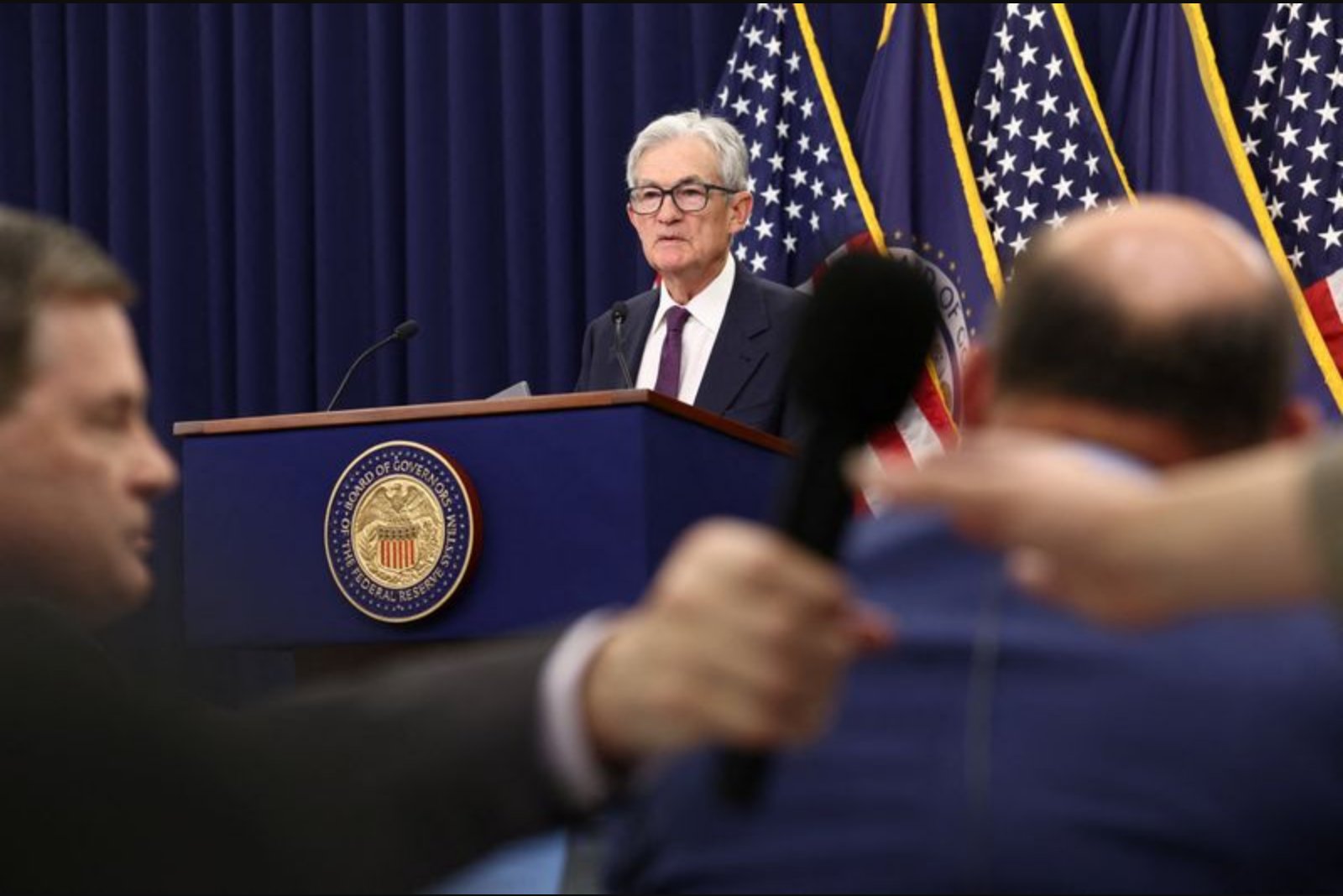
WASHINGTON - Federal Reserve Chair Jerome Powell said on Wednesday that he expects to resume his position as a Fed governor after his chair term concludes in May and intends to avoid exerting an outsized influence on policy from that role.
Speaking at a news conference, Powell said he would remain on the Federal Reserve Board for an unspecified period after his tenure as chair ends, and that he planned to adopt a restrained public presence. He said he would keep a "low profile" while serving out the remainder of his time on the board.
On the question of whether he would seek to steer policy or act as an informal or influential presence after stepping down, Powell was explicit. "That’s just something I would never do, you know, the shadow chair thing," he said, rejecting the idea of operating as a so-called shadow chair who continues to shape monetary policy from behind the scenes.
Powell also addressed his relationship with the incoming probable chair, Kevin Warsh. He said he will attempt to support the direction Warsh wants to take the Fed "if you can," framing that support as contingent on the ability to align with the chair's aims. "If you can’t, you can’t. That’s the way it’s always worked there," he added.
Powell cited his prior experience on the board, noting that he served six years as a Fed governor before becoming chair. He said that experience informed his understanding of the challenges the chair faces in building consensus among board members. "I don’t want to add to that unnecessarily. And that means trying support the direction the chair wants to go, if you can," he said.
The comments underline Powell's stated intent to refrain from active leadership once his chairmanship concludes and to provide measured support to the incoming chair where alignment is possible. He did not specify how long he will remain on the board, leaving the exact timeline open.
Key points
- Jerome Powell will revert to a Fed governor role after his chair term ends in May and plans to keep a low public profile while remaining on the board for an unspecified period.
- Powell said he will try to support incoming chair Kevin Warsh where possible but rejected acting as a "shadow chair" who exerts undue influence over policy.
- He referenced his six years as a governor prior to becoming chair as giving him perspective on the difficulty of forging board consensus.
Risks and uncertainties
- Duration uncertainty - Powell did not specify how long he will remain on the Fed board after May, leaving the timing of his departure unclear; this affects internal board continuity.
- Potential divergence - Powell acknowledged that support for the chair depends on alignment; where alignment is absent, he indicated he would not force consensus, creating potential for policy disagreement within the board.
- Governance dynamics - The balance between a low-profile former chair serving as a governor and the new chair’s leadership remains uncertain and could influence internal decision-making processes.
Summary
Jerome Powell said he will return to the rank of Fed governor after his chair term ends in May, remain on the board for an unspecified interval, and avoid acting as a "shadow chair." He stated he would try to back the next chair, Kevin Warsh, where feasible but affirmed that support is conditional on the ability to agree. Powell noted his prior six years as a governor shaped his view of the challenges in building consensus at the board level and said he does not want to add unnecessarily to those challenges.