
Economy April 29, 2026 03:58 PM

Powell closes tenure as Fed chair, prepares to cede leadership to Warsh

Outgoing chair praises team work, says Fed's inflation credibility remains intact as economy weathers shocks

By Maya Rios
Powell closes tenure as Fed chair, prepares to cede leadership to Warsh

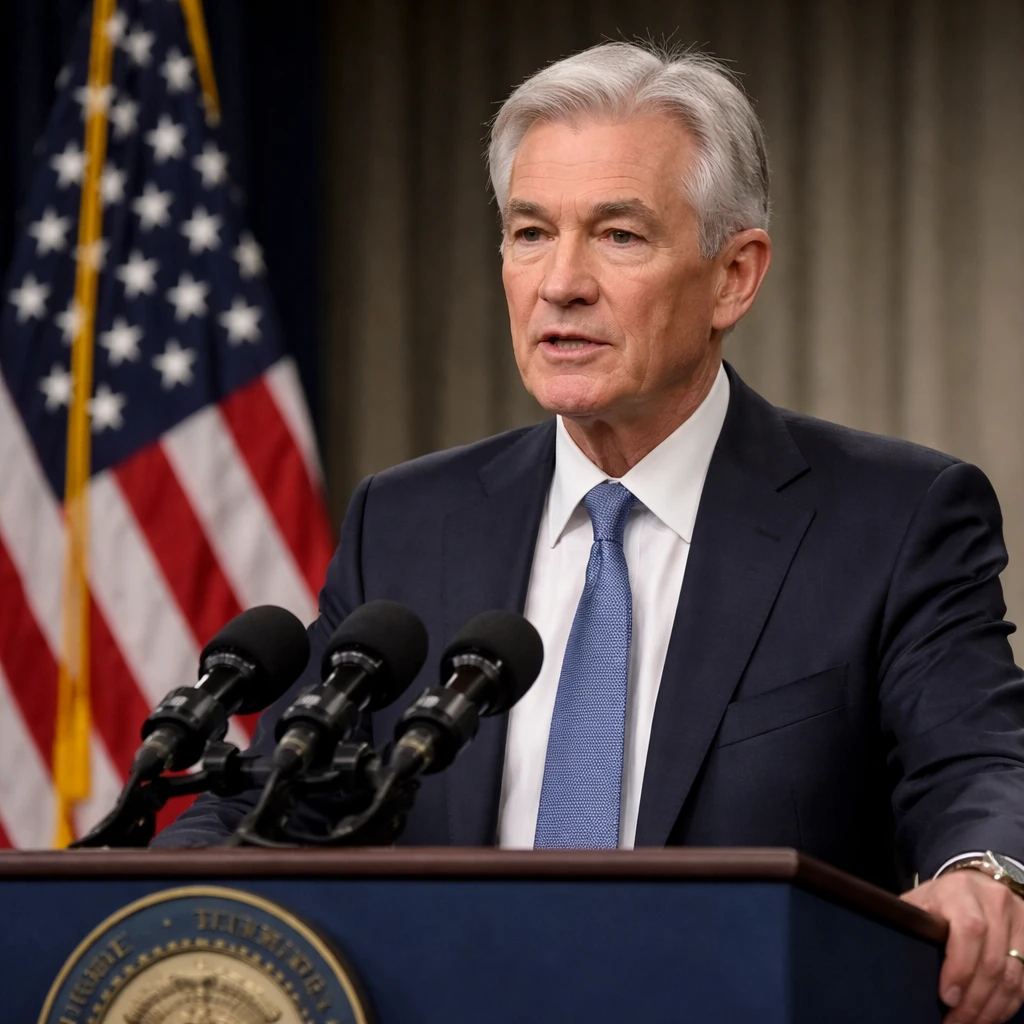
Federal Reserve Chair Jerome Powell delivered his final news conference in the role, saying he will not return to lead future briefings as Kevin Warsh prepares to assume leadership in mid-June. Powell expressed pride in the work completed with colleagues, noted that markets still price in the Fed's 2 percent inflation target credibility, and reported limited evidence so far that higher gasoline prices have curbed consumer spending. He plans to remain on the Fed board after his chairmanship ends in May, citing concerns about political pressures on the institution, while saying he will not seek to undermine the incoming chair.

Key Points

  • Jerome Powell held his final news conference as Fed chair and said he will not lead the next post-meeting briefing as Kevin Warsh prepares to take over in mid-June.
  • Powell stated that markets still price in the Fed's credibility regarding its 2 percent inflation target and that this credibility has not weakened.
  • He reported that the economy is continuing to weather successive shocks and that consumer spending has remained robust, with little observable slowdown so far from recent gasoline price increases.

Federal Reserve Chair Jerome Powell closed out his final press conference as chair on Wednesday, telling reporters he will not be holding the next post-meeting briefing as leadership prepares to transfer to Kevin Warsh in mid-June.

Powell used his remarks to reflect on the work accomplished during his tenure, saying he is proud of the results achieved alongside his colleagues at the central bank. He emphasized that market expectations continue to reflect confidence in the Fed's commitment to its 2 percent inflation target, and he said that this credibility has not eroded.

On the state of the economy, the outgoing chair described activity as continuing to push through successive shocks, noting that consumer spending has remained resilient. He told reporters that the Federal Reserve has not yet seen significant signs of slowing that could be linked to the recent increase in gasoline prices.

Powell also addressed his post-chair plans. He intends to remain on the Federal Reserve Board as a governor after his leadership term concludes in May. He cited ongoing attacks on the Fed's independence from the Trump administration as a motivating factor for staying on the board, but he made clear he will not try to undercut Kevin Warsh when Warsh assumes the chairmanship.

When the Federal Open Market Committee next meets to decide policy in mid-June, Warsh will be the official to lead any post-meeting news conference, Powell said.


Context and implications

Powell framed his departure from the chair role as a handoff rather than a break with the institution. He underscored market confidence in the Fed's inflation target while pointing to continued consumer spending as evidence of economic durability amid price fluctuations. At the same time, his decision to remain a governor and his explicit reference to political attacks on Fed independence signal continued attention to the institution's institutional integrity.

Details Powell offered were concise and limited to his assessment of market credibility, consumer behavior, gasoline-price effects to date, and the timeline around leadership transition and his board membership.

Risks

  • Leadership transition risk - the shift from Powell to Warsh in mid-June may create near-term uncertainty for markets and policy communication strategies.
  • Political pressure on the Fed - Powell cited ongoing attacks on Fed independence from the Trump administration, an uncertainty that could affect perceptions of the central bank's autonomy.
  • Energy-price sensitivity - while Powell said the Fed has not yet seen much slowdown from higher gasoline prices, a larger or prolonged rise in fuel costs could still damp consumer spending and influence sectors sensitive to consumer demand, such as retail and transportation.

More from Economy

Customs Agency Says First Electronic Refunds for Trump's Tariffs Could Begin May 12 May 4, 2026 Iran's Araghchi Says Military Action Won't Resolve Hormuz Standoff, Voices Cautious Hope on Pakistan-Brokered Talks May 4, 2026 Westpac’s H1 profit underperforms as margins and credit charges weigh May 4, 2026 Oil Surge and Rising Yields Push Risk Assets Lower as Strait of Hormuz Tensions Mount May 4, 2026 IMF Managing Director Warns of Sharper Global Strain if Middle East War Extends into 2027 May 4, 2026