
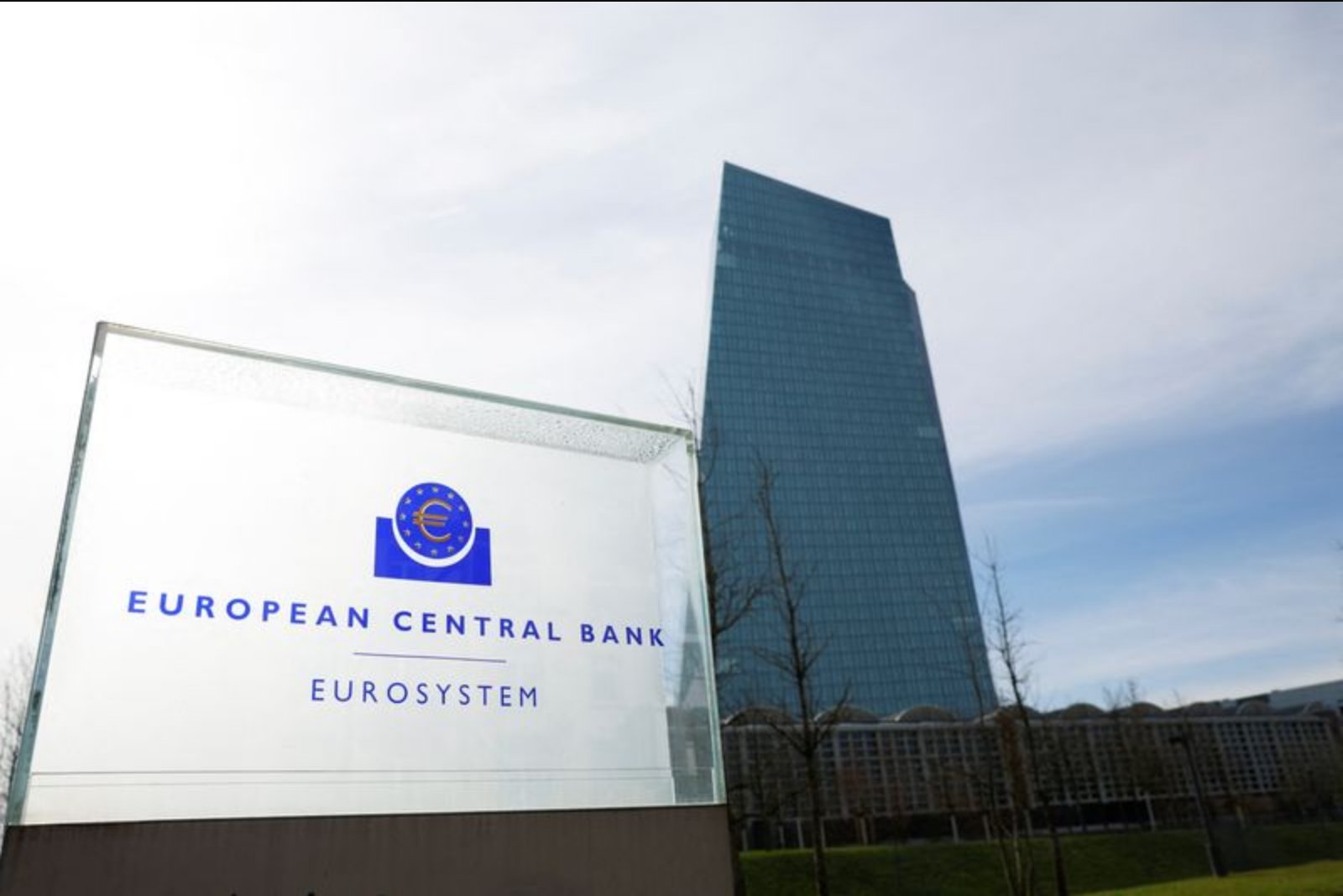
European Central Bank policymakers indicated on Friday that additional tightening of monetary policy could be required, possibly at the June meeting, after flagging a deteriorating inflation outlook and an increased danger of persistent price growth.
The ECB left interest rates unchanged on Thursday but there was clear debate within the Governing Council about the need for further hikes. Officials, speaking both on and off the record, said higher rates remained under consideration as the central bank weighs the prospect that an energy-led spike in inflation may not be confined to a single, short-lived impact.
Bundesbank President Joachim Nagel said the outlook had weakened since earlier assumptions. "From today’s perspective, the situation is evolving less favourably than in the earlier baseline scenario," he said. "This makes it all the more appropriate for the Governing Council to respond in June if the outlook does not improve markedly."
The ECB in March set out three scenarios - a baseline, an adverse and a severe path - for growth and inflation. Even the bank’s most benign projection assumed some tightening of monetary policy would be necessary.
Estonia’s central bank chief Madis Muller similarly warned that the ECB’s 2% deposit rate may need to be increased. In a blog post he said: "We did not yet consider it necessary to raise interest rates this week, but it is increasingly likely that we will have to do so in the future." He added that "there are already signs that rising energy prices are being passed on to other products and services." The ECB has noted it cannot directly reduce energy costs but said intervention would be required if the shock begins to produce second-round effects through the rest of the economy.
Austrian policymaker Martin Kocher adopted a more cautious formulation but echoed concerns that higher inflation, driven by rising oil prices linked to the Iran war, may be persistent. "The inflation outlook has deteriorated," he said. "It is therefore possible that we are facing prolonged inflation."
When the ECB prepared its baseline projection in March, it used market interest rate paths that assumed two rate hikes. Market sentiment has since moved: investors are now pricing a greater number of rate increases, with expectations implying three moves. The first of those is seen as fully priced in by July and the second by September.
The shift in market pricing aligns with oil trading near the levels the ECB used in its adverse scenario, while measured inflation is already at 3%, above the bank’s 2% target. Mr. Nagel underscored the institution’s readiness to respond to risks to price stability. "We are aware of the risks to price stability and are ready to act at any time," he said, adding a reminder that "let’s not forget that the baseline scenario already entails a more restrictive monetary policy."
Summary
ECB officials signalled that tighter monetary policy could be needed, possibly starting in June, as energy-driven inflationary pressures raise the risk that above-target price growth becomes entrenched. While rates were left unchanged this week, multiple policymakers said the possibility of future hikes is increasing, and markets have moved to price in additional rate rises.
Key points
- Policymakers warned the inflation outlook has worsened and said the Governing Council may need to act in June if conditions do not improve - affecting fixed income and broader financial markets.
- Officials highlighted energy price pass-through to other goods and services, identifying potential impact on consumer-facing sectors and services.
- Markets have shifted from pricing two rate hikes, per March baseline assumptions, to implying three moves, with the first fully priced in by July and the second by September - a development relevant to bond yields and bank funding costs.
Risks and uncertainties
- Energy-driven inflation could generate second-round effects, pushing up prices in goods and services - this notably affects consumer and service-sector inflation metrics.
- Persistently higher oil prices, near levels used in the ECB’s adverse scenario, pose a risk to the inflation outlook and could compel additional monetary tightening - a downside for interest-rate sensitive assets.
- Market expectations have shifted toward more rate increases; if those expectations prove misplaced, volatility in financial markets could rise - impacting bond and equity market positioning.